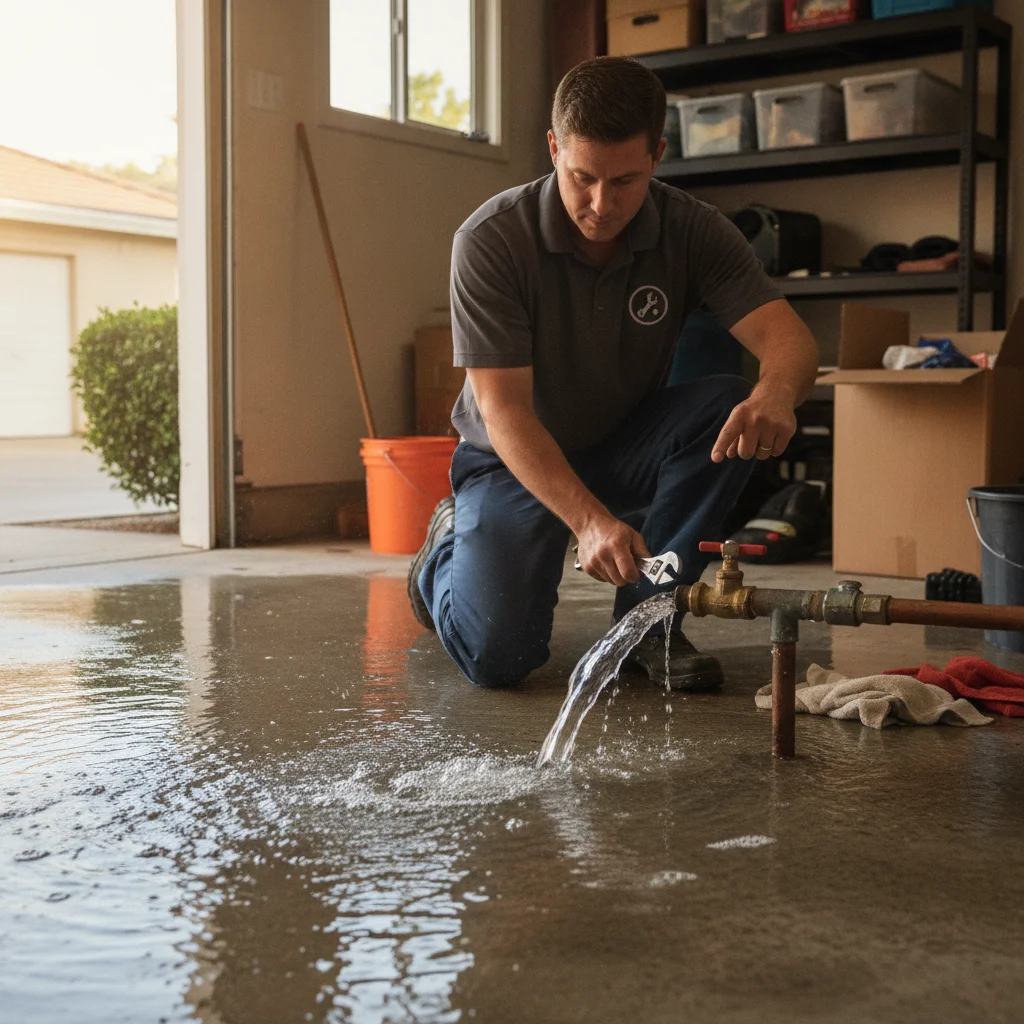
Burst pipe cleanup in Escondido starts with controlling the source, when that can be done safely. The next priorities are documenting the affected areas and defining what the restoration pro needs to inspect.
Shut off the water only when it’s safe
A burst pipe can turn a plumbing problem into a cleanup job quickly. Stopping the source matters, but reaching the shutoff isn’t always a reasonable first move.
Our approved claims ledger doesn’t contain a property-specific safety rule for shutting off water. This article can’t determine whether your valve, route, or affected room is safe. If you can’t confirm safe access, don’t make that decision from general online advice. Contact the appropriate emergency, utility, or property professional for direction.
If the shutoff is already known and safely reachable, stop the water without disturbing more of the room than necessary. Don’t begin removing flooring, opening walls, or moving heavy contents just to find the broken line. Those actions can change the visible damage before anyone documents it.
Keep the plumbing repair separate from the water cleanup. One scope addresses the failed pipe. The other follows where the released water went and identifies affected materials. Ask each professional to explain which part of the job they will handle.
Our broader San Diego burst pipe emergency guide helps organize the first decisions. For an Escondido home, keep the property address, affected rooms, and known shutoff location ready. Those details help the independent pro understand the situation without guessing.
Once the source is controlled, avoid treating the remaining water as a simple mopping job. The visible area is the starting point for the cleanup assessment, not an automatic boundary.
Document where the water traveled before cleanup
Start with the source and work outward. Photograph the broken pipe area if it can be viewed safely. Then capture each wet room from several positions. Include floors, baseboards, lower walls, cabinets, doorways, and nearby contents.
Use notes to record what you observed. Write down where water first appeared, which direction it moved, and which adjoining spaces looked affected. If someone moved an item or removed water, record that too. Don’t recreate damage for a photograph.
Include areas that look unchanged beside the visibly wet area. Those comparison photos can help the restoration pro understand the apparent boundary before extraction begins. They also provide a record of conditions at that moment.
Avoid making insurance or repair conclusions in your notes. Describe what you saw without labeling materials as covered, excluded, ruined, or safe. Coverage decisions belong to the parties handling the policy. Repair decisions should follow the independent contractor’s assessment and written scope.
Share the record with the licensed restoration pro you hire. Ask that pro to add findings from the assessment, including which rooms and materials were checked. If the apparent cleanup boundary changes, ask for the reason to be documented.
A useful record connects the source, the visible path, and the proposed work. It doesn’t need dramatic language. Clear photographs, room names, and simple observations are more useful than assumptions about hidden damage.
Check wall cavities, flooring, and adjoining rooms
A flooded home from a burst pipe needs more than a glance at the largest puddle. Ask the independent restoration pro how the visible water path will be checked beyond the source room.
Wall openings, flooring edges, cabinet bases, and door thresholds can affect the assessment boundary. Adjoining rooms deserve attention when water reached a shared wall or crossed an opening. The goal is to identify what was actually checked, not to assume every nearby material is affected.
Ask the pro to explain the inspection method before materials are removed. The written scope should identify the areas being assessed and the reason each area is included. If an opening is proposed, ask what observation or reading supports that step.
Flooring also needs material-specific decisions. A surface can look different from the layer beneath it, so ask how the pro will evaluate both. Don’t accept a broad removal recommendation that fails to name the affected area or observed condition.
The same applies to walls and cabinets. Request a clear distinction between cleaning, drying, monitoring, removal, and repair. These are separate scope decisions. Each should connect to documented conditions inside the Escondido home.
If a nearby room is excluded, ask why. If it’s added later, request an updated scope. That creates a clearer path from the original water release to the work being proposed.
How extraction and drying shape the repair scope
Extraction and drying aren’t interchangeable steps. Extraction addresses water that can be removed from the affected area. Drying addresses moisture retained in materials included within the restoration scope.
For burst pipe cleanup, the independent pro should explain that boundary in plain language. Ask what will be extracted, what will remain in place, and what conditions will be monitored. The answers should match the rooms and materials documented during the assessment.
Drying decisions can also affect later repairs. Material kept in place may need a different repair plan than material removed during cleanup. Ask the pro to separate restoration work from reconstruction so you can see where one scope ends.
A written scope should identify the affected areas, proposed actions, and completion basis. If equipment placement changes, ask for the reason. If more material is added to the scope, request updated documentation before assuming the original plan still applies.
Some contractors may describe their process as following IICRC S500. If that happens, ask what the statement means for this specific job. Request an explanation of the assessment, documentation, monitoring, and completion decisions being proposed. Don’t treat a standard’s name as a substitute for a property-specific scope.
Restore Pro SD doesn’t perform extraction or drying. We’re a referral service that matches San Diego County homeowners with licensed, independent water damage professionals. The customer hires and pays the selected professional directly.
Before agreeing to work, make sure the proposal identifies who performs each part. That distinction helps prevent a pipe repair, cleanup service, and later reconstruction from becoming one unclear promise.
Verify local repair and permit requirements
Cleanup and repair can involve different decisions. Removing water doesn’t answer whether later plumbing, wall, flooring, or reconstruction work needs local approval.
We don’t have a verified Escondido-specific permit rule in our approved claims ledger. We also don’t have an approved permit fee or local processing time. Don’t rely on an unsourced number or a general San Diego County statement for those details.
Ask which authority governs the property address. Then confirm the current requirement directly with that office before repair begins. The contractor should identify the proposed work accurately when requesting guidance. A vague description can produce an answer that doesn’t match the actual scope.
Request written confirmation when possible. Keep it with the cleanup record, contractor proposal, and any revised repair scope. If the authority says no permit applies, retain that response too. The important point is verification for the actual address and work, not an assumption based on another project.
Restore Pro SD doesn’t hold a trade license or issue warranties. The independent professional performs the work under the customer’s agreement. Before signing, confirm that contractor’s current license through the CSLB online license check. Our claims ledger doesn’t contain contractor-specific license numbers, so those details must be checked directly.
Also ask who will coordinate any required inspection and who will close out the repair scope. Get those responsibilities in writing. That keeps local verification tied to the professional making the repair recommendation.
When to call us
Burst pipe water damage in Escondido needs a licensed Water Damage Restoration pro when the affected boundary is unclear or building materials need assessment, extraction, or drying. Restore Pro SD can match you with an independent professional serving San Diego County.
Call us at (858) 400-4586. The line plays a recording-consent notice, then takes a recorded and transcribed message. It isn’t answered live and doesn’t forward.