For water damage restoration in Chula Vista, start with written scopes you can compare line by line. Focus on the water source, affected rooms, moisture records, cleaning steps, repairs, and the independent professional’s verified license.

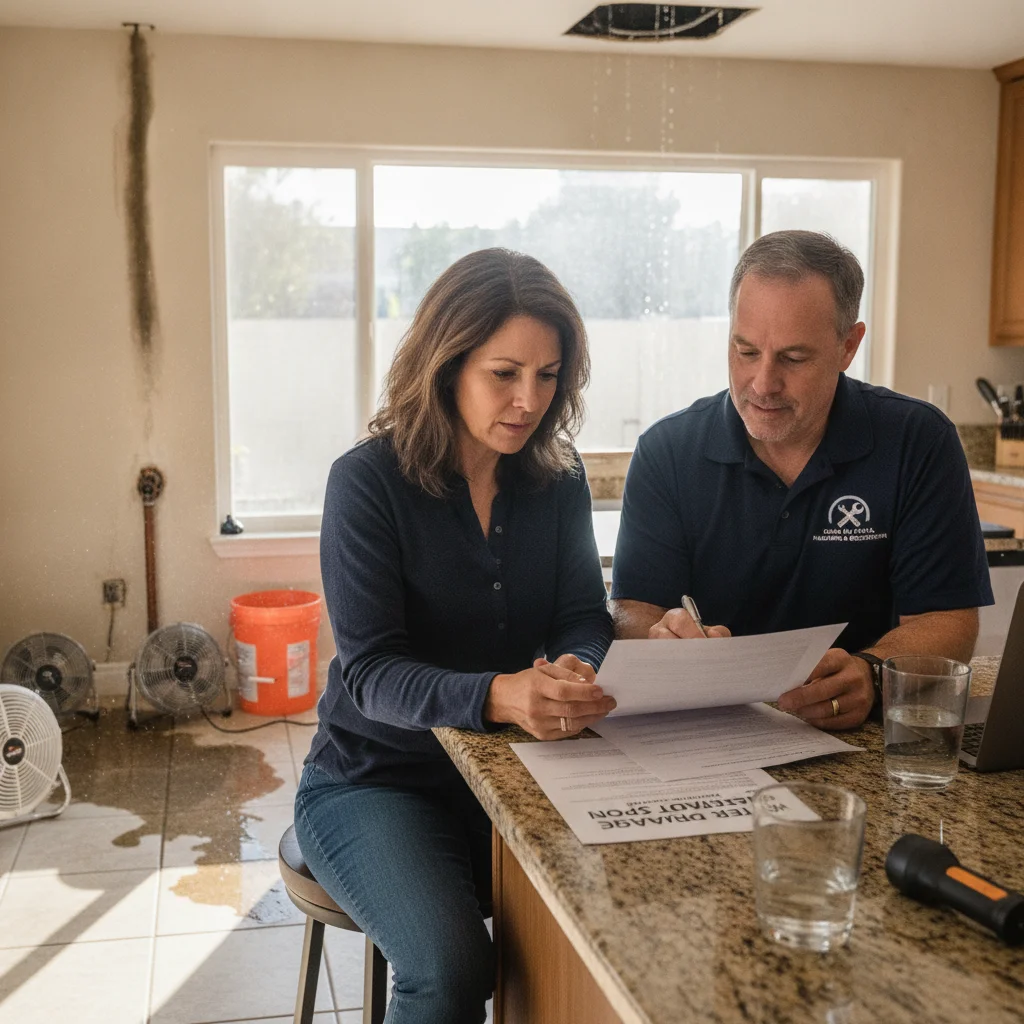
A Chula Vista homeowner reviewing a written water damage scope with an independent local professional

Start with the water source and affected rooms

Tell each professional what happened before requesting a scope. Identify the reported source, where water first appeared, and when you noticed it. Include every room where you saw water, staining, swelling, or another change.

Don’t limit the walkthrough to the largest wet area. Ask the professional which adjoining rooms and materials were checked. That may include the opposite side of a wall, the room below, nearby cabinets, or flooring beyond the visible edge. You’re asking for observations, not assumptions.

Each proposed scope should answer the same basic questions:

  • What’s the reported water source?
  • Has that source been stopped or repaired?
  • Which rooms are included?
  • Which walls, floors, ceilings, or cabinets were inspected?
  • What materials does the professional propose removing?
  • What materials does the professional propose leaving in place?
  • What additional work might be recommended after demolition?

Ask bidders to mark uncertain areas clearly. A scope shouldn’t quietly treat an unexamined space as dry. It should distinguish visible damage, measured areas, and sections that haven’t been opened or tested.

Use one room list for every walkthrough. This keeps a bedroom, hallway, closet, or shared wall from disappearing between proposals. It also helps you spot meaningful differences. One professional may include a room that another skipped.

Our water damage restoration matching service connects Chula Vista homeowners with licensed, independent local pros. Restore Pro SD doesn’t inspect properties or perform the restoration work.

Compare extraction, drying, cleaning, and repairs

A short total tells you little about the proposed work. Ask each professional to separate extraction, drying, cleaning, material removal, and repairs. You can then compare the work itself before comparing totals.

For extraction, ask which rooms and surfaces are included. Have the professional identify any items excluded from that phase. If the scope says “water removal,” ask what that phrase covers at your property.

For drying, request a list of the areas covered by the plan. Ask where drying equipment would be placed and how changes would be recorded. Restore Pro SD doesn’t own or provide equipment. The independent professional chooses the work plan and performs the job.

Cleaning should also have a defined boundary. Ask which materials would be cleaned, what would be removed, and who handles removed contents. If the proposal uses broad language, request a room-by-room explanation.

Repairs require the same clarity. Ask whether the proposal includes only removal and drying or also reconstruction. Drywall, flooring, cabinets, paint, and finish work should each have a clear status. They might be included, excluded, or pending further inspection.

Don’t treat two proposals as equivalent simply because both mention restoration. Compare their endpoints. One may stop after drying. Another may include selected repairs. A third may leave reconstruction for a different contractor. A written endpoint helps prevent confusion about what remains after the proposed work finishes.

Ask how hidden moisture will be documented

Hidden-moisture documentation should be specific enough to review later. Ask each professional what will be measured, where readings will be taken, and how those locations will be identified.

Request an initial record tied to rooms or materials. A simple room map can make the readings easier to follow. Photos should carry labels or captions that connect them to the written scope. Otherwise, a folder of similar wall and floor images may be hard to interpret.

Ask whether the professional will provide:

  • An initial room and material record
  • Labeled photos of inspected areas
  • Reading locations identified by room
  • Follow-up records using the same locations
  • Notes explaining added or removed scope items
  • A final written record for the areas covered

The exact format may differ between independent professionals. What matters is whether you can connect each record to a location and proposed action. Ask how the professional decides that a listed area has reached its planned endpoint. Have that explanation added to the scope.

Documentation also helps when plans change. If a wall, floor, or cabinet is added after work starts, request the reason in writing. Ask for the related observation, reading, or photo. Don’t rely on a brief verbal update when the change affects the work you’re approving.

Keep your copy of the original scope beside every revision. You’ll then have a clear record of what changed, who proposed it, and which rooms were affected.

A homeowner and an independent restoration professional walking through a water-damaged room with a written scope

Verify each independent pro through official sources

Restore Pro SD matches customers with licensed, independent local water damage professionals. The customer contracts with and pays the matched professional directly. Restore Pro SD performs no physical work, sets no prices, and gives no warranties.

Before signing, request the professional’s legal business name and license number. Enter that information into the official CSLB license lookup. Compare the lookup result with the name shown on the proposal and contract. If anything differs, ask the professional to explain it before you approve work.

The approved claims ledger doesn’t provide a license number or license classification for any individual professional. It also doesn’t confirm an individual professional’s insurance, bonding, certifications, or warranty terms. Verify those items directly rather than relying on a general statement.

If a proposal mentions training or voluntary certifications, ask for the issuing organization and credential details. Check them with that organization. Keep that review separate from the CSLB record.

Ask each professional to put these items in writing:

  • The legal business name
  • The license number you can verify
  • The person or company responsible for the contract
  • The included and excluded work
  • The payment schedule
  • The process for approving scope changes
  • Any warranty offered by that independent professional

Don’t attribute a contractor’s credentials or promises to Restore Pro SD. We’re the matching service. The independent professional remains responsible for the proposal, contract, work, pricing, and any warranty they provide.

Use Chula Vista details that change the scope

A Chula Vista scope should describe the actual property, not a generic South Bay job. Give every professional the same information about access, floor level, attached units, parking limits, occupied rooms, and areas containing stored belongings.

Don’t assume a neighborhood name establishes flood exposure, building design, soil conditions, or required repairs. The approved claims ledger contains no verified neighborhood-level claim for Chula Vista. For address-specific flood information, start with FEMA’s flood resources and confirm what the current official records show.

Permit questions also depend on the proposed work. The approved ledger doesn’t confirm a blanket Chula Vista permit rule for water damage restoration. Before approving demolition or reconstruction, describe the exact project to City of Chula Vista Development Services and check its current guidance. Ask the independent professional to identify who will handle any required application, inspection, or record.

Property access can change a proposal even when the affected rooms look similar. Ask where equipment would be staged and which entry would be used. For an attached home or managed property, identify any shared areas and written access limits before comparing scopes. These are property details you can confirm directly.

Finally, compare the Chula Vista address on every document. The proposal, room list, photos, moisture records, and later revisions should all point to the same property and affected areas. That simple check helps keep the decision tied to your home rather than a reusable template.

When to call us

Call when you’re comparing professional extraction, drying, cleaning, or repair scopes and need a licensed water damage restoration pro. Call us at (858) 400-4586 and we’ll connect you with a licensed local restoration pro.