For water damage restoration in Oceanside, choose a pro who provides a clear, room-by-room scope. The proposal should separate water removal, drying, cleaning, and repairs. It should also explain how hidden moisture will be tracked.

An Oceanside homeowner reviewing a written water damage scope with an independent local professional

Start with the water source and affected rooms

Start by writing down what happened. Identify the suspected source without overstating what you know. A supply line leak, roof opening, drain overflow, and outside water call for different questions. If the source remains uncertain, say that clearly. Ask each candidate how they’ll confirm it.

Note every room where you saw water, staining, swelling, or damp materials. Include adjoining closets, hallways, cabinets, and rooms below the visible damage. Record when you first noticed the problem and whether the source has stopped. Photos can help candidates compare the same conditions.

Next, list the affected materials. These may include flooring, baseboards, drywall, cabinets, insulation, or stored belongings. Don’t assume a dry-looking surface means the space behind it was checked. That question belongs in the proposed inspection and documentation plan.

Give every candidate the same starting information. Otherwise, you may receive proposals based on different assumptions. One pro might include an adjoining room while another excludes it. That difference can make two totals impossible to compare fairly.

Ask for unresolved questions in writing. A careful proposal should show what’s known, what needs checking, and what could change the scope. Restore Pro SD can match you with licensed independent local pros, but the selected professional determines the work plan.

Compare extraction, drying, cleaning, and repairs

A useful proposal separates the project into distinct phases. Extraction addresses removable water. Drying covers moisture retained within materials and spaces. Cleaning concerns affected surfaces or belongings. Repairs address materials removed or damaged during the work.

Look for clear boundaries between those phases. Ask whether the scope includes moving contents, removing baseboards, accessing cabinet toe kicks, or checking rooms below the loss. Confirm who handles debris, stored belongings, and any materials removed for access.

Repairs deserve their own discussion. Ask whether the same independent pro will complete them. If another contractor is needed, find out who coordinates that handoff. The proposal should identify exclusions instead of leaving them for later.

Compare line items, not just the final total. One candidate may include drying documentation and repair planning. Another may stop after extraction. Ask how changes are approved if concealed damage becomes visible. Don’t rely on a verbal description that conflicts with the written scope.

Our water damage restoration matching service connects Oceanside homeowners with licensed independent local pros. Restore Pro SD doesn’t perform the work, set the price, or provide a warranty. You’ll contract with and pay the selected professional directly.

For more context, review the water damage restoration process before comparing proposals. Use it to organize questions, then require each candidate to explain their own process in writing.

Ask how hidden moisture will be documented

Visible water is only part of the selection decision. Ask each candidate to explain where they’ll check for concealed moisture. The answer should address wall edges, flooring transitions, cabinets, adjoining rooms, and areas below the reported loss when relevant.

Request a room-by-room moisture map or equivalent written record. It should identify the material, reading location, and date of each entry. Ask how photos, equipment placement, and later readings will be tied to that record. Consistent labels make progress easier to follow.

The approved claims ledger doesn’t provide a universal moisture target or drying duration. Don’t accept an unsupported number as a guaranteed finish point. Ask the independent pro to state the project target, explain its basis, and document how completion will be evaluated.

Also ask what would justify removing material. A proposal shouldn’t treat every wall or floor the same. The pro should explain what they’re checking, what the findings mean, and when written approval is needed for added work.

Ask what written industry guidance shapes the drying and cleaning plan. Then verify any standard or certification the candidate names with its issuing organization. Restore Pro SD’s approved ledger contains no confirmed certification for the brand or any individual contractor, so no such credential should be assumed.

Keep copies of the initial scope, readings, photos, revisions, and completion records. These documents help you compare promises with the work actually authorized. They also reduce confusion when drying and repairs involve different companies.

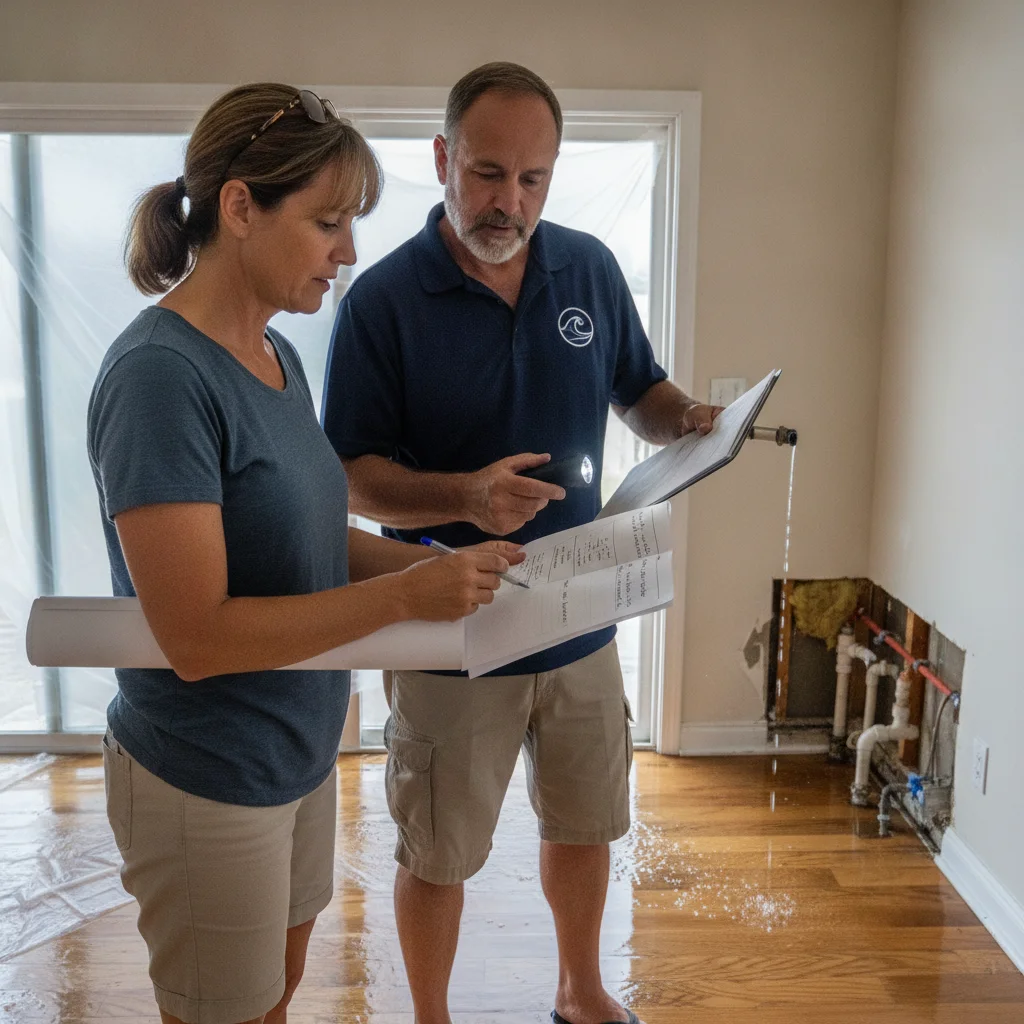
A homeowner and an independent restoration professional walking through a damaged room together with a clipboard

Verify the independent pro through official sources

Restore Pro SD is a referral service. We match homeowners with licensed independent water damage professionals. We don’t hold a trade license, employ restoration crews, or perform physical work.

Before signing, check the independent professional through the CSLB license lookup. Search using the identifying information shown on the proposal. Compare the listed business with the party named in your contract and payment instructions.

Don’t treat a training certificate as a substitute for the official license-record check. If a candidate claims a voluntary certification, ask for the exact credential and issuing organization. Verify it directly instead of relying on a logo or acronym.

The approved claims ledger doesn’t contain insurance, bonding, or warranty details for individual pros. Ask for current documents supporting any such representation. Read the selected professional’s contract for warranty language rather than assuming coverage exists.

Confirm who will enter the property, who supervises the work, and who can authorize changes. Ask whether repairs will be completed under the same contract. If not, request a clear stopping point between restoration and reconstruction.

No specific Oceanside permit trigger for water damage repairs appears in Restore Pro SD’s approved claims ledger. Don’t let anyone guess based only on the project name. Ask City of Oceanside Development Services about the proposed drywall, framing, plumbing, electrical, or exterior work. Keep the City’s answer with the project records.

Use Oceanside details that change the scope

An Oceanside address needs more detail than a city name. Tell each candidate whether the property sits west or east of Interstate 5. Note nearby references such as Coast Highway or State Route 76. Exact access, building type, and water path matter more than a broad neighborhood label.

For coastal or exterior water concerns, describe the precise entry point. Note whether water appeared near a roof edge, window, exterior wall, door, or lower-level opening. Don’t assume coastal proximity identifies the cause. Ask the pro to separate observed evidence from possible explanations.

Likewise, don’t infer a flood designation from proximity to the San Luis Rey River, Loma Alta Creek, or Buena Vista Lagoon. Restore Pro SD’s ledger doesn’t confirm any parcel-level flood designation. Check the exact address with City officials and current mapping. The San Diego County Flood Control page can provide county mapping context, but it shouldn’t replace a City parcel check.

Building layout can also change the proposed work. Tell the candidate whether the home is detached, attached, or part of a managed community. Identify shared walls, units below, access restrictions, and any property-manager or association contact. Ask who must approve work outside your unit.

Finally, compare scopes using the same Oceanside property details. A written proposal should reflect the actual rooms, materials, access points, and unresolved questions. If it reads like a generic template, ask for a revision before choosing the pro.

When to call us

Call when the source is unclear, several materials are affected, or you need a written scope from a licensed Water Damage Restoration pro. Call us at (858) 400-4586. The line plays a recording-consent notice, then takes a recorded and transcribed message. It isn’t answered live and doesn’t forward.