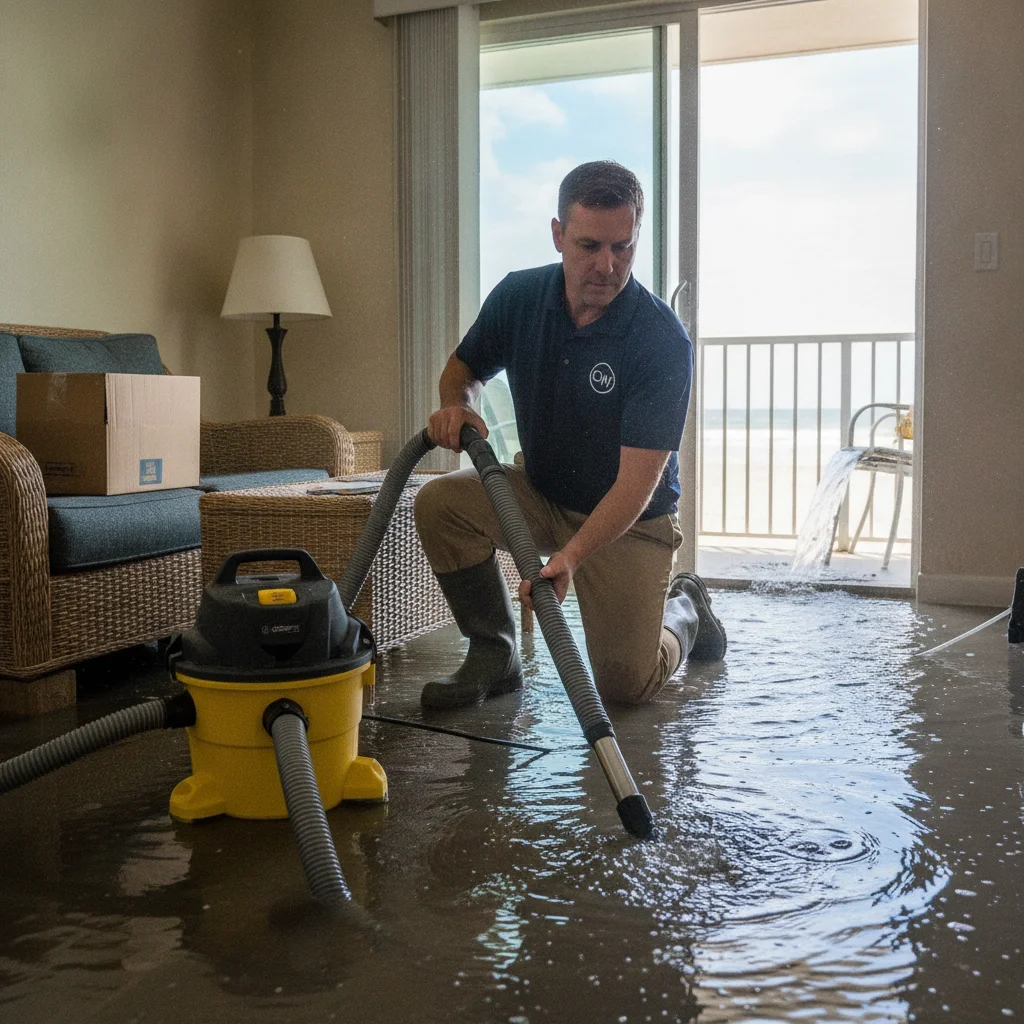
Standing water in a Pacific Beach rental creates a coordination problem before cleanup can begin. The owner, tenant, building contact, and restoration contractor need one clear point of contact. Restore Pro SD matches callers with licensed, independent local water damage pros, but our brand performs no physical work.
Who gets called first when a rental unit floods
Start by identifying who can authorize access and approve the proposed cleanup scope. That person might be the owner, property manager, or another named building contact. Don’t guess. Check the lease, management agreement, and contact information available for that property.
We couldn’t confirm one universal landlord-tenant call order from the approved source material. Your agreement and circumstances may differ. Questions about legal duties should go to a qualified California legal adviser. Our guide to rental water damage for tenants and landlords can help organize the conversation without deciding responsibility.
The first conversation should establish a few basic facts. Note who found the water, which areas appear affected, and whether another unit may be involved. Record observations without assigning blame or naming a cause that hasn’t been confirmed. Then identify who will speak with the restoration contractor.
That coordination matters whether the rental sits near Garnet Avenue, Mission Boulevard, or Crown Point. A contractor needs the complete address, unit number, entry instructions, and an authorized contact. Shared gates, managed parking, and separate unit keys should be discussed before access is arranged.
Restore Pro SD can connect the caller with a licensed independent pro for flood damage cleanup. Before hiring, confirm the individual contractor’s record through the CSLB license lookup. The customer contracts with and pays that professional directly.
How shared walls and stacked units change the scope
A cleanup plan for a shared-wall rental shouldn’t focus only on the visible puddle. Ask the contractor whether the proposed evaluation includes nearby walls, cabinets, flooring edges, ceilings, and adjoining units. The contractor should explain what they want to inspect and why.
If the reported source is above, below, or beside the rental, involve the appropriate building contact. Access to another unit should be coordinated through whoever can authorize it. Don’t promise entry on somebody else’s behalf. Give the contractor accurate contact details instead.
Label each affected space clearly in notes and photographs. Use the building address, unit identifier, room, and surface shown. This prevents an image from one bedroom or kitchen being confused with another unit’s damage. It also helps when tenants, owners, or contractors exchange updates remotely.
Ask for a written proposal that separates each unit and each requested task. The document might address water removal, material handling, drying, or later repairs. Those decisions belong to the independent contractor and customer. Restore Pro SD doesn’t set the scope, schedule, price, or warranty.
When visible water must be removed, our guide to emergency water extraction in San Diego explains what to ask during the contractor conversation. For a Pacific Beach rental, include the nearest cross street and exact entry route. Directions such as “off Grand Avenue” aren’t enough for a multi-unit property without a unit number and access details.
What happens to tenant belongings during cleanup
Set a belongings plan before furniture, boxes, or personal items get moved. The owner’s fixtures and the tenant’s possessions shouldn’t be mixed into one vague inventory. Identify who can make decisions for each group of items.
Ask the contractor to photograph an item before moving it. The record should show its original room, visible condition, selected action, and destination. Use plain descriptions. “Blue chair from front bedroom” is more useful than “damaged furniture.” Don’t describe an item as ruined unless the responsible party or contractor has made that determination.
The tenant and owner should also agree on a communication path. If the tenant needs medication, identification, work equipment, or another personal item, the request should go through the designated site contact. That person can coordinate retrieval with the contractor instead of creating an unplanned entry.
Some belongings may remain in place, move elsewhere in the unit, or leave the property. Ask the contractor to explain the proposed handling for each group. If off-site handling is proposed, request the destination, responsible contact, and inventory process in writing.
Don’t discard disputed belongings based on a verbal assumption. Keep uncertainty visible in the record and ask the relevant tenant, owner, insurer, or adviser for direction. Restore Pro SD doesn’t decide ownership, coverage, replacement, or reimbursement.
How access and scheduling work in an occupied building
Occupied buildings need a shared access plan. Create one contact sheet for the tenant, owner or manager, building representative, and independent contractor. Mark who can approve entry, who holds keys, and who should receive updates.
Give the contractor the exact unit location and entry route. A Pacific Beach address near Cass Street, Pacific Beach Drive, or Mission Boulevard may still have several possible doors. Include the gate, stairway, elevator, parking, or loading instructions actually supplied by the property contact. Don’t invent building rules when none were provided.
Ask the contractor which areas they expect to enter. Confirm whether they’re requesting access to an adjoining unit, common hallway, storage area, or utility space. Each request should go to the person authorized to approve that location.
Scheduling should account for occupants without creating promises nobody controls. Ask the contractor for proposed visit windows and the preferred way to report changes. Restore Pro SD is a referral service and doesn’t control the independent professional’s calendar or job duration.
If the contractor proposes leaving equipment in the unit, ask where it will sit and what access later visits require. The tenant should know which rooms remain available and who to contact about a practical conflict. Keep those arrangements in writing.
The same approach applies to building notices. Record only the quiet hours, entry rules, elevator arrangements, or parking directions supplied by the building contact. A clean access record helps everyone distinguish confirmed instructions from casual assumptions.
What an owner should keep from the cleanup record
Keep one central file for the rental instead of scattering records across texts and inboxes. It should begin with the initial report, including when the water was noticed, who reported it, and what they observed. Separate direct observations from an unconfirmed cause.
Save photographs with clear room and unit labels. Keep the contractor’s business name, contact information, written proposal, and any later scope changes. Record that the contractor’s license was checked, along with the date of that check.
If the contractor supplies inspection notes, readings, equipment records, or progress photographs, retain the original copies. Don’t rewrite technical notes into stronger claims. Ask the contractor to explain unfamiliar terms and clarify whether a statement is an observation, recommendation, or completed task.
The belongings record should stay with the property file. Include item descriptions, photographs, movement approvals, destinations, and any unresolved decisions. Save communications from the tenant, property manager, contractor, and insurer in date order.
Before closing the file, request a written account of the work the contractor says was completed. Ask which rooms and materials were addressed, what changed from the initial proposal, and whether any recommended work remains undecided. Keep invoices and payment records from the independent contractor with that account.
A cleanup record doesn’t decide legal responsibility or insurance coverage. It gives the owner a clearer timeline and keeps confirmed details apart from guesses. That distinction is especially useful when several Pacific Beach units, occupants, or property contacts were involved.
When to call us
Call when a Pacific Beach rental has visible water and needs evaluation by a licensed Water Damage Restoration professional. Restore Pro SD will match you with an independent local pro who performs the cleanup and discusses the scope directly with you. Call us at (858) 400-4586. The line plays a recording-consent notice, then takes a recorded and transcribed message. It isn’t answered live and doesn’t forward.