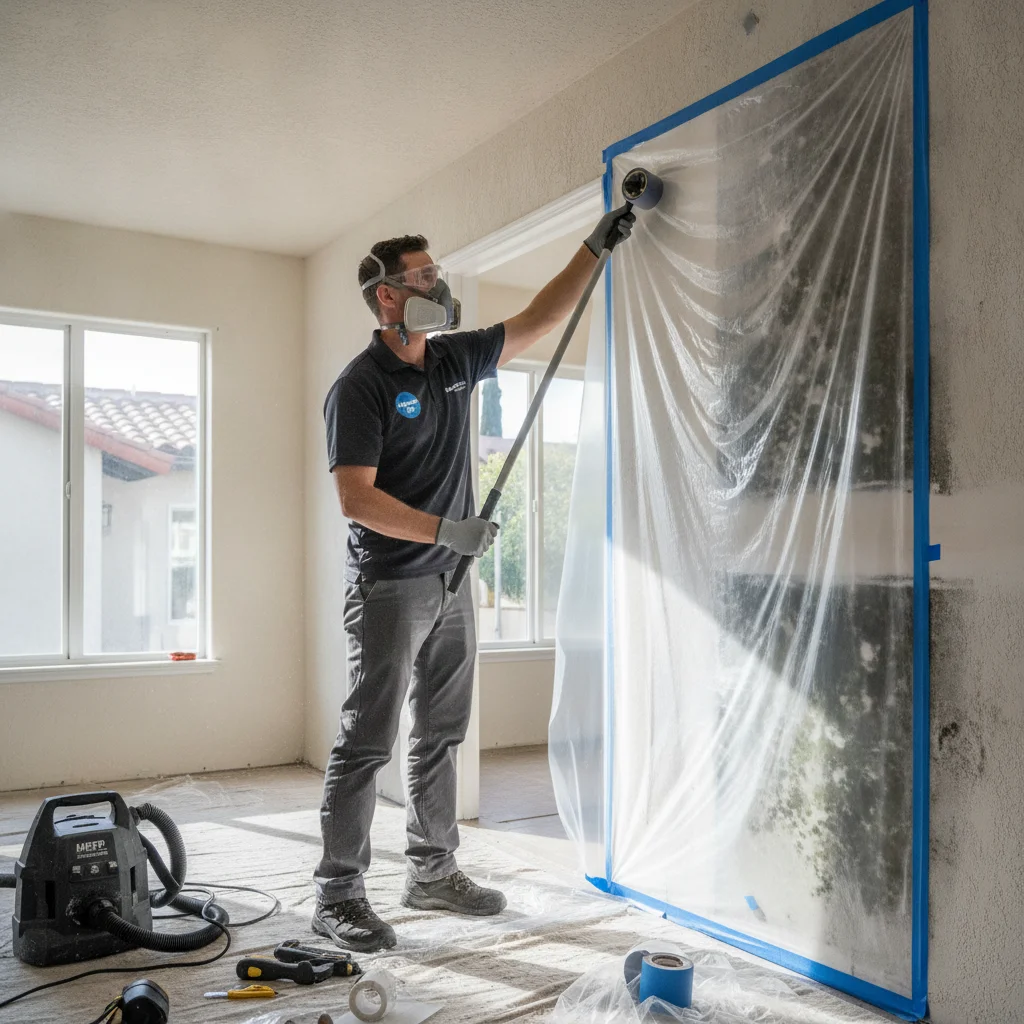
For mold remediation in Rancho Bernardo after a plumbing leak, separate the completed repair from the mold decision. Ask a licensed local restoration pro to document the affected area, containment plan, removal scope, drying checks, and any proposed testing before you approve work.

An independent remediation professional setting up containment sheeting around a mold-affected wall in a San Diego home

What usually turns a slow leak into a mold problem

A plumbing repair answers one important question: where did the water originate? It doesn’t automatically show what happened inside nearby walls, cabinets, flooring, or trim.

Start with a clear timeline. Write down when you first noticed the leak, stain, odor, or damaged finish. Keep photos from before and after the plumbing repair. Ask the repair provider for an invoice that identifies the repaired part and location.

Next, compare the visible damage with the proposed remediation area. A stain beneath a sink may lead to questions about the cabinet back, wall surface, and floor below. A repaired pipe behind drywall may require a different inspection path. The restoration pro should explain what can be seen, what remains concealed, and what would justify opening another area.

Don’t let an old moisture source become a vague mold project. Ask the pro to distinguish three items in writing:

  • The plumbing component that was repaired
  • Materials showing visible damage or suspected moisture exposure
  • Areas included in the proposed mold work

If the leak’s source wasn’t clear, review these slab leak warning signs before discussing the scope. That guide can help organize your observations, but it doesn’t diagnose the current problem.

For homeowners comparing mold removal in Rancho Bernardo, documentation matters more than broad language. A room name alone isn’t a scope. Ask for affected surfaces and proposed work areas to be identified clearly.

How the affected area is contained before removal

Containment should be discussed before damaged material is disturbed. Ask the restoration pro to show where the work boundary will sit and how people will move around it.

A written proposal should identify the affected area and the planned work zone. It should also explain how nearby rooms, belongings, vents, doors, and walkways fit into the setup. If part of the home will remain occupied, ask how that changes access to the work area.

Containment language can sound technical without saying much. Bring the conversation back to visible details:

  • Which surfaces form the boundary?
  • Where will workers enter and leave?
  • What happens to items inside the planned work zone?
  • Will any wall, cabinet, floor, or trim be opened?
  • How will removed material leave the home?
  • Who can enter the area while work is underway?

Ask the pro to photograph the setup before removal begins. Keep those images with the contract, plumbing invoice, and testing documents. That creates a record of the proposed boundary and the condition found during the project.

If the proposal cites a standard or guidance document, ask the pro to identify it and explain how it applies to your scope. Don’t accept a general reference as a substitute for specific work steps.

Our mold remediation matching service connects San Diego County homeowners with licensed, independent local pros. Restore Pro SD doesn’t perform containment or removal itself. You’ll contract with and pay the matched professional directly.

What testing does and does not settle

Testing can be proposed before work, after work, or at both points. Before agreeing, ask what decision the result is meant to support. A test without a defined purpose may add paperwork without clarifying the scope.

Ask the person proposing testing to answer these questions in plain language:

  • What area will be sampled?
  • Why was that location selected?
  • What question should the result answer?
  • Who will collect and interpret the sample?
  • Will the findings change containment or removal?
  • What written report will you receive?
  • Is any follow-up check included in the proposal?

Testing shouldn’t replace a clear description of visible conditions. It also shouldn’t turn every unsampled surface into a conclusion. Ask the pro to separate direct observations, test results, and professional recommendations in the written record.

If one company proposes both remediation and testing, ask each person’s role. You can also ask whether an independent assessment would help settle disagreements about the work boundary or completion criteria. The proposal should state who makes those decisions.

Keep the EPA’s mold and moisture guidance with your project records. Use it as general federal background, then ask the licensed local pro how the proposed work applies to your Rancho Bernardo home.

Testing terms can vary between proposals. Compare the actual sample locations, purpose, report, and decision points. Don’t compare only the name of a package.

A contained work area with an air scrubber running beside an opened wall cavity

How drying and removal work together

Removal and drying should appear in one coordinated scope. A proposal that discusses only demolition leaves important questions unanswered. A drying-only proposal may not explain what happens to visibly affected material.

Ask the pro to identify what stays, what gets cleaned, and what gets removed. Each decision should point to a specific material and location. Phrases such as “treat affected areas” need more detail before you sign.

The drying portion should be equally clear. Ask where moisture readings will be taken, what materials will be checked, and how results will be recorded. If equipment is proposed, request its location and purpose. Restore Pro SD doesn’t own or place drying equipment. That work belongs to the independent professional you hire.

Sequence matters in the written plan. Ask when containment will be established, when materials may be opened, and when drying checks will occur. If hidden conditions change the scope, the contract should explain how you’ll be notified before additional work proceeds.

A professional mold remediation process can help you compare the stages named in competing proposals. Use it as a discussion guide, then require project-specific answers from each pro.

Before completion, ask for the final work record promised in the contract. That might include photographs, moisture records, removed-material notes, or testing documents, depending on the agreed scope. Confirm exactly what will be delivered rather than assuming every contractor uses the same paperwork.

This distinction keeps Rancho Bernardo mold damage from becoming one vague line item. You should be able to connect each proposed action to a named area and a stated purpose.

What a Rancho Bernardo homeowner should ask before work starts

Start with the contractor, not the sales language. Ask for the legal business name and current license information. Verify the license through the CSLB license check before signing.

Restore Pro SD is a referral service and doesn’t hold a trade license. We match homeowners with licensed, independent local restoration pros. The homeowner contracts with the selected professional directly.

Then review the scope line by line. Ask the pro to mark the planned work area on photos or a simple room sketch. Confirm which materials may be opened, cleaned, removed, dried, or left in place. If testing is proposed, connect it to a specific decision.

Ask these questions before approving the project:

  • Is the plumbing source already repaired?
  • What evidence defines the affected area?
  • Where will containment begin and end?
  • Which materials are included in removal?
  • What drying checks are included?
  • What would trigger a change in scope?
  • Who approves additional work?
  • Which records will I receive at completion?
  • Who sets any warranty terms in the contract?

Don’t assume Restore Pro SD sets prices or warranty terms. We don’t. Request those details directly from the independent pro and make sure they appear in your agreement.

We couldn’t confirm a Rancho Bernardo-specific permit rule or local fee for this page. Ask the contractor which San Diego County or other local authority applies to the address. Confirm any current requirement with that authority before paying a fee or approving regulated work.

Finally, compare exclusions as closely as inclusions. A proposal may name the main work while leaving painting, flooring, cabinet repair, plumbing, storage, or reconstruction unaddressed. Ask who handles each excluded item. Don’t assume one scope covers work it never names.

The clearest proposal won’t rely on labels alone. It will identify the area, sequence, decision points, responsibilities, and promised records.

When to call us

Call when mold appears during or after a plumbing leak repair and you need a licensed water damage restoration pro to assess the next steps. Call us at (858) 400-4586. The line plays a recording-consent notice, then takes a recorded and transcribed message. It isn’t answered live and doesn’t forward.