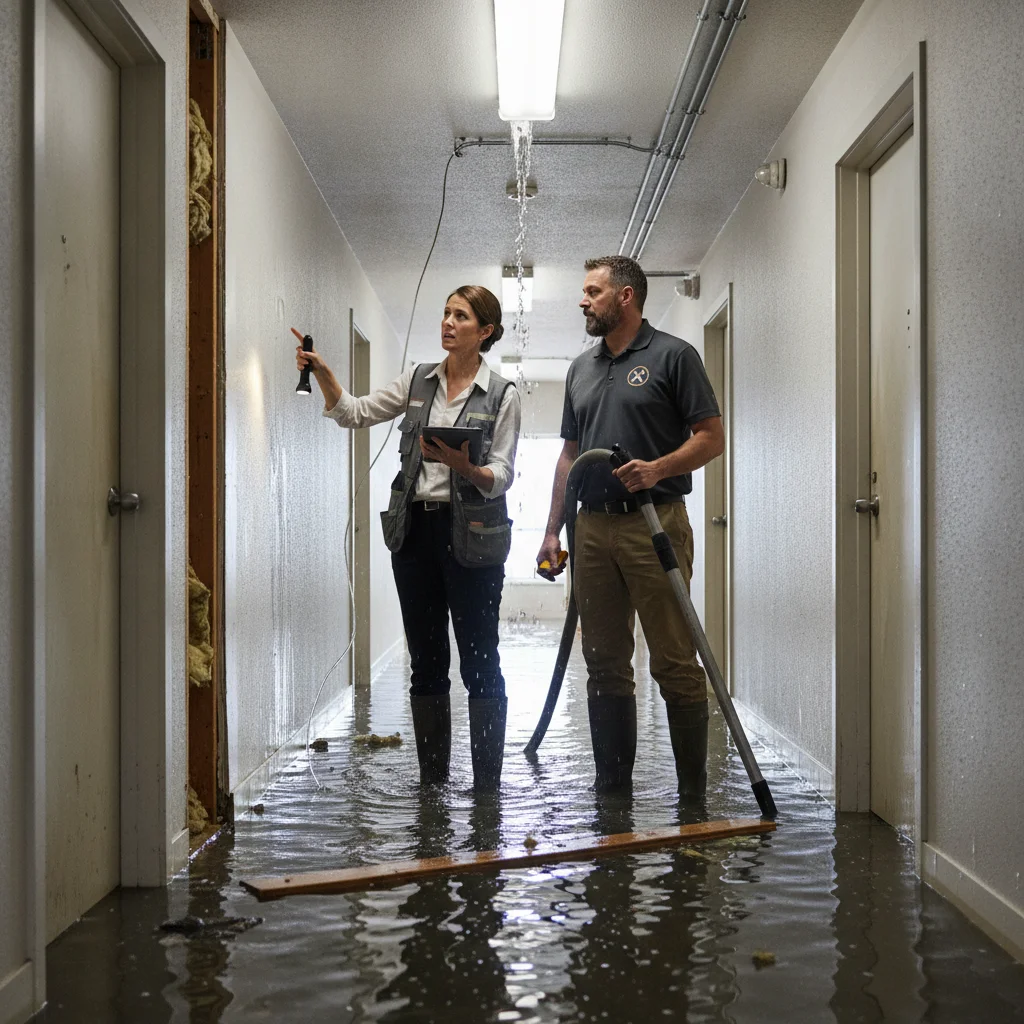
San Diego property managers need a clear chain of action after a pipe bursts. Confirm resident safety, follow the building’s source-control procedure, document the affected area, and contact a licensed independent restoration pro. Keep residents, ownership, the insurer, and counsel informed with confirmed facts.
The first calls a manager makes when a unit floods
Start with the person reporting the water. Confirm the property address, unit, floor, occupied rooms, and visible source. Ask whether water is still flowing and which areas are affected. Record what the person actually sees without asking them to diagnose the problem.
Have onsite staff follow the property’s established emergency plan. Source control may involve a building shutoff or a plumbing professional. Don’t direct a resident into an area they consider unsafe. If the event exceeds the internal plan, follow that plan’s escalation instructions.
Contact the property’s plumbing resource for the failed pipe. Contact a licensed restoration professional to assess the affected materials and document the proposed work. These are separate assignments, so confirm who is responsible for each one. Our burst-pipe cleanup referral service can match you with a licensed independent local restoration pro.
Notify ownership and the insurer according to their current instructions. Include counsel when entry, resident displacement, responsibility, or lease interpretation becomes an issue. Those contacts can identify applicable duties. The restoration vendor shouldn’t be asked to make legal or coverage decisions.
A San Diego County portfolio may span central San Diego, Chula Vista, East County, inland North County, and coastal North County. Keep shutoff locations, gate instructions, and onsite contacts specific to each property. Don’t promise that anyone is en route until the independent vendor confirms it. For a broader incident checklist, see our San Diego burst-pipe emergency guide.
How to document the loss before anyone starts cleanup
Create one incident record before details scatter across texts and work orders. Note when the report arrived, who reported it, and what they described. Add the time of source control only after someone confirms it. Keep observations separate from guesses about cause or responsibility.
Photograph each affected room when conditions allow. Start with wide views showing the room and water path. Then capture closer images of floors, walls, ceilings, cabinets, belongings, and the suspected source. Include unit numbers or room labels in the file names. A short video can preserve the overall layout.
Save the resident’s original message, any maintenance request, onsite notes, and vendor communications. Record who approved source control, restoration access, and changes to the work. Don’t rearrange belongings merely to improve a photograph. Documentation shouldn’t delay urgent action under the property’s emergency plan.
Give the independent restoration pro the property details and available records. Ask for a written plan identifying inspected areas, proposed work, equipment placement, monitoring, and any later repair recommendations. The plan should identify the protocol or standard the professional intends to follow.
Keep the vendor’s findings in the vendor’s own words. Don’t turn “inspection pending” into “no damage found.” Coverage and documentation requests differ by policy and loss. Confirm the current requirements with the property’s insurer before discarding affected materials or closing the record.
Why neighbouring units get checked even when they look dry
A dry-looking doorway doesn’t establish the boundary of the affected area. The important question is whether the pipe location and observed water path point toward another unit, ceiling, corridor, or shared building space. A licensed restoration pro should decide which areas need inspection.
Give the pro an accurate building layout when one is available. Identify the failed pipe’s location, the rooms above and below, shared walls, utility spaces, and nearby common areas. The inspection map should follow the actual property, not a generic San Diego apartment layout.
Ask the professional to record every area inspected, the inspection method, and the finding. Don’t mark a neighboring unit “dry” only because staff saw no stain. If the professional decides that no additional work is needed there, retain that written finding in the incident file.
Access must be coordinated with the lease, current instructions from counsel, and any applicable rule. We couldn’t confirm one property-entry notice period that applies to every burst-pipe situation. Ask California counsel which state or local authority controls the property, then verify the current requirement with that authority.
Keep the access request factual. State what area needs inspection, who will attend, and how the resident can coordinate. Our rental water damage guide can help frame questions, but it doesn’t replace property-specific legal advice.
How communication with residents runs during drying
Treat resident communication as an event log, not a promise. Send an initial notice with the confirmed source status, affected area, and current access plan. Follow with updates when the independent professional changes the work plan or provides new instructions.
Each message should name the property, affected unit or common area, sender, and update time. Separate confirmed information from pending items. “The restoration assessment is pending” is clearer than guessing when drying or repairs will finish.
If equipment is placed, pass along the professional’s written instructions. Don’t tell residents to move, adjust, or unplug equipment unless the professional has authorized it. Direct equipment questions to the independent company performing the work.
Avoid promising an end date, insurance coverage, rent adjustment, or a legal outcome. The restoration pro documents physical conditions and completed work. The insurer addresses coverage under the policy. Counsel advises management about lease terms, access, resident requests, and current California requirements.
Some San Diego County portfolios communicate in both English and Spanish. Give residents the same practical information in their preferred language. Include the property name, unit, access details, vendor identity, and next update point in each version.
Track when each notice was sent and how it was delivered. Save replies and access confirmations with the incident file. Limit messages to the recipient’s property and unit. Don’t share another resident’s personal circumstances when explaining work in a neighboring space.
What to keep on file after the job closes
The closeout file should let another manager reconstruct the event without guessing. Keep the initial report, incident timeline, source-control record, affected-unit list, photographs, videos, access notes, and resident communications together.
Add vendor scopes, approvals, inspection findings, monitoring records, equipment records, invoices, and the final written summary. Include relevant communications from ownership, the insurer, and counsel. Keep each document in its original form when possible, then use a consistent naming system for retrieval.
Record the independent contractor’s legal business name and the date its license status was checked. Use the official CSLB license check rather than relying only on advertising or a verbal statement. Restore Pro SD is a referral service and doesn’t hold a trade license.
Ask the restoration professional’s final summary to identify inspected areas, work performed, remaining concerns, and recommended follow-up. Don’t close an adjoining unit based only on appearance. Retain the professional’s written finding supporting that decision.
We couldn’t confirm a universal file-retention period for every California rental property and loss. Ask the property’s insurer and California counsel what applies. Record the authority, policy provision, or instruction they identify and the date you checked it.
After closeout, update the property’s internal plan with verified details. That may include the correct shutoff location, gate instructions, onsite contact, and preferred communication method. Don’t add assumed job times, coverage outcomes, or vendor capabilities.
When to call us
When a burst pipe affects building materials, adjoining spaces, or several units, a licensed Water Damage Restoration pro should assess the scope and document the plan. Restore Pro SD is a referral service, and the customer contracts with the independent professional directly. Call us at (858) 400-4586. The line plays a recording-consent notice, then takes a recorded and transcribed message. It isn’t answered live and doesn’t forward.