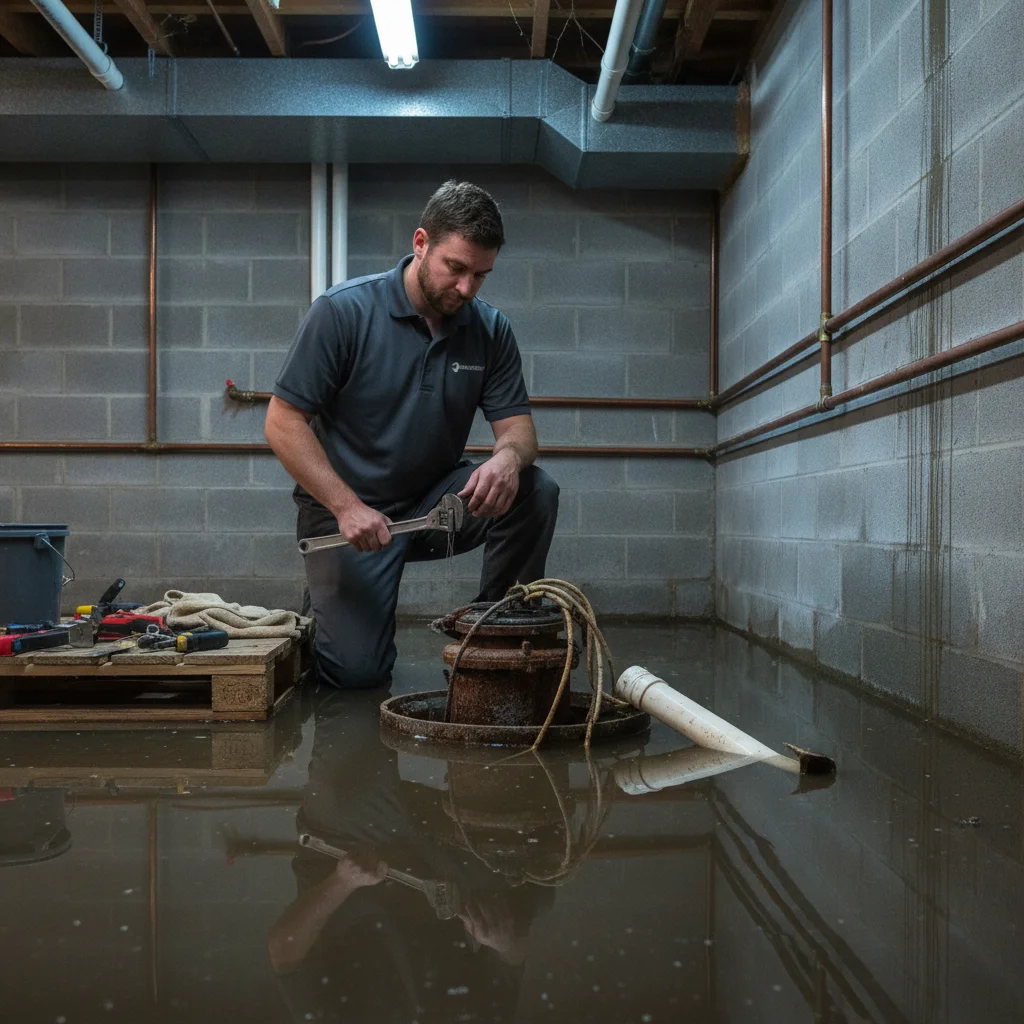
A failed sump pump can leave water across the basement floor. For a San Diego County property, note whether it’s in coastal North County, inland North County, central San Diego, East County, or the South Bay when you request help. Even if the pump restarts, you still need to identify what got wet and plan the cleanup before repairs begin.
Stop the inflow and document the affected area
Start by identifying whether water is still entering the basement. Check only the controls and equipment you already understand. If a step requires entering water or handling unfamiliar electrical equipment, wait for qualified help. Don’t guess at a shutoff method.
The approved site ledger doesn’t contain a verified, countywide shutoff procedure for sump pump failures. Properties and pump systems differ. Follow the pump manufacturer’s current instructions or directions from a qualified professional.
Once you’re in a position to observe the area, create a simple record. Photograph the visible water from several angles. Include the sump pit, pump, nearby walls, flooring, stored belongings, stairs, and doorways. Capture wide views before taking close photos.
Write down what you noticed when the problem was discovered:
- Whether the pump was silent, running, or cycling
- Whether water was still entering the pit
- The highest visible water line
- Which rooms and materials appeared wet
- Any unusual color, odor, or debris
- Which controls were changed after discovery
Don’t discard damaged parts before the pump contractor, restoration professional, or insurer reviews them. Keeping the failed component may help preserve a clear record of what happened.
Pump repair and water cleanup are separate decisions. A pump technician can address the equipment. A restoration professional can inspect the basement and define the cleanup scope. Our basement flood cleanup service connects San Diego County property owners with licensed, independent local pros.
Why standing water can remain after a restart
A restarted sump pump answers one narrow question: whether the pump is moving water now. It doesn’t show where earlier water traveled or which materials were affected.
Ask the restoration professional to inspect every visible low area. That review can include spaces beneath stored items, along wall edges, near stairs, and inside adjoining rooms. The professional should also determine whether the pump can reach all remaining water.
Watch the area without treating pump noise as proof of cleanup. Note whether the visible water line changes. Record whether water remains away from the sump pit. If the pump stops again, document its condition instead of repeatedly changing controls without guidance.
The source also matters. Tell the professional whether the water appeared during rain, after a plumbing problem, or without an obvious event. Don’t label the source if you can’t confirm it. Simply describe what you saw and let the appropriate professional investigate.
Visible water is only one part of the decision. Ask whether the restoration scope includes spaces and materials outside the pump’s immediate reach. Our San Diego basement flood cleanup guide provides a broader checklist for organizing that conversation.
If you need public information about flood preparation and recovery, review FEMA’s flood resources. Follow current instructions from the relevant authority instead of relying on an unverified local rule.
What extraction handles that a sump pump can’t
A sump pump and professional extraction serve different roles. The pump moves water reaching its intake. Restoration extraction addresses water found across the affected area.
Ask the restoration professional to explain exactly what “extraction” includes in the proposed scope. The answer should identify each room, surface, and material they plan to address. It should also distinguish water removal from later drying, cleaning, removal, or repair work.
Walk through the basement with the professional when conditions allow. Point out every place where you saw water. Mention anything that was moved before the inspection. A cabinet, storage bin, rug, or appliance can hide part of the original water line.
Useful scope questions include:
- Which visible areas need extraction?
- How will enclosed or hard-to-reach spaces be evaluated?
- Which belongings must be moved before work starts?
- What documentation will show the inspected area?
- Is pump repair included, excluded, or handled by someone else?
- Who will confirm that extraction is complete?
Don’t assume every contractor uses the same wording. Request a written scope that defines each task. It should name the contractor performing the work and explain what happens before repairs begin.
Restore Pro SD doesn’t perform extraction, set prices, or provide warranties. We match property owners with licensed, independent water damage professionals. The customer contracts with and pays the selected professional directly.
How pros map moisture beyond the basement floor
After visible water is removed, ask the independent restoration professional for a documented moisture inspection. The purpose is to identify which areas were checked before repair decisions begin.
Request a room-by-room record. It should distinguish visibly affected areas from locations checked because they border the flooded space. Ask the professional to explain the tools, reference points, and readings used during the inspection. Don’t rely on a verbal statement that the basement “looks dry.”
The inspection conversation can cover:
- Floor surfaces and their edges
- Baseboards and the lower portions of walls
- Wall corners and finished enclosures
- Built-in cabinets and storage areas
- Stair landings and nearby rooms
- Materials beneath removable floor coverings
- Openings created for inspection, if any
These are inspection prompts, not a finding that every listed material is wet. The professional must determine the actual conditions at your property.
Ask for a simple map or written list showing where readings were taken. Each entry should identify the room and material. If the professional recommends removal, request an explanation tied to the observed condition. If an area couldn’t be reached, that limitation should appear in the record.
For current information about moisture and mold, consult the EPA’s mold guidance. The site’s approved claims ledger doesn’t establish a fixed drying period or universal moisture target. Ask the selected professional which criteria will be used and how completion will be documented.
What to review before repairs begin
Don’t let repair work bury unanswered cleanup questions. Review the extraction scope, moisture record, proposed removals, and repair plan together. Each document should identify the contractor responsible for that work.
Confirm whether sump pump repair is part of the agreement. If another contractor will handle it, establish where one scope ends and the next begins. This helps keep pump work, restoration, and reconstruction from becoming one unclear project.
Before selecting a contractor, use the CSLB license check. Confirm the current license record using the contractor’s exact business name and information. Restore Pro SD is a referral service and doesn’t hold a contractor license.
Review these items with the independent professional:
- The rooms and materials included in the cleanup
- The basis for any recommended removal
- The method used to document moisture
- Conditions that must be met before repairs start
- Tasks excluded from the written scope
- Pricing, payment terms, and change-order procedures
- Any warranty offered by the contractor
No verified market price or fixed job duration appears in the approved claims ledger for this situation. Get those terms directly from the professional before agreeing to work. Ask how added damage, hidden areas, or pump-related work would change the written scope.
Keep copies of photographs, readings, agreements, invoices, and contractor information. If an insurer is involved, ask what documentation it wants before cleanup evidence is covered or discarded. Don’t assume a contractor’s paperwork automatically meets an insurer’s requirements.
When to call us
This kind of cleanup needs a licensed Water Damage Restoration pro when water remains, materials are still damp, or the affected area needs inspection before repairs. Call us at (858) 400-4586 and we’ll connect you with a licensed local restoration pro.