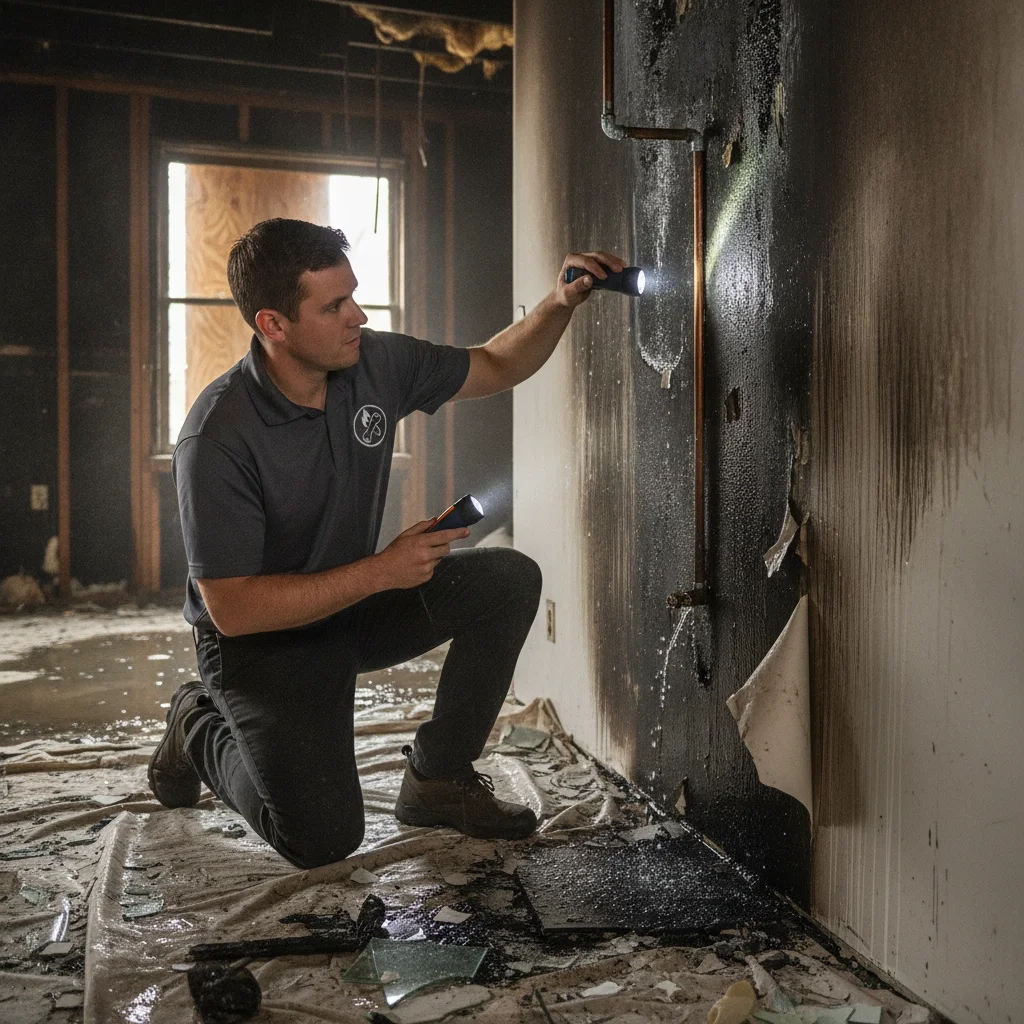
The flames may be out, but soaked walls and floors remain. Fire and water damage restoration starts by tracing that water, separating affected materials, and building a drying plan around the fire conditions.
Why firefighting water keeps causing damage after the fire is out
Water used during firefighting doesn’t stay in the burned room. It can pass through open wall cavities, damaged ceilings, floor penetrations, and gaps around fixtures. A dry-looking hallway may still border a wet wall assembly. Water may also collect beneath flooring or inside cabinets.
Visible puddles are only one part of the problem. The restoration pro needs to follow the likely path from where water entered to where it settled. That means looking beyond the darkest soot marks or most obvious fire damage.
Fire openings can also change how water moves through the property. Missing drywall, broken windows, opened ceilings, and damaged doors may expose areas that wouldn’t get wet during a typical plumbing leak. The assessment must account for those new pathways.
Don’t enter an area based only on appearance. Restore Pro SD can’t determine whether a fire-damaged property is safe to enter. Ask the fire department about access, and follow your insurer’s instructions before disturbing damaged materials.
Once access is permitted, avoid moving soaked contents without direction from the restoration pro or insurer. Moving items can hide the original water path and complicate documentation. It can also spread damp soot into rooms that weren’t part of the initial loss.
Our fire and water damage restoration referral service connects San Diego County property owners with licensed, independent local pros. The matched professional evaluates the property and performs the physical restoration work.
What gets assessed first when both fire and water are involved
The first assessment needs two connected views. One follows the water. The other identifies how the fire changed each affected area.
The pro may begin by dividing the property into practical zones. These can include visibly burned areas, wet areas without obvious burning, and nearby spaces that appear unaffected. This keeps the scope tied to observed conditions instead of treating every room the same.
Moisture readings help define where drying may be needed. The pro may check exposed surfaces, adjoining rooms, flooring edges, cabinets, and accessible wall or ceiling areas. The goal is to create a documented moisture map, not rely on touch alone.
The assessment should also distinguish building materials from personal contents. Drywall, framing, insulation, flooring, furniture, and stored items won’t always receive the same recommendation. Some materials may be candidates for drying or cleaning. Others may need removal after the pro evaluates their condition.
Fire-related questions must stay with the right authority. Ask the fire department about access restrictions. Ask your insurer how it wants the loss documented. Direct electrical, structural, or utility concerns to the appropriate qualified professional.
The restoration scope should explain what was observed and what happens next. It should identify areas needing more access, materials proposed for removal, and spaces included in the drying plan. If a condition hasn’t been confirmed, ask the pro to mark it as pending instead of presenting it as settled.
For a wider view of the combined service, read our guide to fire and water damage restoration in San Diego. This article stays focused on the water left after firefighting.
How soot and moisture complicate each other
A wet fire scene isn’t the same as an ordinary wet room. Water can move loose soot and residue across surfaces, into joints, and toward lower areas. That movement can make the visible burn boundary an unreliable guide to the water damage.
The pro should assess moisture and residue together. A material that could normally be dried may need a different decision when its surface also carries heavy fire residue. Cleaning, removal, and drying choices need to fit the actual material and its condition.
Avoid wiping soot from wet walls before the assessment. Wiping may smear residue and obscure where water traveled. It can also change the condition your insurer or contractor needs to document. Leave sampling, cleaning tests, and material decisions to the professionals handling the loss.
Odor shouldn’t be used as the only measure of progress. A room may smell strongly while holding little measurable moisture. Another area may smell mild but contain water behind a finish. Ask the restoration pro to explain moisture findings separately from residue and odor findings.
Photographs can help preserve the original scene. Capture broad room views and closer images only if the fire department has permitted access. Follow the insurer’s directions on what to document and retain.
Moisture also raises questions about later mold growth. Restore Pro SD can’t confirm whether a specific property has mold from a description alone. The EPA’s mold and moisture guidance offers general background, while the matched professional can assess conditions at the property.
Why the drying plan changes on a fire job
A standard leak plan can’t simply be copied onto a fire loss. The pro must account for opened assemblies, fire residue, damaged finishes, removed materials, and areas awaiting another professional’s decision.
The order of work matters. Water may need removal from accessible surfaces, but some wet areas can’t be reached until the scope addresses damaged coverings. Drying equipment placement may also change as materials are removed or new cavities become accessible.
The pro should explain which spaces belong to the active drying area. That plan may include barriers or other controls chosen for the property’s conditions. Ask what separates the work area from rooms where occupants or contents remain.
Drying goals should be tied to the materials being addressed. Different walls, floors, and structural components may begin with different readings. A single room reading doesn’t describe every layer within that room.
Monitoring gives the pro a way to adjust the plan. Ask what will be measured, where readings will be taken, and how changes will be recorded. Written logs can help show whether a material is progressing toward the project’s chosen drying goal.
Some decisions fall outside drying. A wet, charred structural component may need evaluation by another qualified professional. A restoration pro shouldn’t treat a moisture reading as a structural clearance. Likewise, Restore Pro SD doesn’t make structural, electrical, or re-entry determinations.
Our explainer on what structural drying means covers moisture mapping, equipment planning, and documentation in more detail. On a fire job, those steps must fit the broader condition of the property.
What to ask the matched restoration pro
Good questions make the scope easier to compare and understand. Start by confirming who will contract with you and who will perform the work. Restore Pro SD makes the referral, while you contract with and pay the independent professional directly.
Ask these questions before authorizing the proposed restoration scope:
- Which rooms and building materials are included in your assessment?
- How did you trace water beyond the visible fire area?
- What moisture readings will you document during the project?
- Which materials do you propose drying, cleaning, or removing?
- What observed condition supports each removal recommendation?
- How will you separate water work from soot-related cleaning?
- Are any areas waiting on fire department, insurer, utility, or structural direction?
- Who will handle contents affected by both moisture and soot?
- How will added findings or scope changes be documented?
- What parts of the work will any subcontractors perform?
- What voluntary restoration certifications does the contractor hold, if any?
- What warranty terms, if any, appear in the contractor’s written agreement?
Verify the contractor’s information through the CSLB license check. Restore Pro SD doesn’t hold a trade license, perform restoration work, set contractor prices, or provide warranties.
Ask for plain explanations when the scope uses technical labels. You should be able to connect each proposed step to a room, material, or documented condition. If a contractor can’t confirm a condition yet, the scope should say what further assessment is needed.
Also ask how the contractor plans to coordinate with your insurer. The insurer decides its own coverage and documentation requirements. The restoration contractor determines its proposed work, while you decide what to authorize under your agreement.
When to call us
Water left inside walls, floors, or other building assemblies after a fire calls for assessment by a licensed Water Damage Restoration pro. Call us at (858) 400-4586. The line plays a recording-consent notice, then takes a recorded and transcribed message. It isn’t answered live and doesn’t forward.