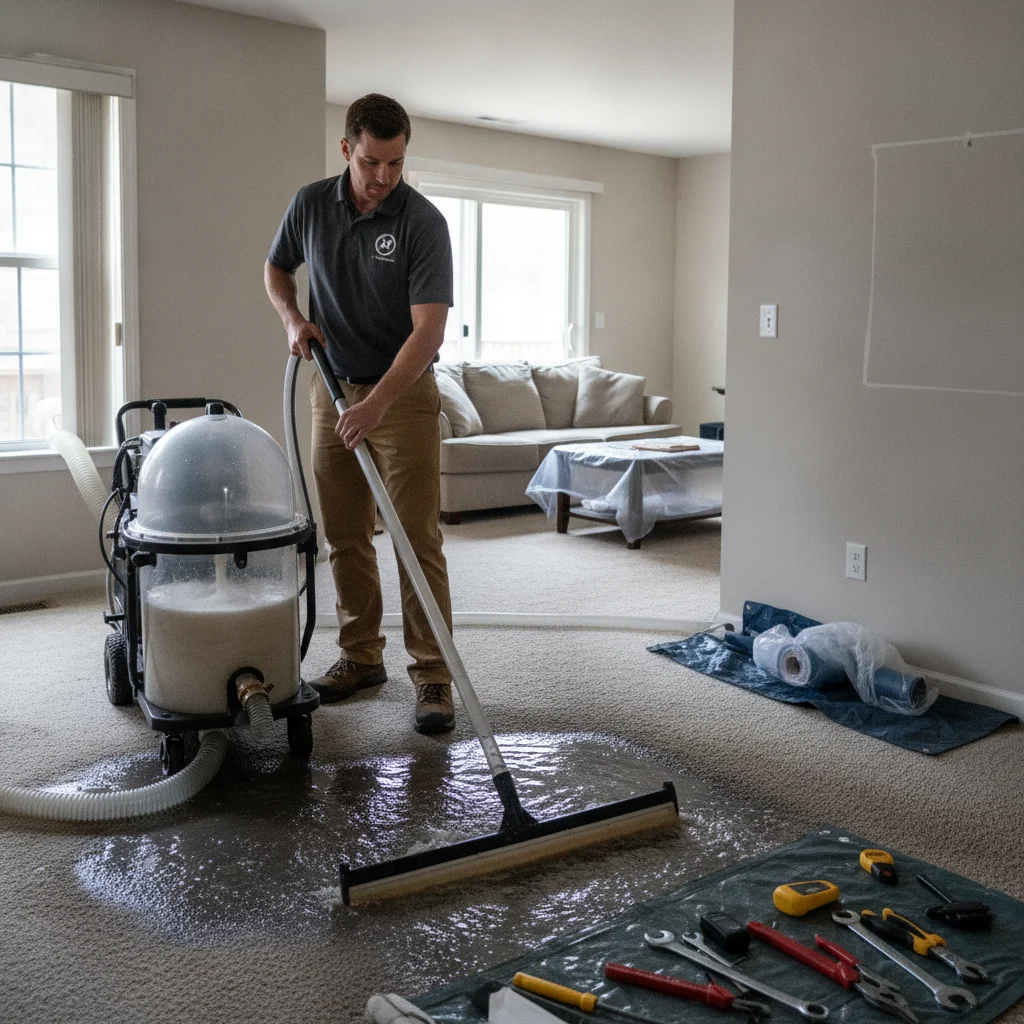
For water extraction in Mira Mesa, condo and townhome owners should plan for shared walls, neighboring access, and association notices. Contact a licensed restoration pro, then follow the notice steps in your own association documents. No specific Mira Mesa HOA duty, insurance split, or access rule could be confirmed in the approved claims ledger.
Why a shared wall changes who needs to be told
Water beside a shared wall creates a coordination problem. Your unit may be the first visible location, but that doesn’t settle where the water started or which areas need inspection.
Start with the contacts named in your association documents. That may include an association representative, property manager, or another designated contact. The documents should also identify the process your community expects owners to follow.
Tell the appropriate contact what you can observe. Include where you found water, when you found it, and whether the source is known. Note any visible change near a shared wall, floor, or ceiling. Keep the description factual and avoid assigning blame.
Notify an affected neighbor through the method your community allows. A short message can explain that a licensed restoration pro may need access to check an adjoining area. Don’t claim that the neighboring unit caused the problem unless an appropriate professional has confirmed the source.
Restore Pro SD doesn’t decide responsibility between owners and an association. We’re a referral service that connects customers with licensed, independent water damage professionals. The customer contracts with and pays the professional directly.
Ask each involved contact who can approve inspection, extraction, equipment placement, and any opening of building materials. Getting those answers early can prevent conflicting instructions later. Your association documents and insurer must determine duties that aren’t confirmed in the approved claims ledger.
Getting access to neighbouring units
Access should be arranged through the resident or the person identified in the association documents. Don’t assume that an owner, tenant, manager, or board member can authorize every part of the work.
If the restoration pro requests neighboring access, ask for a clear explanation. The request should identify the area they want to inspect and the reason access matters. Send that information to the resident and association contact without changing its meaning.
Keep a written record of each request. Include when it was sent, who received it, and any reply. If someone approves access verbally, ask them to confirm the approval in writing. The same approach helps when access is limited to certain rooms or conditions.
A neighboring resident may be unavailable. Your association may also have its own process for contacting occupants or arranging entry. Check the current governing documents rather than relying on something a former manager or neighbor remembers.
If access remains unresolved, tell the restoration pro, association contact, and insurer. Ask which document or procedure controls the next step. No Mira Mesa-specific right of entry or access timeline could be confirmed from the approved claims ledger.
The licensed pro can then explain what work is possible within the authorized areas. They can also document any locations they couldn’t reach. That creates a clearer record without pretending that the referral service, contractor, or homeowner can settle an access dispute.
How an HOA usually fits into the sequence
An HOA may become a communication point, but its exact role isn’t universal. Your community’s documents must determine what the association handles and what remains with the unit owner.
Send the first notice in the form required by those documents. State the unit, visible location, discovery time, and known source, if confirmed. Mention any neighboring area that may need authorized access. Avoid conclusions about fault, ownership, or insurance coverage.
Ask the association contact for the current reporting procedure. You can also ask who approves work involving shared areas or building components. If the independent pro recommends opening a wall, ceiling, or floor, find out whether written authorization is required before that work begins.
The association may want information from the restoration professional. Ask what it needs, then request those specific records from the pro. Don’t promise that the pro’s scope will satisfy the association or an insurer. Each party may request different information.
Contact your insurer separately. Don’t assume the association’s policy, your policy, or another owner’s policy will cover a particular part of the loss. Coverage and payment responsibility weren’t confirmed for this situation. Your insurer and association documents must answer those questions.
For a broader look at the service, read our guide to emergency water extraction across San Diego. It can help you prepare questions while the Mira Mesa property contacts review their own procedures.
What extraction looks like in a stacked building
The licensed restoration pro should explain the proposed scope before physical work begins. In attached housing, that discussion should cover each authorized unit and any shared area involved.
Ask where the pro plans to check for moisture. Confirm which walls, floors, ceilings, cabinets, or finishes are included in the scope. If an area can’t be accessed, ask the pro to note that limitation in writing.
Equipment placement also needs coordination. Ask where machines, hoses, cords, and other items may be positioned. If the plan involves a hallway, stair, parking area, or another shared space, send the request to the association contact. Don’t assume the contractor’s work authorization covers shared property.
Separate the questions about removal and drying. Ask what standing water will be extracted, which materials will remain, and which areas need continued drying work. Request an explanation of how the pro will document conditions and later changes.
Our emergency water extraction service connects San Diego County customers with licensed, independent local professionals. Restore Pro SD doesn’t perform the extraction, place equipment, or control the work.
If drywall is affected, the choice isn’t yours to guess from appearance alone. Use the wet drywall repair or replace guide to prepare questions for the professional. Ask what conditions support the proposed treatment and whether another authorized area must be inspected first.
Before work expands, confirm who approved the added scope. Keep that approval with the pro’s written description. This matters when several units or association contacts are involved in one incident.
What records an owner should keep
Create one file for the incident. A digital folder works well if documents arrive by email, text, or an owner portal. Keep original copies instead of rewriting them from memory.
Save photos and videos of visible conditions. Note when you discovered the water and when you sent each notice. Keep messages from neighbors, the association contact, property manager, insurer, and restoration professional.
Store the current association documents you relied on. Include any written instruction about access, shared areas, approved work, or required notices. If someone gives a decision by phone, send a short follow-up asking them to confirm your understanding.
Keep the independent pro’s name, contract, license information, scope, invoices, and payment records. Restore Pro SD is only the matching service. The customer contracts with and pays the independent professional directly.
You can check a contractor’s record through the CSLB license check. Save the information you reviewed with the rest of the project file.
Request copies of any condition notes, moisture records, equipment logs, access limitations, and completion documents the pro provides. Don’t create missing readings or add details that the professional didn’t record.
For insurance communication, retain the claim reference and every document your insurer sends. Keep questions about coverage separate from questions about physical work. Neither the contractor nor Restore Pro SD can decide what your policy covers.
No fixed Mira Mesa retention period was confirmed in the approved claims ledger. Ask your insurer and association how long they want records kept. If their answers differ, retain the file according to the longer instruction they provide.
When to call us
A Mira Mesa condo or townhome loss needs a licensed Water Damage Restoration pro when you need professional extraction and an assessment of the affected areas. Call us at (858) 400-4586. The line plays a recording-consent notice, then takes a recorded and transcribed message. It isn’t answered live and doesn’t forward.