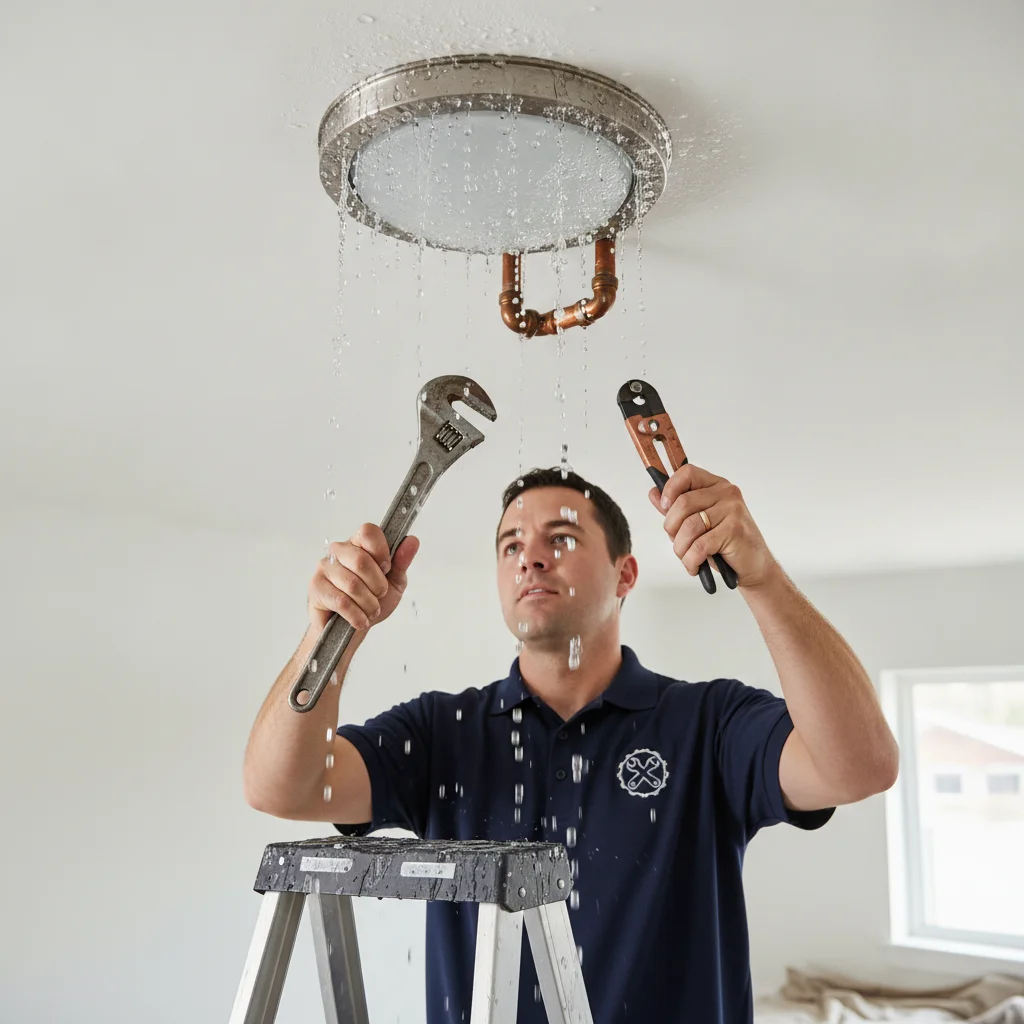
Seeing water collect at a ceiling light creates two immediate concerns: electrical access and wet building materials. The approved claims ledger doesn’t provide a verified do-it-yourself shutdown or approach procedure. Contact a qualified electrician or utility for situation-specific direction, and ask a licensed restoration pro to assess the water damage.

Water droplets around a ceiling light fixture with the surrounding room kept clear

Keep clear of the affected ceiling area

This page can’t define a safe distance from the fixture. It also can’t confirm whether a wall switch, breaker, or electrical service should be operated. Those instructions aren’t documented in the approved claims ledger.

A qualified electrician or utility must give that guidance for your situation. Describe the visible water, its location, and whether it appears near other electrical components. Follow the boundaries and access instructions that qualified party provides.

Don’t rely on a generic shutdown sequence from an article. The right action can depend on conditions that aren’t visible from the room. Restore Pro SD doesn’t provide electrical services or electrical safety instructions.

From a viewing point approved by the electrician or utility, note what you can see without testing anything. Record the room, fixture location, and visible path of the water. Note whether the water is dripping, collecting around the fixture, or marking nearby ceiling material. If no qualified party has confirmed where you may stand, skip the inspection and photography.

This article also can’t confirm that a wet ceiling will remain stable. If you see a bowed or hanging area, read our separate guide about a sagging ceiling from water. That guide addresses the ceiling condition, but it doesn’t replace electrical direction for water coming through a ceiling light.

Identify the likely water source from a distance

The point where water appears doesn’t provide a verified diagnosis here. Restore Pro SD’s approved claims ledger contains no source-identification rule for a ceiling light water leak. A qualified professional must determine the origin at the property.

You can prepare a neutral timeline without approaching the fixture. Write down when the water was first noticed and what was happening beforehand. Note whether rain was falling, plumbing was being used, an appliance was running, or heating and cooling equipment was operating. These details are observations, not proof of the source.

Also record what lies above or beside the affected room, if you already know. It might be another room, an attic, a roof area, or a neighboring unit. Don’t open a ceiling or enter another space to investigate based on this article. Ask the appropriate professional what access is allowed.

For a San Diego County property, provide the exact city and property type when requesting a match. Mention whether the building is detached, attached, or part of a managed property. Restore Pro SD serves San Diego County and uses those details when connecting homeowners with independent local pros.

Avoid labeling the leak as a roof, plumbing, appliance, or heating and cooling problem before it is confirmed. Give each professional the observations and timeline instead. That keeps the conversation focused on what was seen rather than an unsupported diagnosis.

Document the fixture, ceiling, and nearby surfaces

Documentation should record conditions without requiring a closer inspection. Wait for a qualified electrician or utility to identify an acceptable viewing location. If that hasn’t happened, skip the photos.

From an approved location, take a wide photo showing the fixture and surrounding room. Use the camera’s zoom for a closer view. Capture visible water around the fixture, nearby ceiling marks, and any affected wall or floor surfaces that can be seen from the same location.

Write down the time each change was observed. Note whether dripping continued, slowed, or stopped while you watched from the approved area. Describe changes in plain terms. Don’t estimate the amount of water or claim that a material is dry.

Record whether the light was on or off when the problem was first noticed. This page can’t tell you to change the switch position or test the fixture. Document its existing state without operating it.

Keep the original images and a short written timeline together. Share them with the electrician and the independent restoration professional. Ask each person to separate confirmed findings from possible causes.

Photos don’t establish the full damage scope. They provide a record of visible conditions at specific moments. The restoration professional can explain what further assessment is proposed once electrical access and site conditions have been addressed.

An independent restoration professional assessing ceiling moisture after electrical access is confirmed safe

What the restoration pro should assess

Ask the independent restoration professional to explain the proposed assessment before work begins. The approved claims ledger doesn’t provide a universal inspection checklist, drying method, or completion standard for this scenario. The plan must come from the professional evaluating the property.

Useful questions can make that plan easier to review:

  • Which ceiling, wall, insulation, flooring, or contents appear affected?
  • What evidence supports each finding?
  • Has the water source been confirmed, and by whom?
  • What access, removal, extraction, or drying steps are proposed?
  • How will conditions and progress be recorded?
  • What work belongs to an electrician or another trade?
  • Who will address the fixture and the finished ceiling surface?
  • What conditions will mark the restoration scope as complete?

Ask for the answers in writing. If a professional references a restoration standard, ask them to identify that standard and explain how it applies. Don’t assume a certification, credential, warranty, or license based on marketing language.

Restore Pro SD is a referral service. We match customers with licensed, independent local water damage professionals. We don’t perform restoration work, employ crews, own drying equipment, set prices, or provide warranties.

You should still verify the individual professional before signing an agreement. Use the CSLB license check to review the current information associated with the contractor. Ask the professional directly about credentials, insurance, proposed work, pricing, and any warranty they offer.

Coordinate electrical work and structural drying

Keep the electrical and restoration scopes distinct in your notes. Ask the electrician to explain what electrical work is proposed, what access is allowed, and what restrictions remain. Ask the restoration professional to explain the work proposed for wet materials.

Neither Restore Pro SD nor this article can choose a shutdown, disconnection, repair, or re-energizing sequence. The approved claims ledger doesn’t contain verified instructions for those decisions. A qualified electrician or utility must provide electrical direction for the specific property.

Ask both professionals to identify any dependency between their scopes. For example, ask what must be confirmed before an area can be assessed and what access each person needs. These are questions for the professionals, not conclusions supplied by this page.

Use one written timeline for calls, findings, access decisions, and proposed work. Record the name of the business responsible for each recommendation. Request clarification when two instructions appear inconsistent. Don’t resolve a disagreement by guessing.

If water has spread into ceiling materials, walls, flooring, or contents, our emergency water extraction page provides a way to request a match with a local restoration professional. Restore Pro SD can connect customers throughout San Diego County. The customer contracts with and pays the independent professional directly.

Before approving work, confirm the proposed scope with that professional. Ask who will coordinate with the electrician and who will document any changes. Clear ownership helps keep electrical decisions separate from water damage decisions.

When to call us

When water reaches a light fixture or nearby ceiling material, seek qualified electrical direction and a licensed Water Damage Restoration pro. Restore Pro SD makes the match and doesn’t perform the physical work. Call us at (858) 400-4586. The line plays a recording-consent notice, then takes a recorded and transcribed message. It isn’t answered live and doesn’t forward.