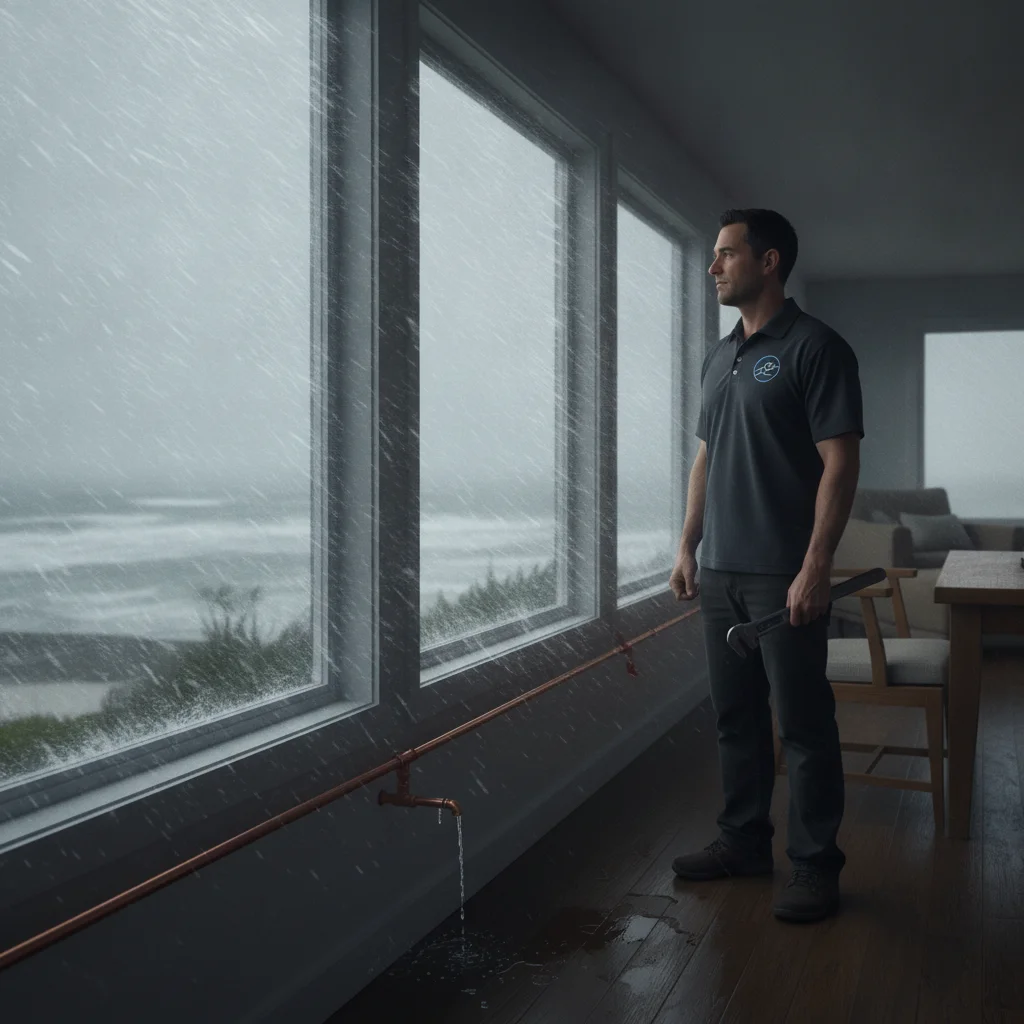
Rain pushed against a window or door can find a vulnerable opening. For wind-driven rain damage in Oceanside, document the affected wall. Protect it from further exposure when safe. Arrange a hidden-moisture check before repairs begin.

Wind-driven rain striking the exterior windows of a coastal North County home in Oceanside

How wind-driven rain enters exterior openings

Wind-driven entry differs from water falling straight onto a roof. Rain reaches the exterior from an angle and presses against openings. A vulnerable joint, gap, or damaged component may then admit water.

Start with the side of the house that took direct rain. Check the full exterior opening, not only the visible wet spot. Window frames, door assemblies, wall penetrations, vents, and nearby trim may all deserve inspection. The relevant opening may sit above or beside the first indoor stain.

Track what happened during the storm. Note which room became wet and when you noticed it. Record whether water appeared near a frame, sill, baseboard, ceiling edge, or floor. Photograph exterior and interior conditions before surfaces change. These observations help the independent professional follow a possible entry path.

A roof problem needs a different investigation. Our guide to roof leak water damage in San Diego covers water entering from overhead roof components. This Oceanside issue focuses on rain reaching exterior wall openings under wind.

Avoid treating interior paint or sealant as proof that the source is fixed. The visible mark identifies where water became noticeable. It doesn’t necessarily identify where the exterior opening failed. A licensed restoration professional can map the affected area. The exterior defect should also be evaluated by a qualified professional whose work covers that component.

Where moisture can hide after surfaces dry

A dry-looking wall can still require investigation. Surface appearance alone doesn’t show what happened behind trim, drywall, flooring, or an opening’s interior edges. Water may follow seams before it becomes visible elsewhere.

The matched restoration pro should begin with a non-destructive assessment where practical. Ask which materials were checked and why. Moisture readings should be tied to named locations, not described as a general impression. A useful record identifies the room, wall, material, and reading location.

Pay close attention to the route below the opening. Water noticed at a window may have reached nearby trim, wall finishes, insulation, flooring, or the floor-to-wall joint. The professional should determine the inspection scope from observed conditions. They should also explain whether limited access is needed to confirm what’s concealed.

Don’t rely on touch alone. A cool or dry surface doesn’t settle the condition of covered materials. Odor also isn’t a complete moisture assessment. If dampness, staining, swelling, or a musty smell remains, document it and show the professional.

For general information about moisture and mold, review the EPA’s mold guidance. That resource shouldn’t replace a property-specific assessment. It can help you prepare questions about moisture control and affected materials.

The goal is a clear moisture map. It should separate confirmed wet areas, checked dry areas, and places that couldn’t be assessed. That distinction helps prevent cosmetic repairs from hiding an unresolved condition.

Why coastal North County needs local context

“Oceanside” identifies the city, but it doesn’t explain a specific home’s exposure. The useful local context comes from the property, the storm direction, and the exact wall that became wet. A generic San Diego checklist can miss those details.

Record the side of the Oceanside home that received direct rain. Note nearby exterior openings and the rooms behind them. Include any prior patch, replacement, or repair you know about. Don’t guess about construction details that haven’t been verified.

This focus also separates the problem from broader storm coverage. Our article about atmospheric river storm damage in San Diego addresses a wider storm scenario. Wind-driven entry calls for a closer look at exterior openings and directional exposure.

No City of Oceanside permit rule, local repair price, or required opening detail was confirmed for this article. Ask the contractor which current authority controls the proposed exterior repair. Then confirm any permit or inspection requirement with that authority before work starts.

Local context shouldn’t become a shortcut for assumptions. Two Oceanside homes may show water in similar places for different reasons. The independent professional should connect each conclusion to observations from your property. That includes photos, readings, visible damage, and the storm history you provide.

This property-specific approach keeps the scope grounded. It also helps separate water restoration from the exterior trade work needed to stop entry.

An independent restoration professional using a moisture meter near a window after rain intrusion

What the restoration pro should document

Good documentation should explain the condition before materials are removed or repaired. Ask for a written record that another person can follow without relying on memory.

The initial record should identify the affected rooms and exterior openings. Photos should show both close details and wider room context. Moisture readings should include their locations and the materials checked. If an area couldn’t be inspected, the record should say that plainly.

The professional should describe the suspected water path as a working conclusion. They should separate direct observations from anything still requiring confirmation. For example, visible staining is an observation. The exact exterior failure may remain unconfirmed until the opening receives a closer evaluation.

Ask how the drying scope will be tracked. The documentation should identify affected materials, monitoring locations, and the basis used to decide when drying is complete. If removal is proposed, ask why that material can’t remain. If it can remain, ask how its condition will be checked.

Photos taken during the work can preserve details that later disappear. The final record should show what was addressed and what remains outside the restoration scope. That matters when an exterior contractor will handle the opening itself.

Before hiring, confirm the independent professional’s current details through the CSLB license-check tool. Restore Pro SD is a referral service, not the restoration contractor. You’ll contract with and pay the matched independent professional directly.

Clear records support better decisions. They also give the exterior repair professional a stronger starting point than a stain and a verbal description.

How to address the source before repairs

Interior drying and exterior source repair are connected, but they aren’t the same task. The restoration professional handles the affected materials within their agreed scope. A qualified professional must also identify and correct the opening that admitted rain.

Ask for a clear division of responsibility. The written scope should say who is evaluating the window, door, penetration, vent, trim, or adjoining exterior component. It should also distinguish temporary protection from the lasting repair.

Don’t begin finish repairs based only on improved appearance. Confirm what was inspected, what was dried, and what still needs correction. New paint, trim, or drywall shouldn’t become a substitute for addressing the entry point.

The proposed repair should match the confirmed source. If the source remains uncertain, request further evaluation instead of accepting a guess. Ask the contractor to show how the observed damage supports the recommended work.

Storm-related restoration may involve several connected decisions. Our storm damage restoration service explains how we match San Diego County homeowners with licensed, independent local professionals. The matched pro can assess the water-affected area and explain their restoration scope.

Keep the final documents together. Include storm photos, moisture records, work scopes, invoices, and exterior repair notes. If another storm later tests the opening, those records can help explain what was previously observed and addressed.

The work isn’t complete merely because the stain disappears. The moisture condition needs documentation, and the exterior source needs a defined resolution.

When to call us

Call when rain has entered an Oceanside home, moisture may be concealed, or affected materials need professional evaluation. Call us at (858) 400-4586. The line plays a recording-consent notice, then takes a recorded and transcribed message. It isn’t answered live and doesn’t forward.