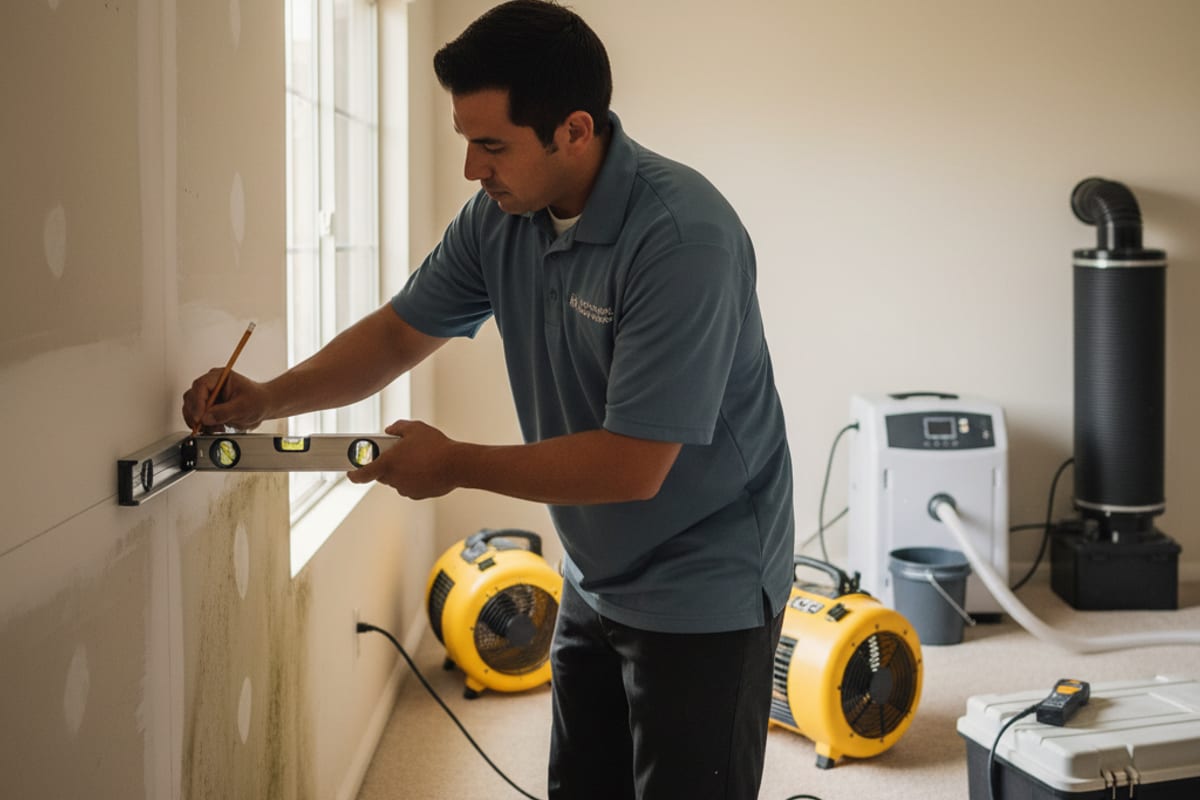
When to replace water-damaged drywall (vs. dry it in place)
Restore Pro SD does not assign IICRC categories or a flood-cut height as brand protocol. Ask the independent professional which drywall they will dry versus remove.
What you'll learn
- That sewage or other contaminated water is an EPA call-a-pro situation
- That a stain on the face can hide a wet cavity
- What to ask about moisture checks versus a printed brand chart
- That equipment brand names are not a Restore Pro SD method
Step by step
- Ask the independent professional what kind of water they think they are seeing. That is their call.
- Look for sagging, bubbling, or staining beyond the obvious wet area.
- Ask how they will check the drywall and the framing behind it.
- Do not treat a category number on this page as brand protocol. There is none.
- Ask how they will dry the cavity before new drywall if they remove any.
Drywall can feel dry on the face and still be wet in the cavity. Ask the independent professional how they will check that.
Rather have a pro handle it?
We connect you with a licensed independent water damage professional across San Diego County. Call any time.
Keep learning.
First hours after water damage
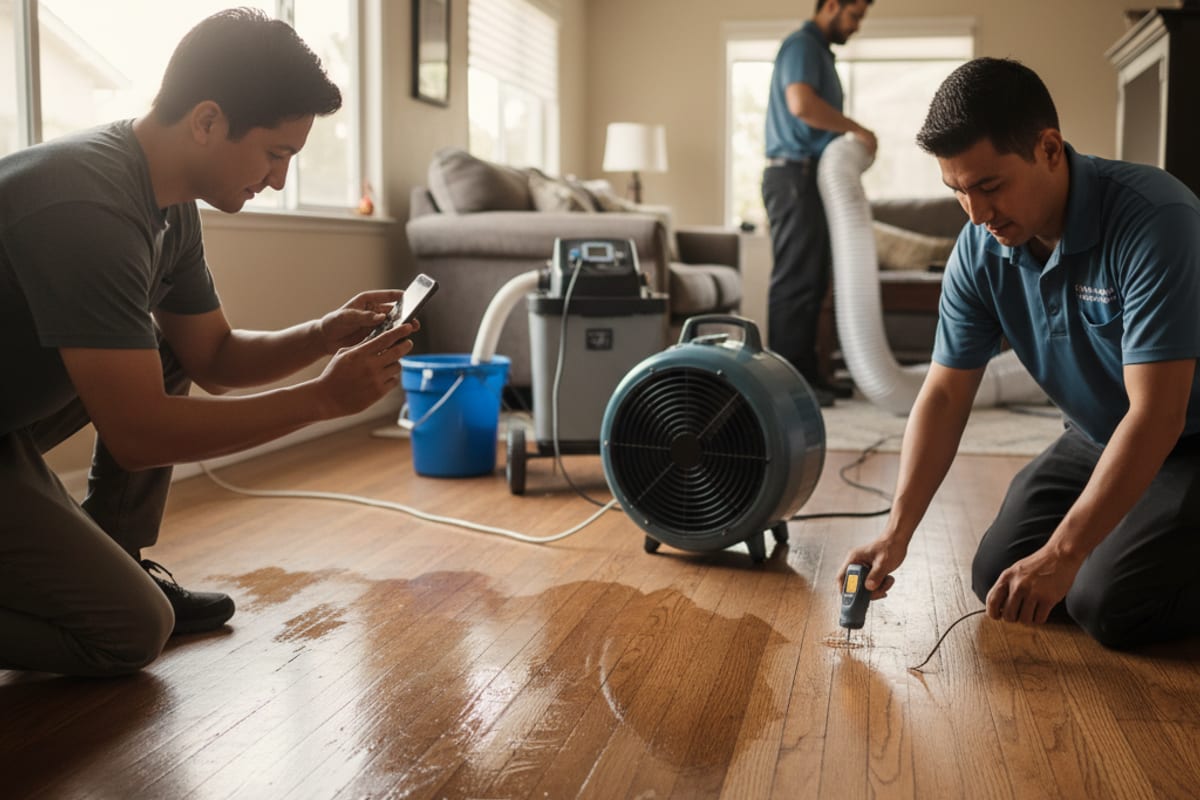
The first hours are about safety, source, and photos. Restore Pro SD does not send a brand crew. Leave a message and we match you with a licensed independent professional.
How to prevent mold after a water leak
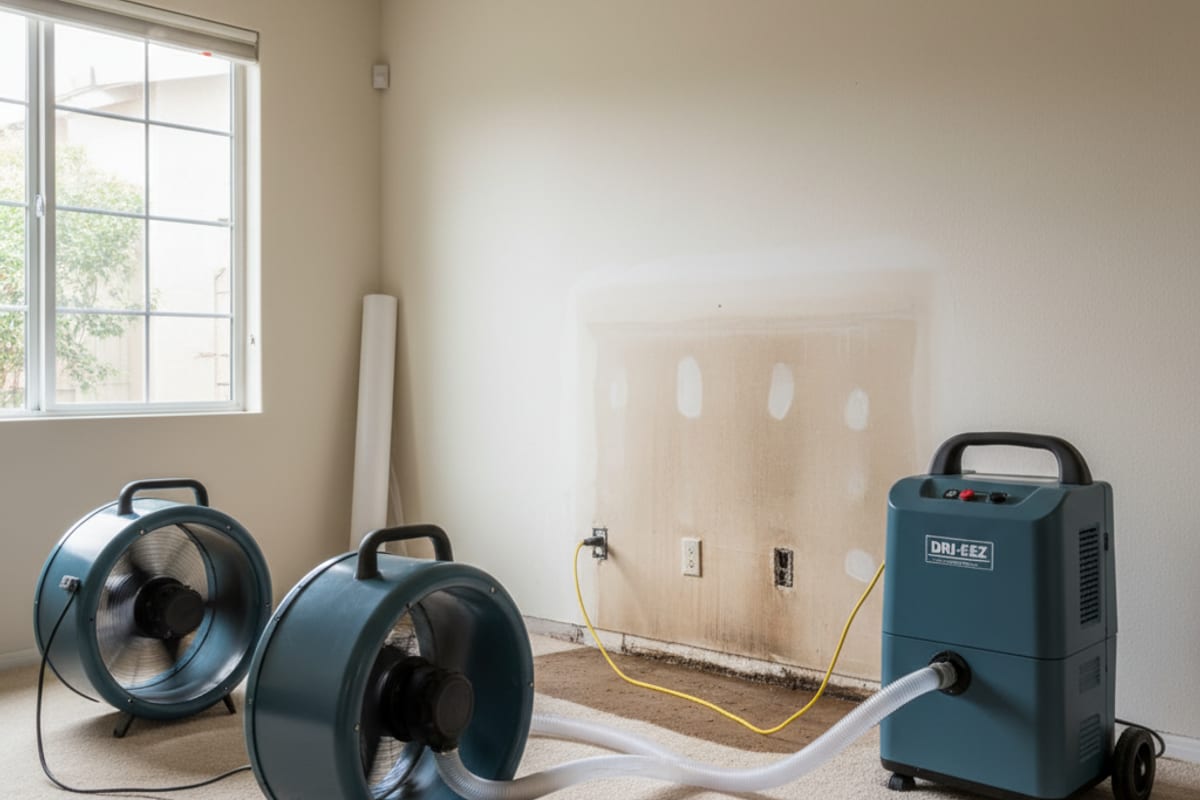
EPA guidance is to fix plumbing leaks and other water problems as soon as possible and dry items completely. Restore Pro SD does not set a mold clock.

How to file a water damage insurance claim
Restore Pro SD does not file the claim, quote deductibles, or bill your carrier. You photograph what you can, ask your carrier about your own policy, and contract with the independent professional.