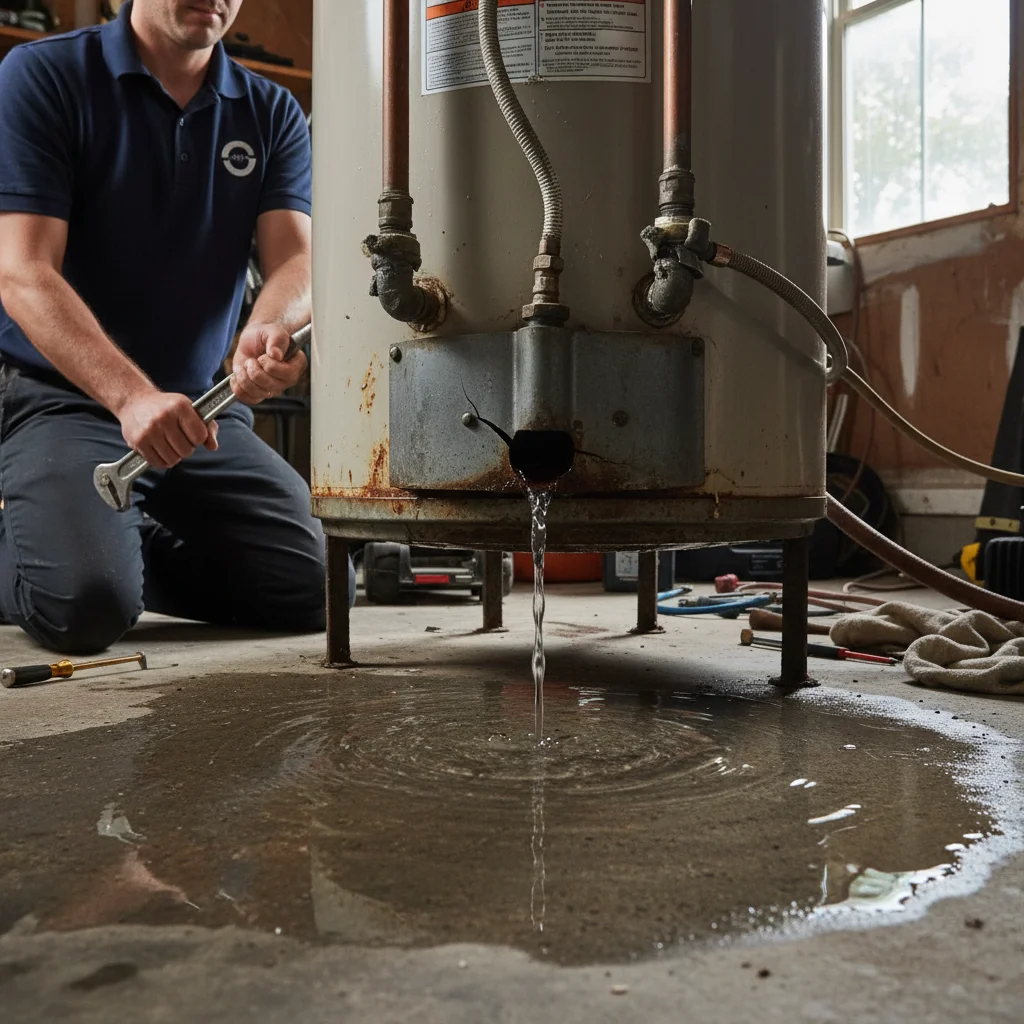
Discovering a leaking water heater in your San Diego home can be an alarming experience. Water pooling around the unit, damp carpets, or discolored drywall signal an urgent problem that needs immediate attention. Acting quickly is crucial to minimize the water damage and prevent more extensive issues, like mold growth, from taking hold.

A view from the floor looking up at the bottom of a leaking residential water he

Your first three steps: shut off water, power, and call for help

When you find your water heater leaking, panic is a natural reaction, but immediate, decisive action can save you significant time and money. Your first priority is to stop the flow of water and ensure safety.

First, shut off the water supply to the water heater. You’ll typically find a cold water shut-off valve on the pipe leading into the top of the heater. Turn it clockwise until the water stops flowing. If this valve is stuck or missing, locate your home’s main water shut-off valve and turn it off there. This will stop water flow to the entire house, but it’s essential for preventing further flooding.

Next, turn off the power to the unit. For electric water heaters, find the breaker in your electrical panel labeled for the water heater and switch it off. For gas water heaters, turn the gas valve to the “off” position. This step is critical for safety, preventing electrical hazards or gas leaks, especially if water has reached electrical components. Never wade into standing water to do this if you suspect electrical contact.

Finally, call for professional help. Once water and power are secure, it’s time to call a qualified plumber for the water heater repair itself, and crucially, a water damage restoration company like Restore Pro SD for the cleanup. We’re here to respond quickly to water emergencies across San Diego County. Our teams can assess the extent of the water damage, start the extraction process, and begin drying out your property to prevent secondary damage and mold. Addressing the leak promptly minimizes long-term structural issues and health risks.

How much damage can a small leak really cause?

It’s easy to underestimate the impact of what might seem like a small leak from your water heater. A slow drip can be deceptive, often causing more extensive and hidden damage over time than a sudden burst. Even a minor leak can saturate drywall, flooring, and subfloors, leading to significant structural compromise. Over days or weeks, this constant moisture weakens materials, warps wood, delaminates flooring, and compromises the integrity of your home’s foundation and framing.

Beyond visible destruction, stagnant water creates a prime environment for mold and mildew growth. In San Diego’s relatively mild climate, mold can begin to form within 24 to 48 hours of water exposure. This hidden menace can spread quickly, often out of sight behind walls or under floors, leading to musty odors, compromised air quality, and potential health issues for occupants. Hidden mold remediation is far more complex and costly than addressing initial water damage.

Furthermore, water carries contaminants. If the leak originates from the water heater’s tank, it’s generally clean water, but if it mixes with dust, debris, or other substances on the floor, it quickly becomes what we call “gray water.” This means it poses a health risk if not cleaned and dried properly. A professional assessment can determine the water’s category and the appropriate cleanup procedures. Neglecting even a minor leak allows these problems to escalate, transforming a small repair job into a major restoration project affecting multiple areas of your home.

The process for drying out floors, walls, and subfloors

Once the immediate leak is contained and any standing water is extracted, the critical next step is thoroughly drying out all affected areas. This isn’t just about mopping up what you see; it’s a science aimed at removing all hidden moisture to prevent long-term damage and mold. Our process for water damage restoration in San Diego homes begins with a comprehensive assessment using advanced moisture detection equipment, like thermal imaging cameras and hygrometers, to map out precisely where water has migrated, even behind walls or under flooring.

Next, we move to water extraction. Depending on the volume, we use powerful pumps and commercial-grade wet vacuums to remove as much standing water as possible quickly. For saturated carpets, our specialized emergency water extraction equipment can often save them, but heavily damaged materials might need removal.

Following extraction, we deploy industrial-strength air movers and dehumidifiers. These high-velocity fans create airflow across wet surfaces, accelerating evaporation, while powerful dehumidifiers pull moisture from the air, lowering humidity levels. We strategically place this equipment to create optimal drying conditions, ensuring consistent airflow and moisture removal from floors, walls, and subfloors. We continually monitor moisture levels in these materials to track progress and ensure everything is dried back to pre-damage standards. This meticulous approach is vital because even a slight amount of residual moisture can lead to serious problems down the line.

A moisture meter being used on the drywall next to a water heater closet to show

Checking for hidden mold after a water heater leak

A leaking water heater doesn’t just damage materials; it creates an ideal breeding ground for mold. Warm, damp environments are exactly what mold spores need to thrive, and they can begin to colonize within 24 to 48 hours of water exposure. This means that by the time you discover the leak, mold may already be quietly developing in unseen areas.

At Restore Pro SD, our professionals understand the urgency of mold prevention. After a water heater leak, we don’t just dry visible surfaces. We conduct thorough inspections using moisture meters and thermal cameras to identify hidden pockets of moisture behind walls, under flooring, and within structural cavities. These are common places where mold starts, often emitting a distinct musty odor before any visible signs appear.

If moisture readings indicate saturation in hidden areas, it might be necessary to carefully open up small sections of drywall or remove baseboards to allow for proper drying and inspection. Our technicians are trained to identify potential mold growth, assess its extent, and recommend the appropriate remediation steps. Addressing mold promptly is crucial for maintaining a healthy indoor environment and preventing further structural damage. Don’t assume a quick cleanup is enough; hidden mold can pose serious health risks and diminish your home’s integrity if left unaddressed.

Will your homeowner’s insurance cover this?

One of the first questions many San Diego homeowners ask after a water heater leak is, “Will my insurance cover this?” The answer largely depends on the specific circumstances of the leak and the details of your homeowner’s insurance policy. Most standard policies cover sudden and accidental water damage. This typically includes damage from a burst pipe or a sudden, unexpected leak from your water heater.

However, policies generally do not cover damage resulting from neglect, poor maintenance, or gradual leaks that occur over an extended period. For instance, if your water heater has been slowly dripping for months, causing rot and mold, your insurer might deny the claim, arguing it was preventable. The key distinction often lies between “sudden and accidental” versus “gradual and preventable.” Damage caused by mold might also have specific limitations or exclusions, especially if it’s considered secondary damage resulting from an unaddressed leak.

It’s essential to contact your insurance provider as soon as you discover the leak and before any significant cleanup or repairs begin, if possible. Document everything with photos and videos of the damage and the water heater itself. Our team at Restore Pro SD has extensive experience working with insurance companies in San Diego County. We can assist you by providing detailed documentation and estimates, helping to streamline the water damage insurance claim process to get you the coverage you deserve. Review your policy carefully or speak directly with your agent to understand your specific coverage for water heater leaks.

When to call us

When you’re facing water damage from a leaking water heater, it’s not a job for DIY solutions. Professional water damage restoration is essential to ensure thorough drying, prevent mold growth, and protect your home’s structural integrity. We have the specialized equipment and expertise to handle everything from water extraction to complete drying and mold prevention.

Call us at (858) 925-5546 for a same-day estimate.