TL;DR

  • Wind-driven rain finds the gaps in tile flashing, skylights, and aging roof systems first.
  • Coverage usually applies for wind-driven rain through a damaged roof; pure groundwater intrusion usually does not.
  • Flood from outside the home requires NFIP or private flood insurance — standard homeowners excludes it.
  • Pre-storm preparation (tarp roofs, clear gutters, check sump pumps) prevents most losses we see.
  • Response times stretch during major events — we still answer the phone and give honest ETAs.

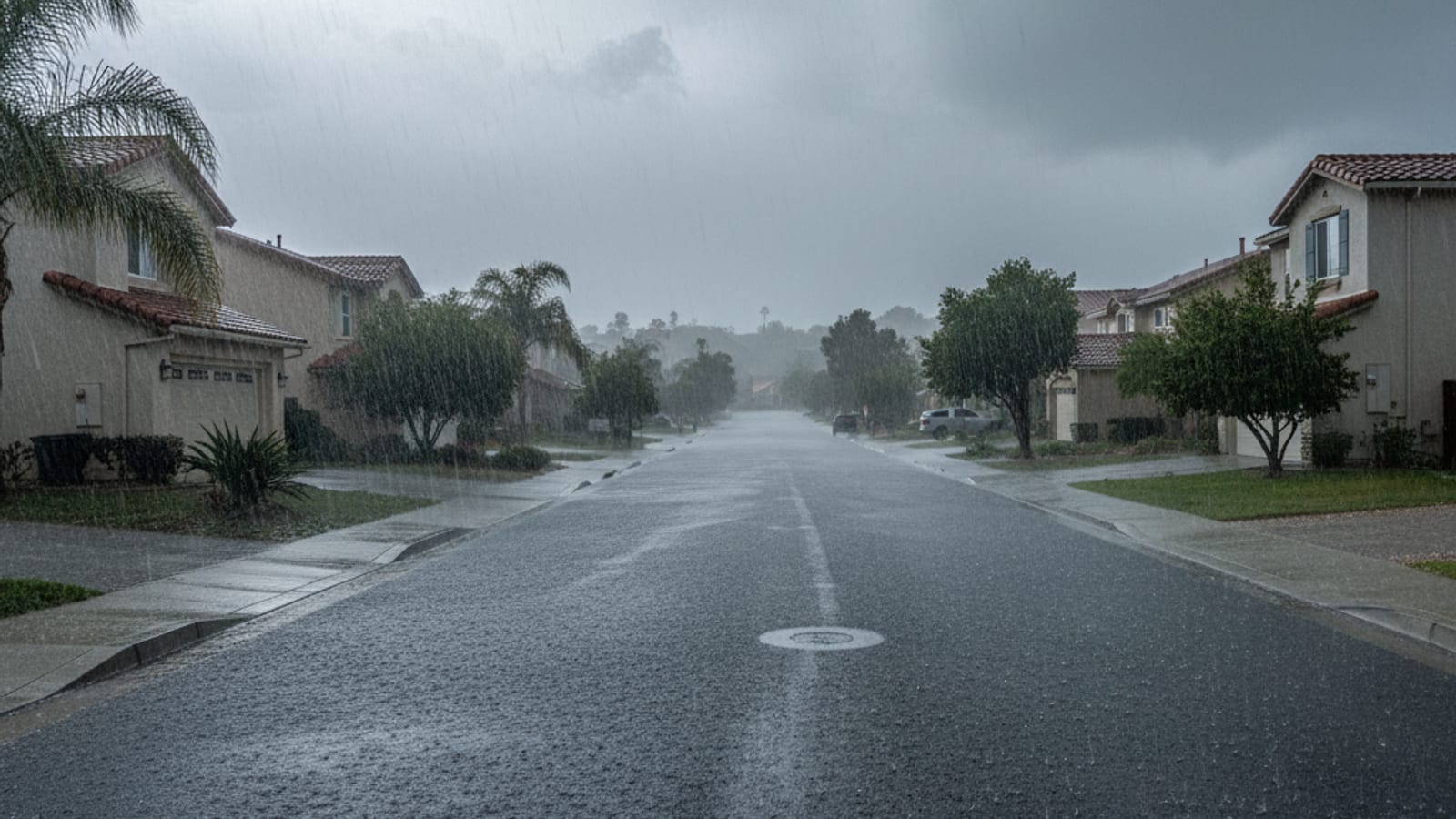
San Diego’s mild reputation lasts until an atmospheric river dumps three inches of rain in 12 hours and the storm drains can’t keep up. We’ve worked every major storm of the last decade — Lilac 2017, the 2023 atmospheric rivers, the 2024 January storm, the 2026 February event. Patterns repeat.

This is the playbook on what to do before, during, and after.

What an atmospheric river actually does to San Diego homes

Three failure modes account for most of what we respond to:

  1. Roof leaks from wind-driven rain — water finds gaps in tile flashing, valleys, skylight perimeters, and around vent pipes. Most common cause of ceiling damage we see post-storm.
  2. Sub-grade flooding — basements, daylight crawlspaces, garages on grade or below grade. Storm runoff overtops landscaping and finds foundations.
  3. Tijuana River Valley and similar — cross-border flooding combined with sewage contamination. Cat 3 work by definition.

Smaller categories that still matter:

  • Skylight failures
  • Window frame leaks (older aluminum frames especially)
  • Slab-on-grade water intrusion through the perimeter
  • HVAC condensate-line backups (independent of the storm but common when humidity spikes)

Before the storm: prevention

The cheapest restoration is the one that does not happen. If you have 24-48 hours of warning:

  • Clear gutters and downspouts — full gutters cause overflow under the eave, then into the wall cavity
  • Check downspout extensions — water dumping at the foundation is the surest path to slab intrusion
  • Inspect tile flashing — cracked or shifted tiles around valleys, vent pipes, and chimneys are leak candidates
  • Test sump pumps — pour a bucket in the pit and confirm the pump activates and discharges
  • Move outdoor items off porches — flying debris during high wind breaks windows
  • Roll back any pre-existing tarp jobs — confirm they are still secure

If you have a known weak spot from a previous storm and have not fixed it, call us before the storm hits. Pre-storm tarps are cheaper and easier than during-storm tarps, and they prevent the loss from happening at all.

During the storm

If a leak shows up mid-storm:

  • Catch the water if you can — buckets, towels, a tarp on the floor below
  • Move furniture and rugs out of the drip path
  • Photograph the active leak — adjusters appreciate seeing the leak in progress
  • Do not climb on the roof — wait until winds drop and the roof is dry enough to walk safely

For active flooding from outside:

  • Cut power to flooding rooms at the breaker before water rises near outlets
  • Move items to higher ground — not always practical, but worth doing if time allows
  • Photograph everything — water level, source, path

Call us while it is happening if response is needed during the storm. Our crews work through atmospheric rivers; we just give honest ETAs based on traffic, road closures, and call volume.

After the storm: emergency tarp

Within 24-72 hours of the storm ending, we tarp damaged roofs. Tarping is preventive — it stops water intrusion during the next storm in the series (atmospheric rivers often come in clusters) and prevents further damage while you arrange permanent repair.

Tarp scope:

  • 30-90 day temporary coverage
  • Staked or weighted edges (no roof penetrations on serviceable roofs)
  • Documented for insurance with photos and invoice
  • Coordinated with your roofer for permanent repair scheduling

A good roofer is a good roofer regardless of who does the tarp. If you have a roofer relationship, we coordinate with them. If not, we have a list of trusted partners.

After the storm: water mitigation

Inside the home, the standard sequence:

  1. Extraction — bulk water out, fast
  2. Demo decisions — Cat 1, 2, or 3 protocol depending on the source
  3. Drying — air movers and dehumidifiers, daily moisture readings
  4. Antimicrobial — Cat 2 and Cat 3 jobs
  5. Rebuild coordination — drywall, paint, flooring after dry sign-off

For atmospheric river damage specifically, the source matters for coverage:

SourceStandard homeowners coverage
Wind-driven rain through roof damageUsually covered (wind is the proximate cause)
Storm runoff over driveway into garageUsually denied (flood policy required)
Storm runoff through foundation cracksUsually denied (groundwater intrusion)
Sump pump failure during stormCovered with sump pump endorsement, otherwise denied
Sewer backup from storm overflowCovered with sewer backup endorsement, otherwise denied
Wave overtopping during king tide + stormNFIP flood policy required

What about the Tijuana River Valley?

Cross-border flooding events combine storm runoff with raw sewage. Anything that comes through the river valley during a major event is treated as Category 3 black water by IICRC standard regardless of how clean the water looks.

This means full PPE, controlled demo of porous materials below the water line, and aggressive antimicrobial treatment. Coverage for these losses depends on whether the homeowner has flood insurance — most properties in the valley should, but many do not.

We’ve worked dozens of jobs in the valley after major events. The work is straightforward; the documentation is the part that decides whether the homeowner gets reimbursed.

What about backcountry storm damage?

Mountain communities (Julian, Pine Valley, Alpine, Ramona) add their own variables — snow loads, ice damming, road closures, longer response drives. Patterns we see:

  • Roof failures from snow load on aging roofs designed for lighter weight
  • Ice damming where insulation is inadequate
  • Power outages combined with frozen pipes (heat tape stops working when power goes out)
  • Septic system overflows during multi-day storms

We work the backcountry with 4WD trucks and extra extraction capacity. Response drives run 60-120 minutes typical from our staging routes during normal weather, longer when roads are closed.

Insurance specifics for storm damage

The biggest decision in a storm claim is identifying the proximate cause cleanly. Wind, hail, and wind-driven rain are covered perils. Flood and groundwater intrusion are not (without separate policies).

Most storm losses end up partially covered — the wind-driven part covered, the ground-water part denied. We document each cause clearly so the adjuster can apply coverage correctly to each part of the loss.

ALE (Additional Living Expenses) coverage applies if the home is uninhabitable during the restoration. Most policies cover hotel costs, food differential, and reasonable replacements. Use it.

Bottom line

Atmospheric river weeks are predictable in their unpredictability. Pre-storm prep prevents most losses; fast response during the storm limits the damage when prep was not enough; clean documentation gets the loss covered when it is a covered cause.

For storm damage assessment or active emergency, call us at (858) 808-6055 — 24/7 across San Diego County. See also our storm damage service page and the flood damage cleanup page.