After the firefighters leave and the smoke clears, the reality of a house fire sets in. It’s an overwhelming moment for any San Diego homeowner. You’re not just looking at the damage from the flames and smoke; you’re also facing a second, hidden threat: massive water damage. This two-front disaster requires a specialized, methodical approach to make your home safe and whole again.

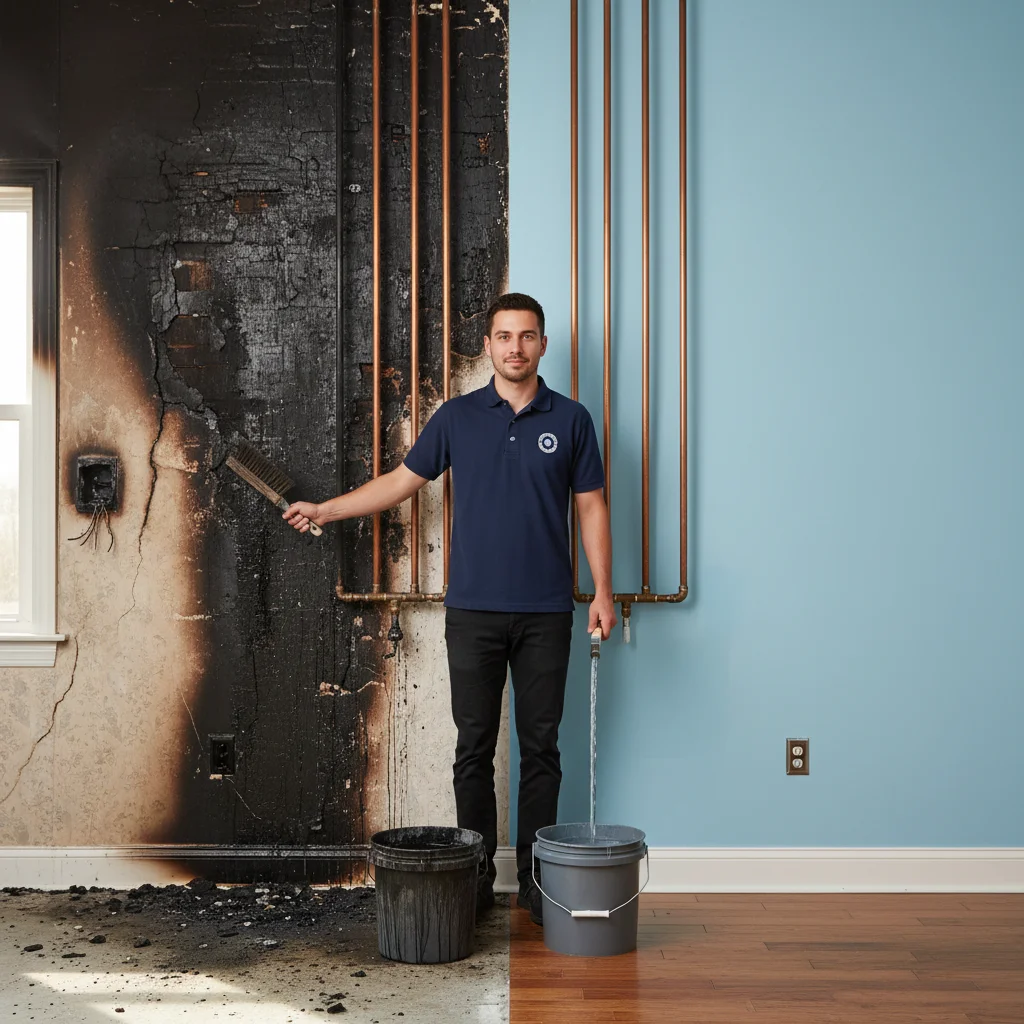
A split image showing a sooty, fire-damaged wall on the left and the same wall fully restored and painted on the right.

Why fire damage always involves water damage

It’s the great irony of a house fire. The very thing that saves your home, water itself, also causes extensive secondary damage. Firefighters must use an incredible amount of water at high pressure to extinguish a blaze. We’re talking hundreds, or even thousands, of gallons soaking into your property. This water saturates everything from drywall and insulation to flooring and structural wood.

It’s not just about the fire hoses, either. If your home has a fire suppression system, you could be dealing with significant fire sprinkler water damage. While these systems are fantastic at containing a fire and saving lives, they can release 20-40 gallons of water per minute. This water mixes with soot and ash, creating a corrosive and messy slurry that seeps into every crack and crevice.

This is why a fire event is never just about fire cleanup. It’s fundamentally a complex water damage restoration project as well. Ignoring the water component leads to mold growth, structural rot, and persistent odors that can make the home uninhabitable. A true professional understands that you can’t address one problem without expertly handling the other. The process must be integrated from the very first moment.

The first 24 hours: securing your property

The moments immediately following a fire are critical. Your home is vulnerable, and the first step is to prevent any further damage. Once the fire department declares the property safe to enter, our first priority is to secure it from the elements and unauthorized entry.

This often involves:

  • Board-Ups: A fire can destroy windows and doors, leaving your home exposed. We professionally board up all openings to protect your property from weather and vandalism.
  • Roof Tarping: If the roof has been compromised by the fire or by firefighters needing to ventilate, it needs to be covered immediately. We use heavy-duty tarps to prevent rain from entering and causing even more water damage.
  • Initial Assessment: Our technicians perform a thorough inspection to understand the full extent of the fire, smoke, and water damage. This assessment is crucial for developing a precise plan of action and for providing accurate information to your insurance company.
  • Debris Removal: We carefully remove charred and unsalvageable debris. This isn’t just about cleaning up; it’s about reducing the sources of soot and smoke odor that permeate the structure.

This initial phase is about stabilization. By securing the property, we stop the clock on further damage and create a safe environment to begin the detailed work of restoration. It’s the foundational step in a comprehensive plan for fire and water damage restoration in San Diego.

Water extraction and drying after the fire is out

With the property secure, our focus immediately shifts to the water. The clock is ticking, as mold can begin to grow in San Diego’s climate within 24-48 hours. A rapid and thorough drying process is non-negotiable.

This is far more complex than just opening windows and setting up a few fans. We use a scientific approach and specialized equipment to remove water you can see and moisture you can’t.

The process typically includes:

  • Water Extraction: We use powerful, truck-mounted and portable extraction units to remove standing water from carpets, hardwood floors, and other surfaces. This removes the bulk of the water quickly.
  • Evaporation: After the standing water is gone, we strategically place high-velocity air movers. These powerful fans sweep across wet surfaces, accelerating the evaporation of bound moisture from materials like drywall, wood studs, and subflooring.
  • Dehumidification: As the air movers turn liquid water into water vapor, industrial-grade dehumidifiers pull that moisture from the air. These machines can be either refrigerant or desiccant-based, depending on the specific conditions. They condense the airborne moisture and pump it out of your home, effectively drying the structure from the inside out.
  • Monitoring: Drying isn’t guesswork. Our technicians use moisture meters, thermal imaging cameras, and hygrometers to track the drying process daily. We don’t stop until we have scientific proof that your home’s materials have returned to their normal, pre-loss moisture content.

This systematic approach ensures that every layer of your home is completely dry, preventing the long-term structural problems and health risks associated with trapped moisture.

A restoration technician uses a thermal fogger to eliminate smoke odor from a living room.

Soot and smoke removal from all surfaces

Once the water is under control, we tackle the fire’s direct signature: soot and smoke. Smoke particles are microscopic, often smaller than a micron, and they travel with the heat of the fire into every nook and cranny. Soot is the oily, black residue left behind, and it’s acidic, causing further damage to surfaces if left untreated.

Effective smoke damage repair in San Diego requires understanding the different types of smoke and soot. A fast, hot fire produces a dry, powdery soot that’s easier to clean, while a slow, smoldering fire (often involving plastics or synthetic materials) creates a thick, oily soot that smears and is much harder to remove.

Our cleaning process is meticulous and material-specific:

  • Structural Cleaning: We use specialized cleaning agents and techniques to remove soot from walls, ceilings, floors, and other structural components. This may involve dry sponging for light soot or wet cleaning for heavier residues.
  • HVAC System Cleaning: Your home’s air ducts are a highway for smoke particles. We use specialized tools to clean the entire HVAC system to prevent soot and odor from being re-circulated when you turn your system back on.
  • Contents Cleaning: We carefully assess all personal belongings. Many items, from furniture and electronics to clothing and documents, can be salvaged using advanced cleaning methods like ultrasonic cleaning, specialized laundering, and detailed hand-cleaning.

This stage is labor-intensive and requires a deep understanding of chemistry and technique. The goal is to physically remove the source of the damage and odor, not just cover it up.

Cleaning, sanitizing, and odor removal

With the bulk of the soot gone, the next phase is a deep clean, sanitization, and targeted odor removal. The water used in firefighting is often not clean, and when combined with the byproducts of a fire, it can create a breeding ground for bacteria.

Our team focuses on three key areas:

  1. Final Detailed Cleaning: Every surface is cleaned again to remove any remaining particulate matter. This is a top-to-bottom process that prepares the home for sanitization and sealing.
  2. Sanitizing: We apply EPA-registered antimicrobial agents to surfaces to prevent the growth of mold, mildew, and other microorganisms. This is especially important in areas that were heavily saturated with water.
  3. Deodorization: Smoke odor is notoriously persistent because the tiny odor particles embed themselves deep within porous materials. Simply cleaning the surface isn’t enough. We use advanced deodorization technologies to neutralize the odor at a molecular level. This can include:
    • Thermal Fogging: This process heats a deodorizing solvent, creating a fine mist that penetrates materials just like the original smoke did, neutralizing the odor particles it contacts.
    • Ozone Treatment: An ozone generator can be used in unoccupied spaces to oxidize odor molecules, effectively destroying them. This is a powerful tool that requires professional handling for safety.
    • Hydroxyl Generation: Hydroxyl generators are a safer alternative to ozone that can be used in occupied areas. They use UV light to create hydroxyl radicals that break down odor molecules in the air and on surfaces.

By the end of this stage, your home is not only clean and dry but also safe, sanitary, and free of lingering fire-related odors.

Reconstruction: bringing your home back

The final step in the journey is reconstruction. After the mitigation and cleaning are complete, your home is a clean, dry, stable slate. Now it’s time to rebuild and restore it to its pre-fire condition, or often, even better. The scope of reconstruction can vary dramatically, from replacing a few sections of drywall and painting to rebuilding entire sections of your home.

This is where having a single, qualified company handle the entire project becomes invaluable. A smooth transition from mitigation to reconstruction avoids delays and communication gaps. Our comprehensive fire and water damage services cover this entire spectrum.

The reconstruction phase can include:

  • Replacing drywall and insulation
  • Installing new flooring, including carpet, tile, or hardwood
  • Hanging new cabinets and countertops
  • Painting and finishing work
  • Electrical and plumbing repairs
  • Structural repairs, such as replacing joists or trusses

We work closely with you and your insurance adjuster to ensure all repairs are done to code and meet your expectations. It’s crucial to work with a licensed contractor for this phase. You can and should always verify a contractor’s license with the California Contractors State License Board (CSLB) before signing any contract. This final stage is about bringing comfort, safety, and normalcy back to your life.

When to call us

Dealing with the aftermath of a fire is not a DIY project. The combination of water damage, soot contamination, and potential structural issues requires certified professionals with specialized equipment and training. If your San Diego home has suffered a fire, your first call after the fire department should be to a professional restoration company.

Restore Pro SD manages the entire process, from the initial board-up to the final reconstruction, working directly with your insurance to make a stressful time more manageable.

Call us at (858) 925-5546 for a same-day estimate.