When water enters your home unexpectedly, the feeling can be overwhelming. Whether it’s from a burst pipe, a failed appliance, or a major storm rolling in off the Pacific, the priority is to get your property back to normal as quickly and safely as possible. Understanding the professional restoration process can demystify the situation and help you see the path forward for your Chula Vista home.

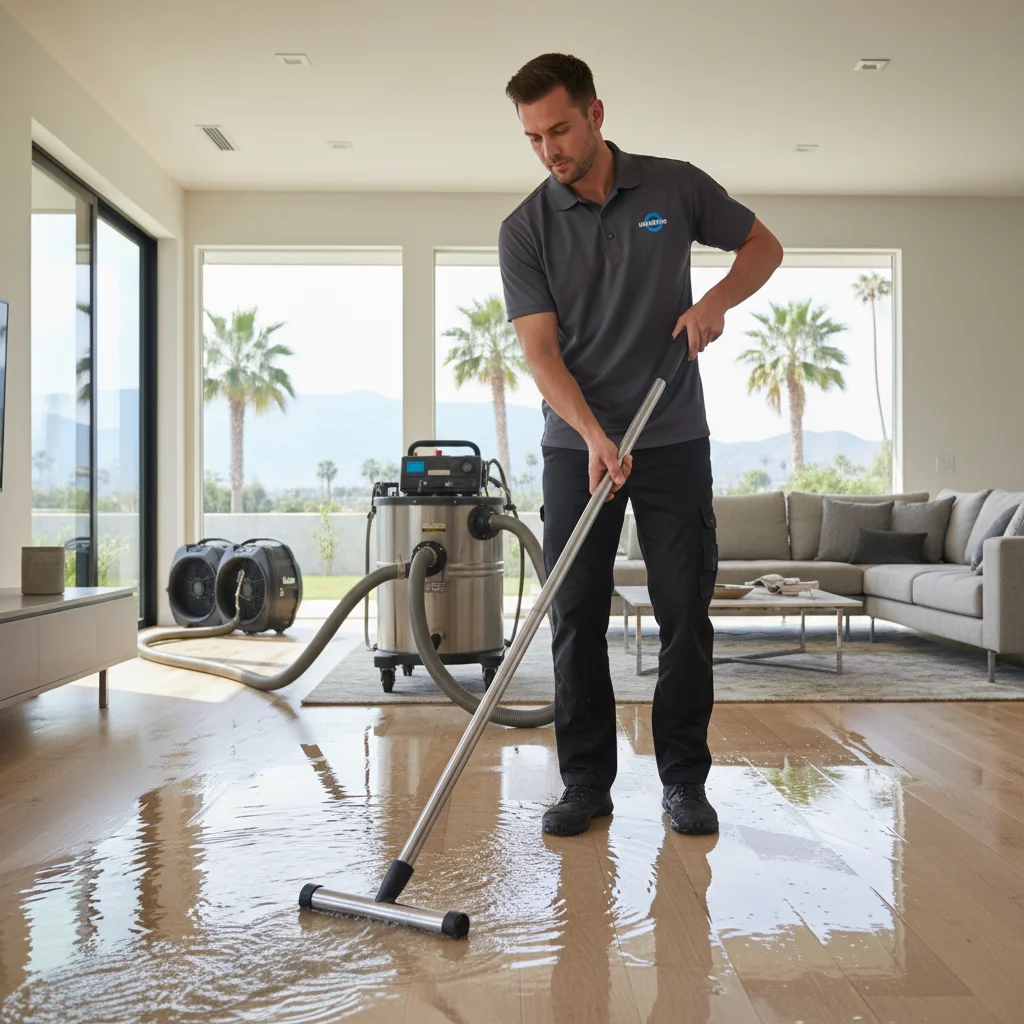
A professional restoration technician from Restore Pro SD performs flood damage cleanup in a Chula Vista home.

The key to a successful recovery is a systematic approach that combines speed, expertise, and the right equipment. Here’s a detailed look at what’s involved in a professional flood damage cleanup in Chula Vista, from the moment we arrive to the final walkthrough.

First steps: stopping the water source

Before any cleanup can begin, the flow of water must be stopped. The first priority is always safety. If you can do so safely, shut off the main water valve to your home and turn off the electricity at the breaker box for the affected areas. Standing water and electricity are a dangerous combination.

When our technicians arrive, their first action is to identify and stop the source of the water if it hasn’t been done already. This could mean:

  • For internal floods: Locating a burst pipe, malfunctioning appliance hose, or overflowing fixture and securing it.
  • For external floods: While we can’t stop the rain, we can implement containment measures like boarding up broken windows or deploying sandbags to prevent more water from entering.

Stopping the source is the critical first step. Every minute that water continues to flow increases the scope of the damage, allowing it to penetrate deeper into building materials like drywall, subfloors, and wood framing. By acting fast, we minimize the total impact and can begin the restoration process on solid ground. This immediate response is the foundation of effective water damage chula vista ca mitigation.

Assessing the flood damage category (clean, gray, or black water)

Not all water is the same. The Institute of Inspection, Cleaning and Restoration Certification (IICRC) classifies water damage into three categories based on the source and potential level of contamination. This assessment is crucial because it dictates the entire cleanup protocol, including safety gear for our crew and the methods used for cleaning and sanitizing.

  • Category 1: Clean Water. This water originates from a sanitary source, like a broken supply line or an overflowing sink with no contaminants. While it’s clean at the source, it can quickly become contaminated as it flows through building materials.
  • Category 2: Gray Water. This water is significantly contaminated and can cause illness if ingested. Common sources include overflowing dishwashers, washing machines, or toilets containing only urine. It contains detergents, soaps, and biological waste.
  • Category 3: Black Water. This water is grossly unsanitary and contains harmful pathogens and toxins. Sources include sewage backups, toilet overflows with feces, and any water that has come from outside, such as natural floods or storm runoff. Floodwater from Chula Vista’s streets or canyons is always considered Category 3 because it picks up chemicals, bacteria, and waste as it travels.

For any flood restoration chula vista project involving black water, our team uses extensive personal protective equipment (PPE) and follows strict protocols to ensure the area is not just dried, but properly disinfected to protect your family’s health.

The water extraction and removal process

Once the area is safe and the damage is assessed, the next step is to remove the bulk of the standing water. Speed is paramount. The faster we can extract the water, the less time it has to wick up walls, soak into flooring, and create an environment for mold growth.

We use powerful, professional-grade equipment designed for rapid water removal:

  • Truck-Mounted Extractors: These are high-powered vacuums that can remove thousands of gallons of water quickly. They are the workhorses of any significant flood job.
  • Submersible Pumps: For deep standing water (more than two inches), we use submersible pumps to continuously move large volumes of water out of the property.
  • Light-Wand Extractors: For carpets and harder-to-reach areas, these tools allow for precise extraction to pull water from deep within the fibers and padding.

During this phase, we often have to make difficult decisions about non-salvageable materials. Porous items that have absorbed contaminated water, like carpet padding, drywall, and insulation, usually need to be removed and discarded to allow for proper drying of the structure beneath.

An array of commercial-grade air movers and dehumidifiers set up in a room, actively drying the space.

Drying and dehumidifying your property

After the visible water is gone, the hidden moisture remains. This is the moisture trapped in wood, concrete, and drywall. Simply letting it “air dry” is not an option in Chula Vista’s climate; it’s too slow and virtually guarantees mold growth.

Professional structural drying is a scientific process that manipulates temperature, humidity, and airflow to remove this hidden moisture. We achieve this by creating a controlled drying environment using specialized equipment:

  • Commercial Air Movers: These high-volume fans are strategically placed to sweep cool, dry air across wet surfaces. This promotes rapid evaporation, pulling moisture from materials into the air.
  • LGR Dehumidifiers: Low-Grain Refrigerant (LGR) dehumidifiers are the key to the process. They pull the newly evaporated moisture out of the air, collecting it as liquid water that is then pumped away. This keeps the relative humidity low, allowing the air movers to continue pulling moisture from the structure.

Throughout the drying process, our technicians monitor progress daily using moisture meters and thermal imaging cameras. We take readings from affected materials to ensure they reach their pre-loss dry standard. This data-driven approach ensures your home is thoroughly and correctly dried, preventing long-term structural issues.

Cleaning, sanitizing, and final repairs

With the property fully dried, we can focus on cleaning and restoring it. This phase depends heavily on the water category and the extent of the damage. For a clean water loss, it might involve simple cleaning and deodorizing. For a black water flood, it’s far more intensive.

The process includes:

  • Cleaning: All affected surfaces are thoroughly cleaned to remove any dirt, debris, or residue left behind by the floodwaters.
  • Sanitizing and Disinfecting: We use EPA-registered, hospital-grade antimicrobial agents to treat all affected areas. This is especially critical in Category 3 situations to eliminate dangerous bacteria and pathogens.
  • Deodorizing: Lingering odors are addressed using various techniques, including thermal fogging or hydroxyl generators, to leave your home smelling fresh and clean.

Finally, the restoration or “put-back” phase begins. This is where we rebuild the damaged areas of your home. It can involve installing new drywall, laying new flooring, replacing baseboards, and painting. This final stage is the core of our flood damage cleanup service, turning a damaged house back into your home.

Why local Chula Vista knowledge matters for floods

Every city in San Diego County has its own unique environmental factors, and Chula Vista is no exception. Working with a local Chula Vista flood cleanup company means you get a team that understands these specific challenges.

  • Coastal Humidity: Proximity to the San Diego Bay means Chula Vista often has higher ambient humidity, especially during a marine layer. This can complicate the drying process. We account for this by deploying the appropriate number of dehumidifiers to overcome the local atmospheric conditions.
  • Varied Housing Stock: From older homes in the west to the newer developments in Eastlake and Otay Ranch, Chula Vista has a wide range of construction types. We know how to handle water damage in homes with slab foundations, raised foundations, and different types of plumbing, allowing us to identify hidden moisture pockets that others might miss.
  • Storm Runoff: During heavy rains or atmospheric rivers, local storm drains can get overwhelmed, leading to flash flooding. We understand the composition of this runoff and treat it as the Category 3 contamination it is, ensuring no health risks are left behind.

Hiring a licensed, local professional ensures you have a team that’s not just certified but also deeply familiar with the homes and climate of your community. You can verify any contractor’s license on the CSLB website.

When to call us

When you’re facing standing water in your home, time is your biggest enemy. A fast, professional response is the best way to protect your property and prevent long-term problems like mold and structural decay. If you’re dealing with a flood of any size, don’t wait.

Call us at (858) 925-5546 for a same-day estimate.