When water strikes your home, whether from a burst pipe, a leaky appliance, or San Diego’s occasional heavy rains, drying out visible puddles is just the first step. The real challenge lies in the hidden moisture absorbed into your home’s structure. This unseen water is a ticking time bomb, ready to cause serious problems if not addressed professionally.

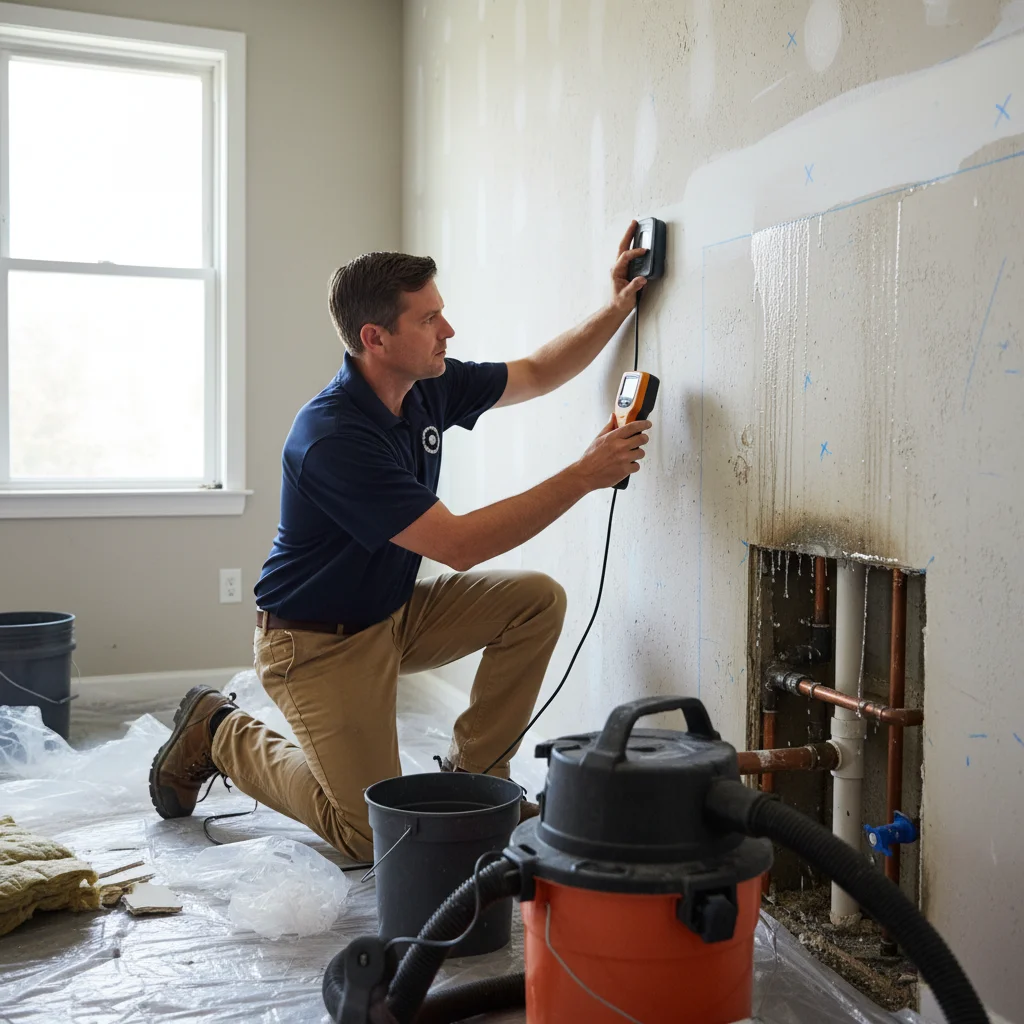
A professional restoration technician using a non-invasive moisture meter on a d

Structural drying is the meticulous process of removing all traces of moisture from building materials. It goes far beyond simply setting out a few fans. It involves a scientific approach to ensure your property is thoroughly dry, preventing secondary damage like mold growth and material deterioration. For homeowners in San Diego County, understanding this process helps ensure your home recovers fully and safely.

It’s more than just fans: the science of drying

Structural drying is an applied science, not just a simple cleanup. It relies on principles of psychrometry, which studies the thermodynamic properties of moist air. In plain language, it’s about controlling temperature, humidity, and airflow to create the ideal conditions for moisture to evaporate from wet materials and then be removed from the indoor environment.

Our technicians don’t just point fans at wet spots. We strategically place specialized equipment to create a precise drying chamber. This involves manipulating air movement to dislodge water molecules from materials and into the air. Simultaneously, industrial-strength dehumidifiers work to capture and remove that airborne moisture, effectively drying out the air itself. This continuous cycle gradually pulls moisture out of your walls, floors, and other structural components.

Without this scientific approach, you risk uneven drying, leaving pockets of moisture behind. These hidden wet areas can become fertile ground for mold, mildew, and even structural rot, leading to costly future repairs. A professional structural drying service understands these dynamics and works to the IICRC S500 standard to achieve optimal results.

How we measure moisture in walls, floors, and wood

Accurate moisture measurement is fundamental to effective structural drying. You can’t dry what you can’t see, and hidden moisture is often the most destructive. Our technicians use a variety of specialized tools to precisely locate and quantify moisture content within different building materials.

We start with non-invasive moisture meters. These devices can detect moisture behind surfaces like drywall, plaster, and flooring without causing any damage. They use electromagnetic waves to measure changes in electrical conductivity, which indicate the presence of moisture. This allows us to “map” the extent of water saturation, identifying every affected area, not just the visible ones.

For more precise readings on specific materials, especially wood, we use invasive moisture meters with probes. These small pins are inserted into the material, providing direct measurements of moisture content by percentage. Thermal imaging cameras are another powerful tool. They detect temperature differences that can reveal hidden moisture pockets, as evaporating water often creates cooler spots. By combining these techniques, we gain a comprehensive understanding of where the water has traveled and how saturated the materials are. This data guides our entire drying strategy, ensuring no hidden moisture is left behind.

The role of dehumidifiers and air movers

Dehumidifiers and air movers are the workhorses of structural drying, but they function as a team, not in isolation. Understanding their combined role is key to effective moisture removal.

Air movers, often called “air movers” or “blowers,” are high-velocity fans designed to create powerful airflow across wet surfaces. This airflow serves several critical purposes. First, it accelerates the evaporation of moisture from materials like carpets, padding, drywall, and wood. Second, it helps break the surface tension of water, allowing it to escape more easily. Third, by circulating air, it prevents the formation of “microclimates,” pockets of high humidity that would slow down the drying process in specific areas.

A clear diagram showing how air movers create airflow across a wet floor towards

As the air movers cause moisture to evaporate into the air, the relative humidity inside the structure naturally increases. This is where dehumidifiers come in. These powerful machines pull moist air from the environment, extract the water vapor, and then release drier air back into the space. Commercial-grade dehumidifiers are significantly more powerful than residential models, capable of removing large volumes of water from the air quickly. They literally “pull” the moisture out of the air, ensuring that the air movers have a dry environment to work with, continuously encouraging more moisture to evaporate from the wet materials. This coordinated effort creates a drying chamber that systematically removes moisture from both the air and the building materials until they reach safe, dry standards.

What happens if you skip proper structural drying? (mold and rot)

Skipping or rushing the structural drying process is a decision that almost always leads to severe, long-term consequences for your San Diego home and your family’s health. The most immediate and common threat is mold growth. Mold spores are naturally present everywhere, but they only need three things to thrive: moisture, a food source (like drywall, wood, or fabric), and appropriate temperatures. Your wet home provides all of these.

Mold can begin to grow within 24-48 hours of water exposure. Once established, it can spread rapidly, causing unsightly stains, unpleasant musty odors, and significant health problems for occupants, especially those with allergies, asthma, or compromised immune systems. Beyond health concerns, mold remediation can be an extensive and expensive process.

Even if mold doesn’t immediately appear, persistent moisture leads to material deterioration. Wood framing, subflooring, and joists can warp, swell, and eventually rot, compromising the structural integrity of your home. Drywall can crumble, paint can peel, and flooring materials can delaminate or buckle. This structural damage weakens your property over time and can lead to costly reconstruction. Without professional structural drying, you’re not just dealing with the initial water damage; you’re setting the stage for ongoing headaches, health risks, and significant financial burdens.

How long does structural drying take?

The duration of structural drying isn’t a one-size-fits-all answer. It varies significantly depending on several factors unique to each water damage situation. Generally, you can expect the process to take anywhere from three to five days, but more severe cases, or those involving dense materials, might extend to a week or even longer.

Key factors influencing the timeline include:

  • The extent of the water damage: A small leak affecting a single wall will dry much faster than a flood that has saturated multiple rooms and structural components.
  • Type of materials affected: Porous materials like drywall and carpet padding absorb water quickly and release it relatively easily. Dense materials like hardwood floors, concrete, and certain types of insulation hold onto moisture more tenaciously, requiring a longer drying time.
  • Humidity and temperature: While our equipment creates an optimal drying environment, the ambient humidity and temperature in San Diego can play a small role, especially in how quickly we can achieve initial moisture reduction.
  • Severity of saturation: How long materials were wet and how much water they absorbed directly impacts the drying time. Standing water for an extended period means deeper saturation.

Our technicians monitor moisture levels daily using specialized meters. We won’t declare an area dry until moisture readings return to pre-loss levels or within acceptable industry standards, ensuring your home is genuinely dry and safe from future problems.

Can you live in the house during the drying process?

Whether you can remain in your San Diego home during structural drying depends heavily on the scope of the water damage and the nature of the restoration work required. In many cases, especially for smaller, localized incidents, it is possible to stay. However, there are important considerations for your safety and comfort.

First, consider the air quality. During the drying process, especially with significant water damage, airborne mold spores or contaminants (if the water was unsanitary) can be a concern. Loud equipment, like air movers and dehumidifiers, will also be running 24/7, creating continuous noise. This can be disruptive to sleep and daily activities.

Second, safety is paramount. The presence of equipment, hoses, and wet areas can pose tripping hazards. If power has been affected, or if the water damage involves electrical systems, it may be unsafe to remain. If the damage is extensive, affecting essential services like plumbing or electricity, or if hazardous materials (like sewage) are involved, temporary relocation is almost always recommended.

Our Restore Pro SD team will assess your specific situation and provide clear guidance on whether it’s safe and practical for you to stay. We prioritize your health and well-being, and will give recommendations based on the scope of the damage and the specific challenges of your restoration project.

When to call us

If your San Diego home has experienced water damage beyond a small, easily managed spill, professional structural drying is essential. Don’t risk hidden moisture turning into mold or structural rot. Our technicians have the expertise and equipment to thoroughly assess, dry, and restore your property correctly. Call us at (858) 925-5546 for a same-day estimate.