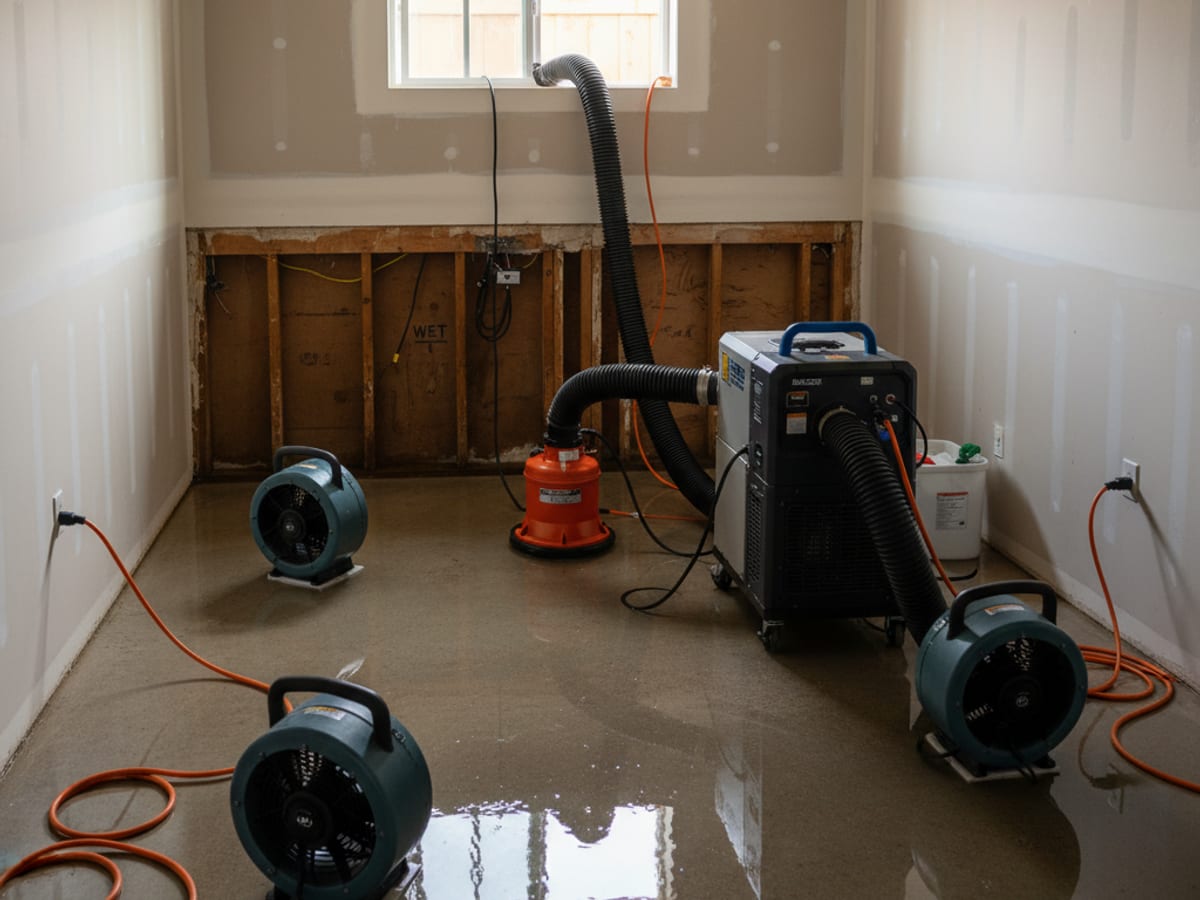
Basement flood cleanup in San Diego usually costs $4 to $12 per square foot, or roughly $2,000 to $7,000 for a typical job. The work runs in a fixed order: stop the source, extract standing water, tear out soaked porous materials, then dry the structure with commercial equipment. Speed matters most. Mold can start within 24 to 48 hours in our humid coastal air, so the first day decides how big the bill gets.
Why San Diego “basements” flood differently
Most San Diego homes don’t have a true below-grade basement. We build on slabs because of seismic code and our soil. So when people here say basement, they usually mean a daylight basement, a lower-level den, a converted garage, or a hillside walk-out room in places like Mission Hills, La Jolla, Point Loma, or the canyon lots in Kensington.
That changes how water gets in. Instead of groundwater seeping through a deep foundation, the common culprits here are different.
- Atmospheric rivers dumping inches of rain on hillside lots, where runoff funnels straight into the lowest room.
- Slab leaks under the lower level, made worse by San Diego’s expansive clay soil that shifts and cracks pipes.
- A high water table near the coast, pushing moisture up through the slab in Pacific Beach, Ocean Beach, and Imperial Beach.
- Failed sump pumps in the few inland homes that do have a sub-grade level.
- Backed-up storm drains during a heavy marine-layer rain event.
Knowing the source matters because it sets the water category, and the category sets the whole cleanup.
The cleanup process, step by step
A flooded lower level gets handled in the same sequence whether it’s a small den or the entire downstairs.
- Stop the source. Shut the main water valve and kill power to the flooded area at the breaker. Standing water plus electricity is dangerous. If it’s a slab leak or a storm, the source has to be located and contained first.
- Assess and document. Photos, moisture readings, and a category call. This is also where your insurance file starts.
- Extract standing water. Truck-mounted vacuums and submersible pumps pull the bulk out fast. The longer water sits, the deeper it wicks into walls and subfloor.
- Remove unsalvageable materials. Soaked carpet pad, drywall below the waterline, and wet insulation usually come out. They trap moisture and feed mold.
- Dry the structure. Air movers and dehumidifiers run for several days, pulling hidden moisture out of concrete, wood, and framing.
- Sanitize. Antimicrobial treatment on every affected surface, heavier if the water was contaminated.
- Monitor and verify dry. Daily moisture checks until readings hit the building’s normal baseline.
In our climate, air-drying on your own isn’t an option. The marine layer keeps humidity high, so water that looks gone is still soaked into the slab and studs. That’s the moisture that grows mold behind a wall three weeks later.
What water category means for your basement
Not all floodwater is equal. The category drives the safety gear, the cleaning method, and the cost. The standard most reputable companies follow comes from the IICRC, the industry’s certification body. You can ask any company whether their crews follow IICRC standards before you hire them.
| Category | Source | What it means |
|---|---|---|
| Clean (Cat 1) | Supply line, rainwater, a clean overflow | Cheapest. Dry it out fast before it migrates. |
| Gray (Cat 2) | Washer, dishwasher, shower drain backup | Contaminated. Needs disinfecting, more teardown. |
| Black (Cat 3) | Sewage, storm runoff, canyon floodwater | Most hazardous. Full PPE, most porous materials tossed. |
Storm runoff and canyon floodwater in San Diego are always Category 3. By the time water reaches your lower level off a hillside, it’s picked up bacteria, chemicals, and road waste. That’s why an atmospheric-river flood costs more than a clean burst pipe of the same size.
What basement flood cleanup costs in San Diego
Cleanup runs $4 to $12 per square foot. Clean water sits at the low end, black water at the high end because of the teardown and disposal. Here’s how a typical job breaks down.
| Item | Typical range |
|---|---|
| Water extraction | $500 to $2,500 |
| Structural drying (equipment, several days) | $1,000 to $3,500 |
| Tear-out and disposal | $500 to $2,000 |
| Antimicrobial treatment | $300 to $1,200 |
| Small job (under 400 sq ft, clean water) | $1,000 to $5,000 |
| Larger job (800+ sq ft, contaminated) | $5,000 to $18,000 |
Most San Diego lower-level jobs land between $2,000 and $7,000, with $4,000 a common middle. The number climbs when the water is contaminated, when it sat overnight, or when it reached finished walls and flooring. For a fuller breakdown by source and severity, see our water damage restoration cost guide for San Diego.
Will insurance cover it
Often, but it depends on the source. A sudden, accidental event like a burst pipe or a failed appliance is usually covered by standard homeowners policies. Gradual leaks and surface flooding from rain are the two big exceptions. Surface flood damage needs separate flood insurance, which most San Diego homeowners don’t carry because we’re not thought of as a flood zone, right up until an atmospheric river proves otherwise.
Document everything before cleanup starts: photos, the source, and the date. A good restoration company works directly with your insurance claim and provides the moisture logs adjusters want. We walk through the whole process in our water damage insurance claim guide.
Frequently asked questions
How fast do I need to act on a flooded basement? Within hours. Mold can start in 24 to 48 hours, and San Diego’s humid coastal air shortens that window. Extraction and drying that begin the first day keep the job small.
Can I just dry it out myself with fans? For a few square feet of clean water, maybe. For anything larger, household fans can’t pull moisture out of a slab or framing fast enough here, and the trapped water grows mold behind walls. Professional drying uses commercial dehumidifiers and verifies the structure is actually dry.
Do San Diego homes even have basements? Most don’t have true below-grade basements. But daylight basements, hillside lower levels, converted garages, and walk-out dens are common and flood the same way. The cleanup process is identical.
What’s the difference between water extraction and full restoration? Extraction removes the standing water. Restoration is the whole job: extraction, tear-out, drying, sanitizing, and rebuild. Our emergency water extraction service handles the urgent first step, day or night.
Why does contaminated water cost more? Black and gray water require protective gear, disposal of porous materials, and disinfecting. A sewage or storm flood can’t just be dried in place the way a clean burst pipe can.
Will I see mold after a basement flood? Only if it dries too slowly. Water removed and structurally dried within the first day rarely grows mold. Water that sits, especially in our marine-layer humidity, almost always does. More on the timeline in will water damage grow mold.
Get it dried before it gets worse
A flooded lower level gets more expensive every hour it stays wet. If you’ve got standing water in San Diego County, Restore Pro SD offers 24/7 emergency response, fast water extraction, and works directly with your insurance claim. Call us at (858) 925-5546 and we’ll start the clock on getting your home dry.