You’ve scrubbed the grout with bleach, dried every surface, and the mold came back within a month. It’s one of the most frustrating cycles San Diego homeowners deal with, and it almost always points to the same root problem: moisture that never actually left. Until you fix the source, the mold will keep returning.

Why bleach doesn’t fix the real problem

Bleach kills surface mold on non-porous materials like tile and glass. But grout is porous, and so is drywall, wood framing, and the paper facing on insulation. When you scrub visible mold off the grout, you’re removing what you can see. What you can’t see are the spores already embedded below the surface and the moisture feeding them from behind.

Mold doesn’t grow because a bathroom is dirty. It grows because there’s a sustained moisture source. In most bathrooms, that source falls into one of two categories: inadequate ventilation combined with San Diego’s coastal humidity, or a hidden leak somewhere in the plumbing.

The marine layer that rolls into coastal neighborhoods like Ocean Beach, Encinitas, and Carlsbad pushes outdoor relative humidity into the 75 to 90 percent range on many mornings. A bathroom with a weak exhaust fan, or one where the fan vents into the attic instead of outside, can stay damp for hours after a shower. Do that every day, and you’ve created a reliable incubator.

But if mold keeps coming back despite good ventilation, or if it’s appearing on walls rather than just the ceiling, a hidden leak is almost certainly involved.

Where hidden leaks live in bathrooms

The most common hidden moisture sources in San Diego bathrooms are the shower pan, the toilet flange, and supply lines behind the wall.

Shower pan and surround. Grout and caulk shrink slightly over time. A hairline crack along the base of the shower surround, at the floor transition, or at the fixture trim can let water work its way into the subfloor and wall cavity with every shower. You won’t see standing water because it drains slowly into the structure. What you’ll see is mold at the base of the wall, soft or bouncy flooring near the shower, or a musty smell that doesn’t go away.

Toilet flange. The wax ring that seals the toilet to the drain flange can fail, especially in older homes or after a toilet has rocked even slightly. When it fails, every flush sends a small amount of water into the subfloor. This is a slow, consistent leak that saturates the subfloor and can wick up into the wall. Mold along the base of the wall adjacent to the toilet, or flooring that feels soft near the base, are the two main signs.

Supply lines and shut-off valves. The braided lines running from the wall to the toilet tank and sink, and the angle stops behind them, can develop slow drips. In a vanity cabinet, those drips collect on the cabinet floor and stay damp because the cabinet is enclosed. Mold inside the cabinet, warped shelving, or a musty smell when you open the doors are common indicators.

Behind the shower valve. If the shower valve trim isn’t properly sealed, water can migrate behind the wall during every use. This one is harder to detect because there are no visible symptoms until the mold is significant or the drywall softens. Mold appearing on the wall adjacent to the shower head or valve, rather than directly on the shower surround, is a clue to look here.

Surface mold vs. a real moisture problem: how to tell the difference

Not every bathroom mold situation requires opening walls. The key distinction is whether you’re dealing with cosmetic surface mold from poor ventilation, or structural moisture from a leak.

Signs that it’s probably a ventilation problem: mold appears primarily on the ceiling, in the upper corners, and on the caulk bead at the tub or shower edge. It comes back in the same spots, at the same pace, and the rest of the bathroom (flooring, lower walls, cabinet interiors) stays dry. Improving exhaust, fixing the vent duct path, and keeping the fan running 20 to 30 minutes after every shower can break this cycle.

Signs that there’s a leak involved: mold appears at the base of walls or inside cabinet enclosures. The floor feels soft or spongy in isolated spots. There’s a persistent musty odor even when the bathroom hasn’t been used in hours. Paint or drywall shows bubbling, staining, or separation. The mold returns faster than it should, or appears in a pattern that tracks a plumbing line or fixture.

If you’re seeing any of those second-category signs, you’re dealing with a moisture problem that bleach and a better fan won’t fix. At that point, what you actually have is water damage, and it’s been developing quietly for some time. You can read more about how that process unfolds in our post on will water damage grow mold.

When to test for mold

Air quality or surface mold testing can be useful, but it’s not always the first step. If mold is visible, you already know it’s there. Testing becomes most valuable in three situations: when you need to determine how far mold has spread into areas you can’t see, when a household member has respiratory symptoms or sensitivities and you need to identify species and spore counts, or when you’re buying or selling a home and want documentation.

Mold testing without a moisture investigation is largely pointless. If you test, find mold, remediate, and don’t fix the moisture source, the test results will look the same six months later. The moisture source is always the priority.

When to open the wall

This is the question most homeowners ask, and it’s the right one. Opening walls means cost and disruption, so you want to be reasonably confident before you go there.

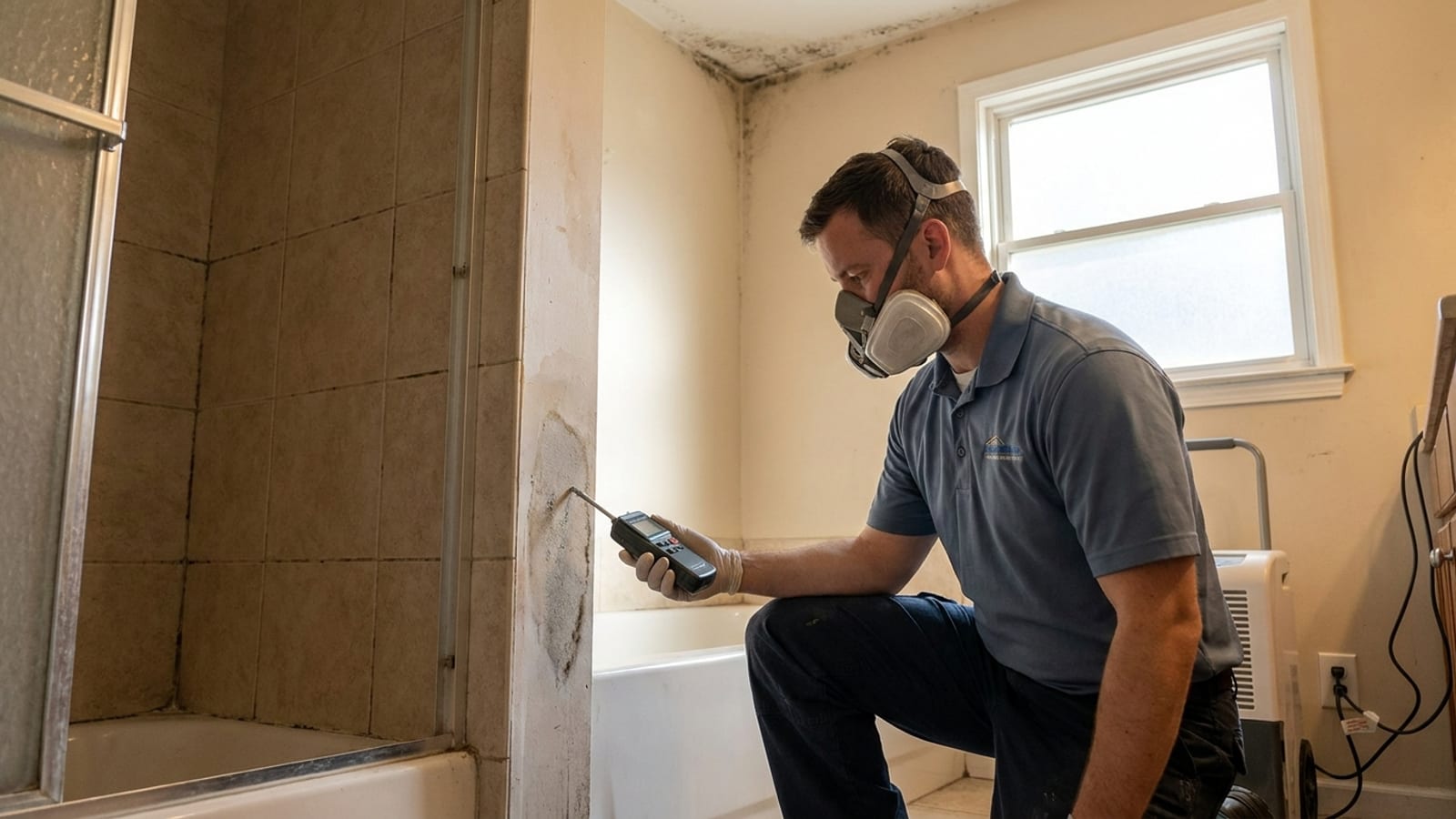
A moisture meter removes most of the guesswork. A reputable restoration technician will use one to read moisture content in the drywall, baseboards, and subfloor around suspected areas. Readings above 16 to 17 percent in wood or above 1 percent in drywall (depending on the meter type) indicate elevated moisture. Elevated readings in areas with no visible mold still mean there’s a problem. Thermal imaging can also show temperature differentials that indicate wet areas inside walls.

If moisture readings confirm saturation behind the wall, opening it is the right call. Trying to dry a wall cavity from the outside with a fan doesn’t work reliably. The framing, insulation, and drywall will stay wet long enough for mold to establish itself throughout the cavity.

When the wall does open, what you find will fall into one of two categories. Either the moisture has been contained to a manageable area and remediation is straightforward, or mold has colonized the framing and insulation and needs full remediation before the wall can close. Either way, knowing is better than guessing. A wall that stays sealed over an active leak will cost significantly more to repair in a year than it would today.

What professional remediation actually involves

Mold remediation in a bathroom setting isn’t just removing the visible growth. The process starts with containment, typically plastic sheeting and negative air pressure, to keep spores from spreading to the rest of the home while work happens. Affected materials, drywall, insulation, and sometimes subfloor sections, are removed and bagged properly for disposal.

The framing and any salvageable structural elements are then treated and dried. HEPA vacuuming removes settled spores from the work area. After drying is confirmed with moisture readings, the area is ready for rebuild. The professional mold remediation process follows industry standards designed to make sure the contamination is fully addressed, not just concealed.

The piece homeowners sometimes miss is that remediation and water damage restoration are related but distinct. Remediation addresses the mold. Drying and restoration address the moisture damage to the structure. Both need to happen, in that order, for the repair to actually hold.

After remediation, the plumbing fix (if that’s the source) needs to happen before any drywall goes back up. There’s no point in closing a wall over an unfixed leak.

When to call us

If bathroom mold has come back more than once, if you’re seeing soft flooring or wall staining near fixtures, or if there’s a persistent odor even after cleaning, those aren’t housekeeping problems. They’re signs of sustained moisture that needs a professional assessment.

A moisture inspection can identify whether there’s a hidden leak and where it is. That information is worth having before you spend more time and money on bleach and surface cleaning that won’t change the underlying condition. The sooner the moisture source is identified and addressed, the less damage there is to remediate.

Call us at (858) 925-5546 for a same-day estimate.