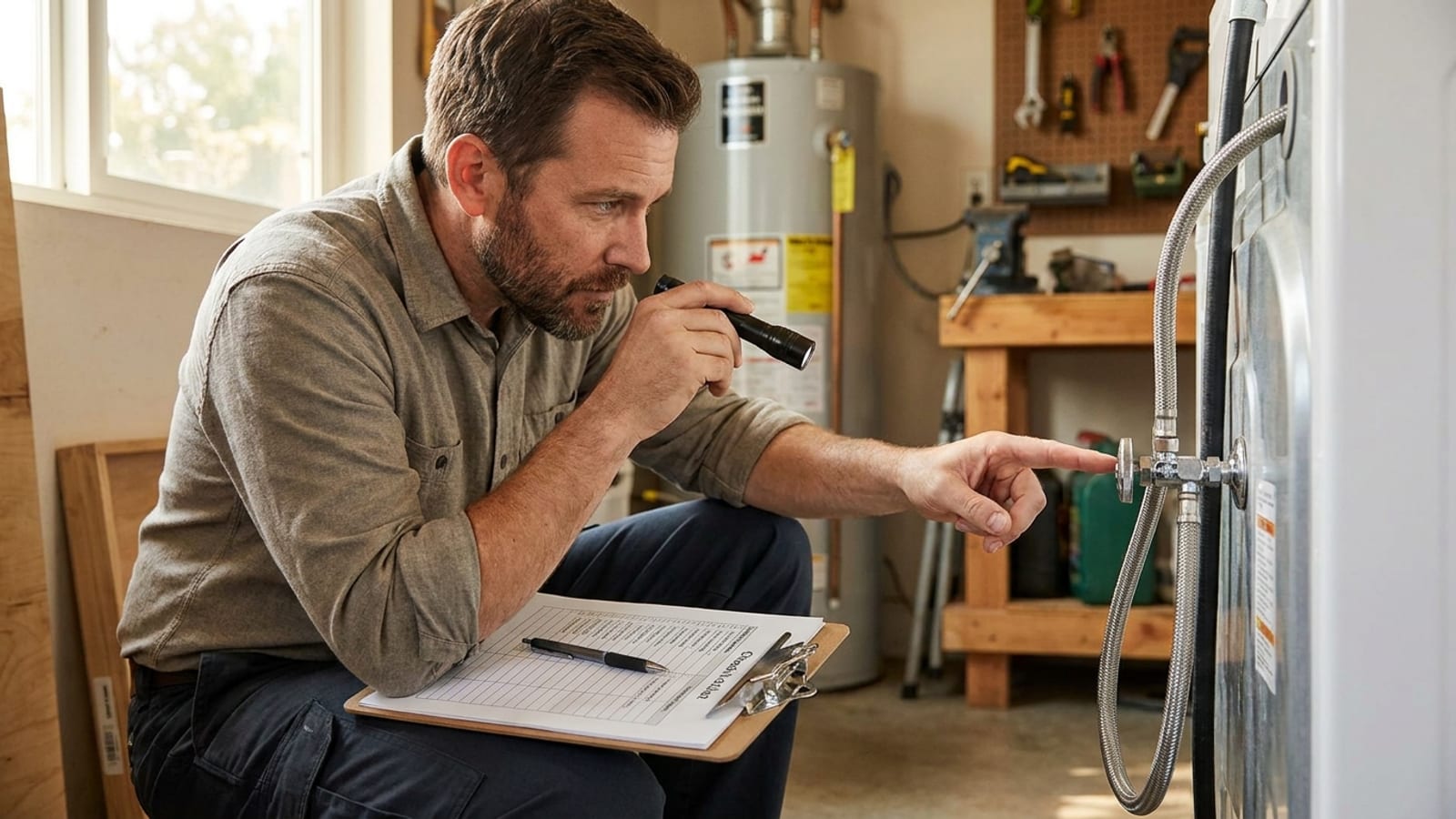
Most of the water damage calls we take across San Diego County didn’t have to happen. A washing machine hose that had been bulging for months. A water heater sitting in a corroded pan, well past its service life. A roof with a cracked flashing that made it through a dry summer but not the first atmospheric-river storm of the season. The repairs cost thousands. A weekend afternoon of walking your house and checking a few things could have cost nothing.

This checklist is organized by area so you can move through your home room by room. Do it this weekend.

Supply lines and hoses: the quiet culprits

Braided steel supply lines are the unsung heroes of home plumbing. Rubber hoses are the ones that quietly fail.

Washing machine hoses are the single most common source of indoor flooding we see. Standard rubber hoses crack and bulge over time, and most manufacturers rate them for five years. If yours are older than that, or if you can see any cracking, swelling, or mineral buildup near the fittings, replace them now with braided stainless steel lines. While you’re back there, leave at least four inches of clearance between the machine and the wall so the hose doesn’t kink.

Dishwasher supply lines run under the sink, usually out of sight. Pull open the cabinet and look. The fitting where the line connects to the shutoff valve is the most common failure point. Feel for any moisture, look for white mineral deposits, and make sure the line isn’t pinched against the cabinet door hinge.

Refrigerator ice maker lines are easy to forget because the fridge covers them. Pull the fridge forward once a year. If you have a plastic line, consider upgrading to a braided steel version. Check the floor underneath for any soft spots or discoloration, which are signs of a slow drip you haven’t noticed.

Toilet supply lines connect the shutoff valve on the wall to the bottom of the tank. These fail at the fittings, often without warning. Every toilet in the house should have a functional shutoff valve that turns smoothly. If yours is stiff or corroded, have a plumber replace it. A toilet that can’t be shut off quickly during a burst pipe emergency becomes a much bigger problem.

Water heater age and location

Your water heater has a lifespan. Most tank-style units last eight to twelve years. You can find the manufacture date on the serial number label (the format varies by brand, but most encode the month and year in the first few characters). If yours is past ten years, start budgeting for a replacement even if it hasn’t failed yet.

Location matters as much as age. Heaters installed in a closet inside a bedroom or hallway, common in older San Diego homes built in the 1960s and 1970s, sit directly over finished flooring. A slow leak in one of these goes straight into the subfloor before anyone notices. If your heater is in that kind of location, get a drain pan with a working drain line or an electronic leak sensor, not just the pan sitting there unconnected.

Garage installs have a bit more margin because concrete can take the moisture longer before damage sets in, but don’t assume concrete is waterproof. Water wicks under the slab edge and into adjoining drywall. Check the pan and the area around the unit’s base every few months.

Slab leak early signs: the clay soil factor

San Diego sits on expansive clay soils in a lot of neighborhoods, particularly in areas like El Cajon, La Mesa, and Chula Vista. Expansive clay shifts with moisture, and that movement puts lateral stress on the copper supply lines embedded in your slab. Over time, pinhole leaks develop. They’re slow at first and easy to miss.

The early signs are easy to overlook if you’re not looking for them. Watch for:

  • Warm or hot spots on the floor, especially on tile or hardwood, with no obvious heat source below
  • A water bill that jumped without any change in household habits
  • The sound of running water when every fixture in the house is off
  • Cracks appearing in your floor tiles or grout lines
  • Damp or soft carpet in a specific area that doesn’t match any exterior water source

You can do a quick meter test: turn off every fixture and valve in the house, then watch your water meter for ten to fifteen minutes. If the dial moves, water is going somewhere. That’s your cue to call a plumber before the situation escalates. Our guide to slab leak signs covers this in more detail if you want to dig deeper.

Roof and gutters before atmospheric-river season

Southern California winters can be bone dry or they can drop several inches of rain in a single weekend. The atmospheric-river events we’ve seen over the past few years have overwhelmed homes that hadn’t had significant rain exposure in years. Most of that damage was preventable.

Gutters need to be clear before the season starts. Clogged gutters force water up under the fascia, into the soffit, and eventually into the wall cavity. This is especially common on older coastal stucco homes in Oceanside and Encinitas where the wood framing behind the stucco doesn’t get much chance to dry out. Clean your gutters in October, and check the downspout extensions to confirm they’re directing water at least three feet away from the foundation.

The roof itself needs a visual inspection for cracked or missing shingles, damaged flashing around chimneys and skylights, and any areas where the surface looks granule-bare or compressed. Flashing failures are the number-one entry point for storm water. If you’re not comfortable on the roof, hire someone before the rain hits, not during.

Check the garage door seal and any low points around exterior doors. A hard-driving rain at the right angle can push water under a worn threshold seal. Replace worn door sweeps and make sure the concrete slopes away from the structure rather than toward it.

Knowing your main shutoff

Every person in your household who could be home alone during an emergency should know where the main water shutoff valve is and how to operate it. This sounds basic, but we get calls where nobody could find it.

In most San Diego homes, the main shutoff is located near the street-side property line in a small concrete box flush with the ground (that’s the meter), or near the front of the house where the service line enters the structure. The inside valve is usually in a utility area, garage, or under a sink near the front of the house. Close it, confirm the water stops at a faucet, then open it again. That’s the drill. Do it now so you know it works.

If the valve is stiff or won’t fully close, have a plumber replace it. A shutoff valve that doesn’t actually shut off during a water damage restoration emergency is worthless.

Smart leak detectors

Leak sensors have come down dramatically in price. A basic Wi-Fi-enabled sensor that alerts your phone costs less than $20, and you can place one anywhere water could pool: under the water heater, behind the washing machine, under the kitchen and bathroom sinks, and in any closet that houses plumbing.

More advanced systems connect to a valve on your main water line and will automatically shut off water if a sensor triggers. These run $200 to $500 installed and can pay for themselves entirely in a single prevented event. If you travel for work or take extended trips, this is one of the better investments a San Diego homeowner can make.

Go-anywhere sensors are the easy starting point. Put them where you can’t easily see under a cabinet, and test them once a year by getting them slightly wet to confirm the alert still fires.

Seasonal habits that actually help

Prevention isn’t a one-time project. A few habits spread through the year make a real difference.

Every six months: walk each bathroom and check the supply lines and shutoff valves for the toilets and sinks. Look under kitchen and bathroom vanities for any signs of moisture. Check the washing machine hoses by feel.

Every year: pull the refrigerator forward and inspect the ice maker line and the floor behind it. Clean the gutters in fall. Schedule a roof inspection before the rainy season if your roof is over ten years old. Test the main shutoff valve to confirm it operates freely.

When you go on vacation: shut off the main water supply if you’re leaving for more than a week. A slow leak with no one home to catch it turns into a gut-and-replace situation. At minimum, shut the individual supply valves to the washing machine and any appliances before a long trip.

Know your water pressure: high water pressure (above 80 psi) stresses every fitting and valve in the house and shortens the life of supply lines. You can test it with a cheap gauge that screws onto a hose bib. If yours reads high, a pressure-reducing valve costs a few hundred dollars installed and protects everything downstream.

When to call us

Preventive maintenance stops most water damage. But not all of it. If you find water where it shouldn’t be, and especially if you don’t know how long it’s been there, the clock on mold growth starts immediately. San Diego’s humidity, even mild marine-layer humidity on the coast, keeps materials from drying out on their own the way they might in a desert climate.

If you’re dealing with any standing water, wet drywall, soft flooring, or a musty smell you can’t locate, get a professional assessment before you assume it’ll air out. Our emergency water extraction team responds across San Diego County, and a quick look can tell you whether you have a minor cleanup or something that needs real drying equipment.

Call us at (858) 925-5546 for a same-day estimate.