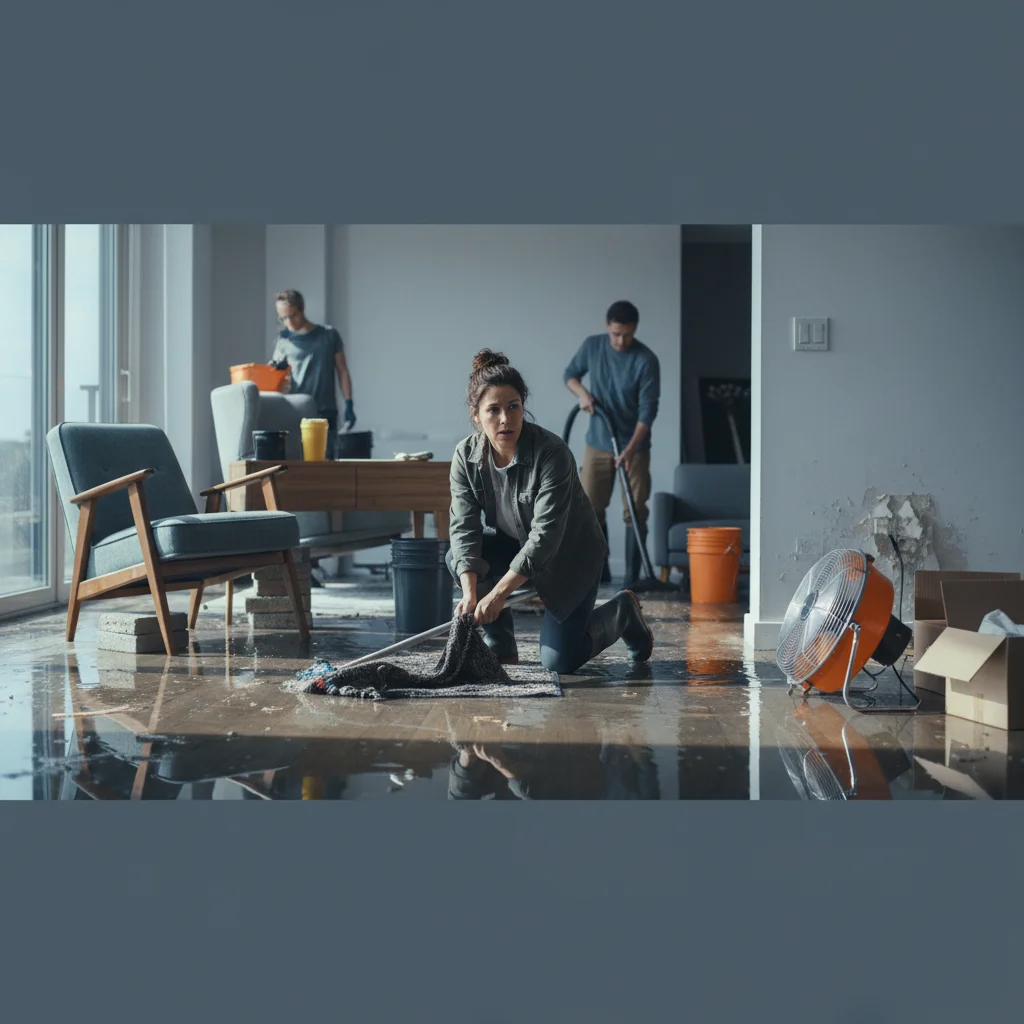
Water damage categories describe how clean or contaminated the water is. There are three. Category 1 is clean water from a sanitary source. Category 2 is gray water with some contamination. Category 3 is black water, grossly contaminated and unsafe to touch. Separately, four classes rate how much water soaked your home and how hard it is to dry. Both ratings drive your cleanup plan and your insurance claim.

A restoration technician inspecting a flooded San Diego living room with a moisture meter against a baseboard.

If you are dealing with water right now, skip ahead and call us. The categories matter, but a fast response matters more. Here in San Diego County, the marine layer and our expansive clay soils turn small leaks into bigger problems faster than most people expect.

The 3 water damage categories

Categories rate contamination. The restoration industry uses the IICRC S500 standard, the national reference most reputable companies follow. You can ask any company whether they work to S500. We do not claim a certification we do not hold, but the standard itself is public and worth knowing.

Category 1: clean water. This comes from a sanitary source. Think a broken supply line, an overflowing bathtub, or a failed water heater that has not sat for days. It poses no real health risk when fresh. The catch is time. Clean water does not stay clean. Sitting in walls or carpet, it picks up contaminants and slides into Category 2 within a day or two.

Category 2: gray water. This has meaningful contamination and can make you sick. Dishwasher and washing machine discharge, toilet overflow with urine but no solids, and aquarium leaks all qualify. A Category 1 loss that sat too long lands here too. Materials that soak up gray water often cannot be saved.

Category 3: black water. This is grossly contaminated and dangerous. Sewage backups, toilet overflow with solids, rising floodwater from the street, and seawater intrusion all count. It carries bacteria, viruses, and other harmful agents. Porous materials that touch black water get removed and replaced, not dried. Do not handle this yourself.

One San Diego reality matters here. Our atmospheric river storms push street runoff and overwhelmed storm drains into homes. That water is Category 3 the moment it enters, even though it started as rain. If a storm flooded your home, treat it as black water until a pro confirms otherwise. Our flood damage cleanup in Chula Vista walks through what that response looks like.

The 4 water damage classes

Classes rate how much water is present and how hard the structure will be to dry. Category and class work together. You might have Category 1 clean water in a Class 4 situation, or Category 3 black water in a Class 2 room.

Class 1: least water. A small area absorbed little moisture. Maybe a corner of one room with low-permeance materials like vinyl or concrete. Fastest to dry.

Class 2: a whole room. Water wicked into carpet, pad, and walls up to about a foot. An entire room or more is affected. Common with a burst supply line you caught within a few hours.

Class 3: the worst saturation. Water came from above or soaked everything. Ceilings, walls, insulation, and subfloor are all wet. A failed second-story appliance or a roof leak during a storm often lands here.

Class 4: specialty drying. Dense, low-permeance materials hold deep, trapped moisture. Hardwood, plaster, lath, concrete, and stone fall here. San Diego’s older Craftsman and Spanish-style homes in North Park, Kensington, and Coronado are full of these materials. Class 4 needs longer drying and specialized equipment.

Protective barriers and air scrubbers set up during a category 3 contaminated water cleanup in a San Diego home.

How category and class change your cleanup and cost

The two ratings set the whole plan. They decide what gets dried, what gets thrown out, what protective gear crews wear, and how long the job runs. Here is a rough guide for San Diego County homes.

ScenarioTypical categoryTypical classWhat it usually means
Caught a burst pipe within an hourCategory 1Class 1-2Extract, dry in place, save most materials
Water heater leaked for two daysCategory 2Class 2-3Remove soaked pad and lower drywall, dry the rest
Dishwasher flooded the kitchen overnightCategory 2Class 2Pull cabinets kickplate, dry subfloor, watch for mold
Slab leak under tile, undetected for weeksCategory 2-3Class 4Deep moisture in slab, long drying, possible tear-out
Sewage backup in a bathroomCategory 3Class 2-3Remove and replace porous materials, full disinfection
Storm flooding from the streetCategory 3Class 3-4Treat as contaminated, extensive removal and drying

Slab leaks deserve a note. San Diego sits on expansive clay soil that swells and shrinks with our wet-dry cycle. That movement stresses copper lines under the slab. A slow slab leak can run for weeks before you notice, which pushes it toward Category 2 and almost always Class 4. If you suspect one, read our signs of a slab leak in San Diego before it spreads.

Cost tracks the same logic. Clean water in a single room runs far less than black water across a whole floor. For real number ranges, see our water damage restoration cost guide for 2026.

Why San Diego’s climate raises the stakes

You might think our dry, mild weather works in your favor. It does for outdoor drying. Indoors, two local factors cut the other way.

First, the marine layer. Coastal cities like La Jolla, Pacific Beach, and Encinitas sit under humid morning air much of the year. Higher ambient humidity slows evaporation, so wet materials stay wet longer. That extends the window where mold can take hold. Mold can start growing within 24 to 48 hours, and our coastal humidity does not help.

Second, the wet-dry swing. We go months with no rain, then take days of heavy atmospheric river rain at once. Homes and soil are not primed to handle that volume, so water finds its way in through roofs, windows, and foundations all at once. Inland areas like El Cajon and Santee see flash runoff; coastal areas fight humidity and slow drying. Your category and class can shift fast under these conditions, which is why a same-day response beats waiting to see if it dries on its own.

The insurance reality

Your category and class often decide what your policy pays. Most standard homeowners policies in California cover sudden, accidental water damage, like a pipe that bursts without warning. They usually exclude gradual leaks and surface flooding from outside.

That distinction bites San Diego homeowners two ways. A slow slab leak that ran for weeks can be denied as gradual, even though you never saw it. And storm flooding from the street is typically Category 3 and excluded from standard policies unless you carry separate flood coverage. Document everything before you clean up. Photos, the source, the date you found it, and the water category all support your claim.

We work directly with your insurance company through the claim, which takes pressure off you during a stressful week. For the full process, read our water damage insurance claim guide, and see our water damage restoration service for what we handle end to end.

Frequently asked questions

Is there a Category 4 water damage? No. There are only three categories, rated by contamination. There are four classes, rated by how much water is present and how hard it is to dry. People mix these up because class goes to four.

Can Category 1 clean water become dangerous? Yes. Clean water degrades over time. Left in walls or carpet, it can reach Category 2 within a day or two as it picks up contaminants and feeds bacteria. This is why a fast response protects your home.

What category is San Diego storm flooding? Treat it as Category 3 black water. Street runoff and overwhelmed storm drains carry contaminants the moment that water enters your home, even though it started as clean rain.

Does the category affect what insurance covers? Often, yes. Sudden clean-water damage is usually covered. Gradual leaks and outside flooding are usually excluded from standard policies. Document the source and category, and consider separate flood coverage if you live in a low-lying area.

How do I know my home’s category and class? A restoration company assesses both on site using moisture meters, the water source, and how far it spread. You can ask them which they assigned and whether they follow the IICRC S500 standard.

Why does San Diego’s marine layer matter for drying? Coastal morning humidity slows evaporation, so wet materials dry slower and the mold window stays open longer. Proper structural drying with the right equipment matters more here than in a dry inland climate.

Get it assessed fast

Categories and classes guide the plan, but the clock guides the outcome. The longer water sits, the more it contaminates and the more it spreads, especially in our humid coastal air.

If you have water in your home anywhere in San Diego County, call Restore Pro SD at (858) 925-5546. We respond 24/7, extract fast, and work with your insurance claim so you are not fighting two battles at once.