You came home to a flooded bathroom, grabbed every towel you own, and got the water off the floor. Now the tile looks dry. The problem is that what you can see is rarely the whole picture with a toilet overflow, and what happened in the next five minutes after it started matters a lot more than most people realize.

Here’s how to think about whether you have a cleanup situation or a real water damage and health risk on your hands.

Clean water vs. contaminated water: the first thing to figure out

Not all toilet overflows are the same. Water damage professionals classify water by its contamination level, and it directly determines how the cleanup has to be handled. If you want more background on this, water damage categories breaks down the full system. But for a toilet overflow, the short version is this.

Category 1 is clean water. If your toilet overflowed because the fill valve got stuck and the tank kept running, or because a supply line failed, that water started out clean. No sewage involved. This is the easiest situation to deal with, and a thorough extraction and dry-out is usually enough.

Category 2 is gray water. If the toilet backed up and brought water from the bowl with it, that water has biological contamination even if it looks clear. Soap residue and urine put it into this category. You can’t treat it the same way you’d treat a supply line leak.

Category 3 is black water. This is the one people dread, and rightfully so. If the overflow brought sewage, fecal matter, or material from a full backup through the drain, you’re dealing with black water. This includes situations where a partial clog caused the bowl to back up repeatedly before finally overflowing. Anything that touched that water, including your towels, your bath mat, and the grout on your floor, is contaminated.

The distinction matters because Category 2 and 3 overflows require antimicrobial treatment, specific PPE to handle safely, and in many cases removal of porous materials that can’t be adequately sanitized. A regular mop-and-dry does not fix this.

Where the water goes that you can’t see

Bathroom floors in most San Diego homes look solid, but water finds every gap. It runs under baseboards in seconds. It soaks into the grout lines between tiles. If you have a wood subfloor under that tile, and many homes in El Cajon, La Mesa, and older parts of Chula Vista do, that water is sitting in the wood right now even if the tile surface dried hours ago.

Vinyl plank flooring is particularly tricky. Water runs under the edges and pools underneath the floating planks, where it has nowhere to go. A floor that looks fine on the surface can have an inch of standing water trapped beneath it.

The subfloor is the bigger concern. Plywood saturates fast. Once it does, it swells, softens, and starts the clock on mold. The IICRC S500 is the industry standard most reputable restoration companies follow, and it sets specific moisture thresholds that materials need to reach before drying is considered complete. Getting there requires more than fans from the hardware store.

If the bathroom is on a second floor, water also moves into the ceiling below. This is how a toilet overflow in an upstairs bathroom becomes a damaged drywall ceiling downstairs, sometimes within hours. Check the ceiling beneath any second-floor bathroom after an overflow. Bubbling paint, discoloration, or soft spots are signs water has already migrated down.

Why sewage content makes this a professional job

If there’s any chance sewage was involved in your overflow, stop doing your own cleanup. This is not about being overly cautious. It’s about real health risks.

Sewage contains pathogens including E. coli and other bacteria that cause serious illness. Black water also contains viruses and parasites. Touching contaminated surfaces and then your face, or not adequately disinfecting skin after contact, is how exposure happens. Children, elderly family members, and anyone with a compromised immune system face the most risk, but this is not safe for anyone to handle without proper PPE.

Beyond the immediate contact risk, sewage-contaminated water that soaks into porous materials and isn’t fully removed creates ongoing exposure. Bacteria don’t just stop when the water dries. They persist in grout, in drywall, in wood framing.

Professional sewage cleanup involves removing all contaminated porous materials, applying EPA-registered antimicrobial treatments to affected surfaces, and documenting that the area has been properly sanitized before any reconstruction happens. This isn’t something you can replicate with bleach and a good scrubbing. Bleach doesn’t penetrate grout and subfloor materials the way it needs to, and surface cleaning doesn’t address what’s inside structural cavities.

If your toilet backed up from a main line issue, read our post on sewage backup for a broader look at what that kind of event involves. Main line backups are a different scale of problem entirely.

What mold has to do with any of this

Mold needs moisture and time. A toilet overflow gives it both. In San Diego’s climate, especially in bathrooms where humidity is already elevated, mold can begin colonizing within 24 to 48 hours of water exposure. The marine layer that keeps coastal areas like Encinitas and Oceanside cooler also keeps indoor humidity higher than you’d expect, and that works against you after a water event.

The concern with toilet overflows specifically is that the water gets into materials that stay wet for days without anyone realizing it. You dried the floor, it looked fine, life moved on. Meanwhile the subfloor under the toilet is sitting at 30% moisture content. Mold is already starting in there.

Mold in a bathroom subfloor or wall cavity doesn’t announce itself right away. You might notice a musty smell first, or see discoloration along the baseboard weeks later. By that point it’s grown into a larger remediation project than it would have been if it had been caught at the time.

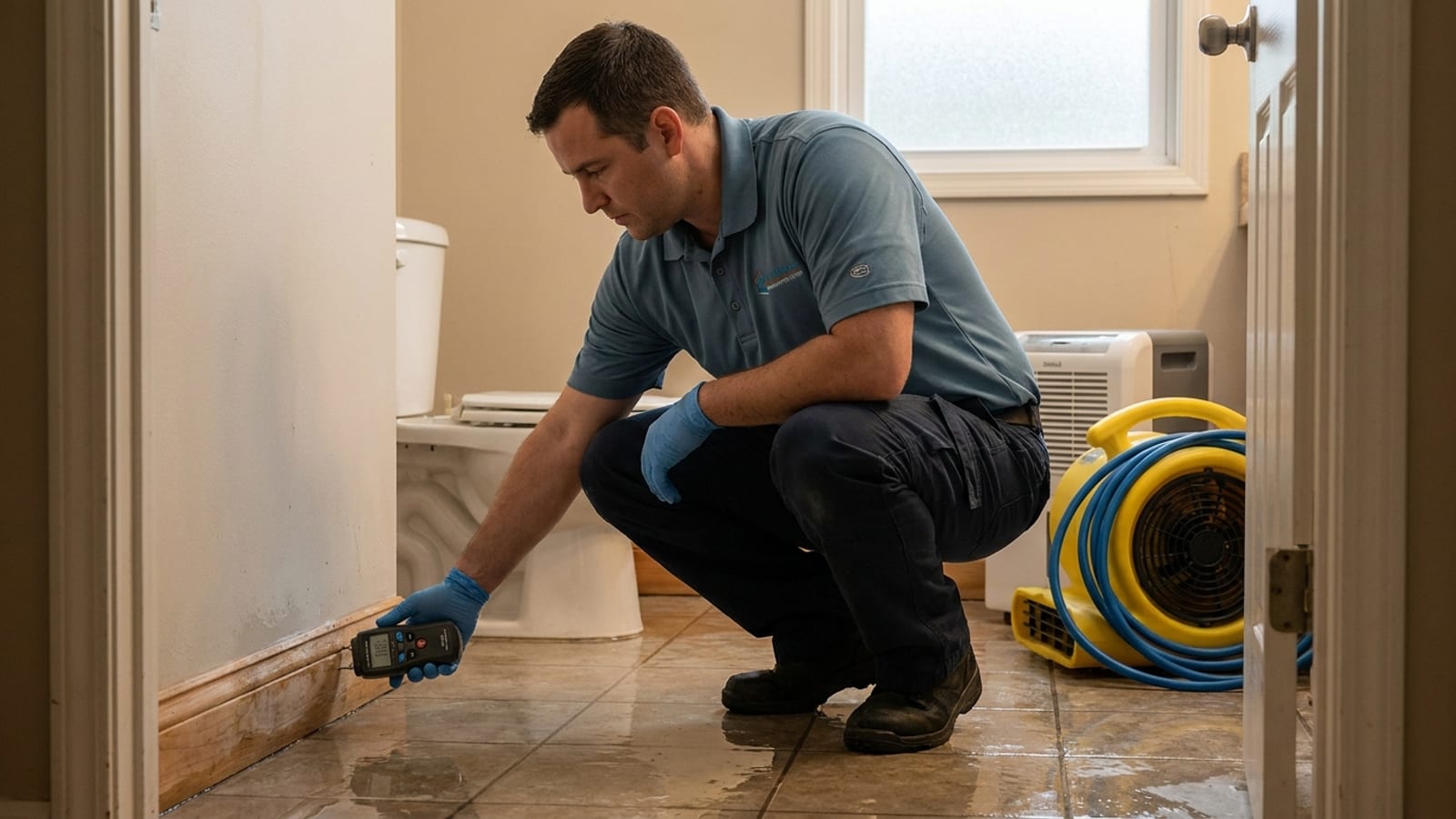
The solution is moisture mapping. Using a thermal imaging camera and moisture meters, a restoration tech can find exactly where water migrated and what’s still wet, without tearing open every wall to look. If there’s moisture present, it gets addressed before reconstruction. If there’s mold already starting, it gets treated before it spreads.

The drying and sanitizing process

Assuming the overflow has been assessed and the water category is understood, here’s what a proper restoration process looks like.

Extraction first. Any standing water or water trapped under flooring gets pulled out with commercial extraction equipment. For water under floating floors, this often means lifting planks to access what’s underneath.

Material decisions. Porous materials that absorbed contaminated water typically need to come out. This can mean sections of drywall, baseboard, and in some cases flooring, depending on how much water got in and what category it was. Clean water Category 1 overflows may allow drying in place. Category 2 and 3 almost never do for anything porous that absorbed the water.

Antimicrobial treatment. For any gray or black water situation, affected surfaces get treated with EPA-registered antimicrobial agents before and after drying. This addresses the bacteria and pathogens that contact with contaminated water introduced.

Drying. Industrial air movers and dehumidifiers get positioned to create airflow across all wet surfaces and draw moisture out of materials. This takes days, not hours. Moisture readings get taken daily to track progress. Equipment stays until everything reads within normal range.

Documentation. A proper restoration company will give you a drying log showing daily moisture readings and the final dry-out confirmation. This matters for water damage restoration insurance claims and for your own records if you ever sell the home.

The whole process for a bathroom overflow with no sewage content typically runs two to four days of drying, plus any reconstruction needed afterward. A sewage-involved overflow adds the remediation and sanitization phases and can extend the timeline. Cost varies by the extent of saturation and whether materials need to come out, but catching it early is almost always cheaper than discovering the problem months later.

When to call a pro

If the overflow came from a clean water source, the spread was minimal, and you extracted it within minutes, you may be able to handle it yourself with thorough drying and monitoring. But if the toilet bowl was involved, if the water spread beyond the immediate bathroom footprint, if there’s any chance sewage was present, or if the floor is soft or there’s water visible under baseboards, get a professional assessment before assuming you’re okay. The cost of a moisture inspection is far less than the cost of mold remediation or subfloor replacement after the problem has had weeks to develop.

Call us at (858) 925-5546 for a same-day estimate.