TL;DR
- Emergency water extraction is the rapid removal of standing water before it soaks deeper into floors, walls, and subfloor.
- In San Diego, mold can take hold in 24 to 48 hours because of marine-layer humidity, so speed matters more here than in dry climates.
- Extraction is step one. Structural drying comes after, and both decide whether materials get saved or torn out.
- Most insurance policies cover sudden water losses, and a fast extraction call protects the claim.
- Call (858) 925-5546 for 24/7 emergency response across San Diego County.
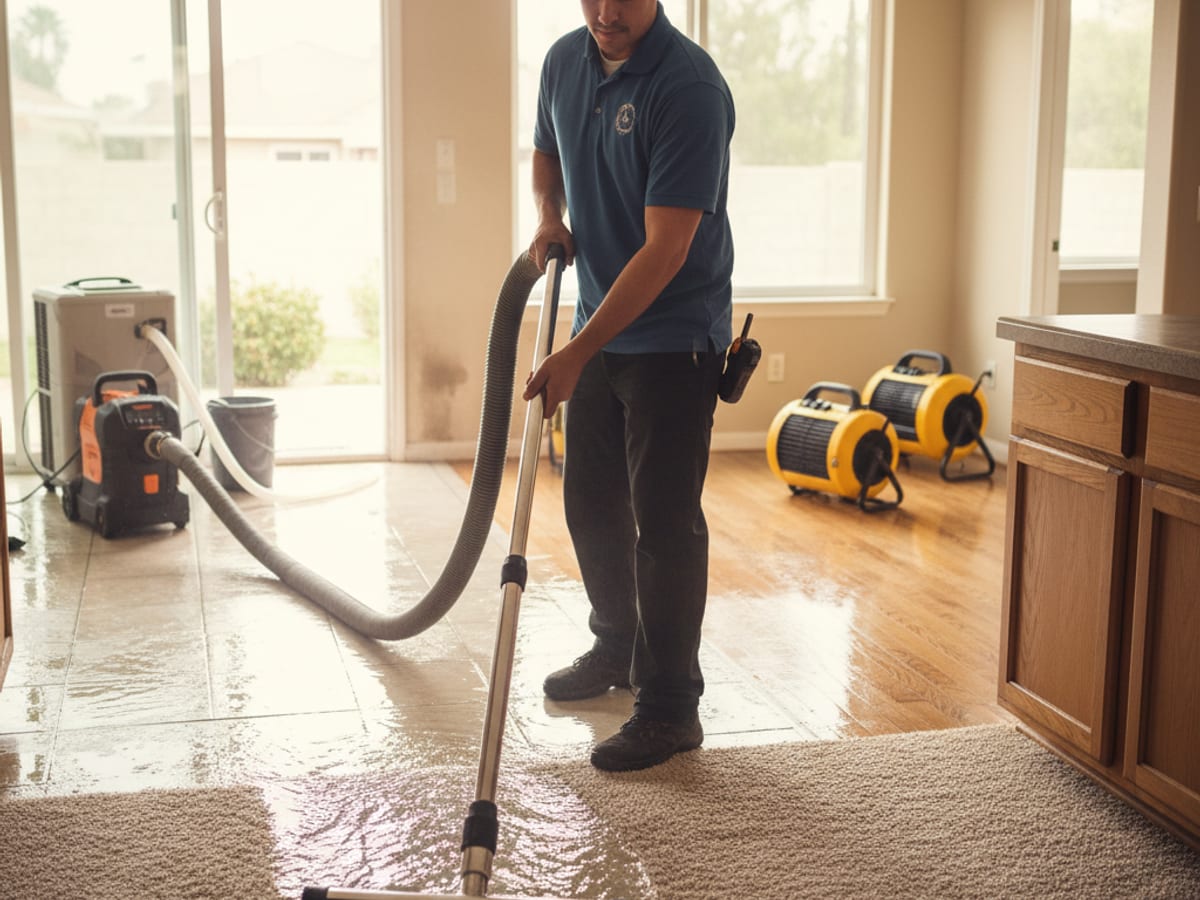
Emergency water extraction is the fast removal of standing water from your home or business using truck-mount and portable extractors, before that water wicks into drywall, subfloor, and framing. In San Diego, getting water out in the first few hours is the single biggest factor in how much you save. The marine layer keeps humidity high, so wet materials stay wet, and mold gets a head start faster than people expect.
We respond to water losses across San Diego County every day. The homes that come out cheapest are the ones where extraction started fast and drying followed right behind it. The homes that turn into six-figure rebuilds are the ones where water sat for two days while someone waited on a call back.
What emergency water extraction actually is
Extraction is bulk water removal. It is not drying, and it is not restoration. Think of it as the triage step.
When water floods a room, it pools on the surface first, then it soaks downward and sideways. Carpet pad acts like a sponge. Subfloor drinks it up. Drywall wicks it several inches above the waterline. Extraction pulls out the standing and absorbed water as fast as possible so the deeper drying phase has less to fight.
Crews use a mix of tools. Truck-mount extractors handle large volumes and pull water from carpet and hard surfaces with strong vacuum pressure. Portable units reach tight spots and upper floors where a truck hose cannot. Weighted extraction tools press down on carpet to squeeze water out of the pad underneath. Once the bulk water is gone, the job moves to structural drying with air movers and dehumidifiers.
If you want the full picture of the drying side, we break it down in what structural drying is.
Why timing matters more in San Diego
National restoration sites all repeat the same line: mold grows in 24 to 48 hours. That is true everywhere. But San Diego has conditions that push you toward the fast end of that window.
The marine layer parks humidity over coastal and inland neighborhoods for much of the year. High ambient humidity means wet drywall and wood do not dry on their own. They stay damp, and damp is what mold needs. A water loss in Pacific Beach during a foggy June morning starts working against you faster than the same loss in a dry desert climate.
Then there is the soil. Much of San Diego County sits on expansive clay soil that swells and shrinks with moisture. That movement is part of why slab leaks are so common here, and a slab leak can release water under your floor for weeks before you ever see it. By the time it surfaces, the subfloor is already saturated. Extraction on a slab leak is different from extraction on a burst pipe, because the water source is below you, not above.
Atmospheric rivers add the third pressure. When a winter storm dumps inches of rain in a day, low-lying areas flood, storm drains back up, and we get a wave of simultaneous calls. During those events, the homes that get extraction first are simply the ones that called first.
For storm-specific guidance, see our post on atmospheric river storm damage in San Diego.
What emergency water extraction costs
Pricing depends on how much water there is, what it touched, and how contaminated it is. Clean water from a supply line costs less to handle than sewage. Here is a realistic range for San Diego County.
| Scope of water loss | Typical extraction cost | What drives the price |
|---|---|---|
| Single room, clean water | $400 to $1,200 | Square footage, carpet vs. hard floor |
| Multiple rooms, clean water | $1,200 to $3,500 | Volume, number of affected materials |
| Category 2 (gray water) | $2,000 to $5,000 | Extra sanitizing, more removal |
| Category 3 (sewage or storm) | $4,000 to $10,000+ | Hazmat handling, material disposal |
| Slab leak under flooring | $2,500 to $7,000 | Floor removal, sub-slab access |
These numbers cover extraction and the early mitigation work. Full restoration, including drying, rebuild, and repairs, runs higher. For a complete cost breakdown across the whole job, read our 2026 water damage restoration cost guide for San Diego.
Most of this is covered by insurance when the loss is sudden and accidental. A burst pipe usually qualifies. A slow leak you ignored for months usually does not. A fast extraction call helps because it documents the loss early and shows you took action to limit the damage, which is something adjusters look for.
The extraction timeline, hour by hour
Speed is the whole game. Here is how a fast response unfolds.
Hour 0 to 1. Stop the water source. Shut the main valve for an internal leak. Get the crew dispatched. Standing water is doubling its damage while you wait.
Hour 1 to 4. Bulk extraction. Truck-mount and portable units pull out the standing and absorbed water. This is where most of the water leaves the building.
Hour 4 to 8. Detailed extraction and setup. Weighted tools squeeze the carpet pad. Baseboards may come off so wall cavities can dry. Air movers and dehumidifiers go in.
Day 1 to 3. Structural drying. Equipment runs continuously. Moisture readings get checked daily until materials hit dry standard.
The difference between calling at hour zero and calling at hour 24 is enormous. Carpet extracted within 12 hours often saves. Carpet that sits saturated for two days usually gets torn out. The same logic applies to drywall, baseboards, and cabinetry.
For a homeowner action plan in that critical first day, we walk through it in water damage: what to do in the first 24 hours.
How to choose an extraction company in San Diego
A few things separate a good response from a bad one.
Ask about response time. Emergency means emergency. A company that cannot give you a real arrival window is not set up for emergencies.
Ask about their standards. The restoration industry follows IICRC standards, which are the accepted guidelines for water extraction and drying. You should ask any company whether their crews work to those standards. A straight answer tells you they take the work seriously.
Ask how they document for insurance. Good crews photograph the loss, log moisture readings, and write a clear scope. That paperwork is what gets your claim approved without a fight.
Ask whether they handle the whole job. Extraction, drying, and rebuild under one roof means fewer handoffs and one point of accountability.
Frequently asked questions
How fast does water extraction need to happen?
As fast as possible. In San Diego’s humid coastal air, mold can start within 24 to 48 hours, and the early end of that window is realistic here. Bulk water should come out within the first few hours of discovery to give materials the best chance of surviving.
Is water extraction the same as water damage restoration?
No. Extraction is the first step, the removal of standing water. Restoration is the full process: extraction, structural drying, sanitizing, and rebuilding whatever got damaged. You need both, in that order.
Will my insurance cover emergency water extraction?
Usually, if the loss was sudden and accidental, like a burst pipe or a failed appliance. Slow, long-ignored leaks are typically denied. Calling for extraction quickly helps your claim because it documents the loss early and shows you acted to limit further damage.
Can I just rent a wet vac and extract the water myself?
For a small spill, sure. For a real water loss, no. A shop vac cannot pull water from carpet pad or wall cavities, and it does nothing for the moisture already wicking into your subfloor and framing. Surface-dry does not mean dry. Hidden moisture is what grows mold.
What happens after the water is extracted?
Structural drying. Air movers and dehumidifiers run for several days while moisture readings get checked daily. Materials are not safe until they hit dry standard, even if they feel dry to the touch.
Does standing water always mean mold?
Not always, but the risk climbs fast. We cover the full picture in will water damage grow mold. The short version: the longer water sits, the higher the odds, and San Diego humidity tilts the odds against you.
Get water out before it does more damage
Standing water is not a wait-and-see problem. Every hour it sits, it soaks deeper and the bill climbs. We provide 24/7 emergency water extraction across San Diego County, from the coast to the inland valleys, with fast response and full restoration under one roof. We document everything for your insurance claim and work with your carrier through the process.
If you have water where it should not be, call (858) 925-5546 now. Tell us what happened and we will get a crew moving. You can also learn more on our emergency water extraction service page.